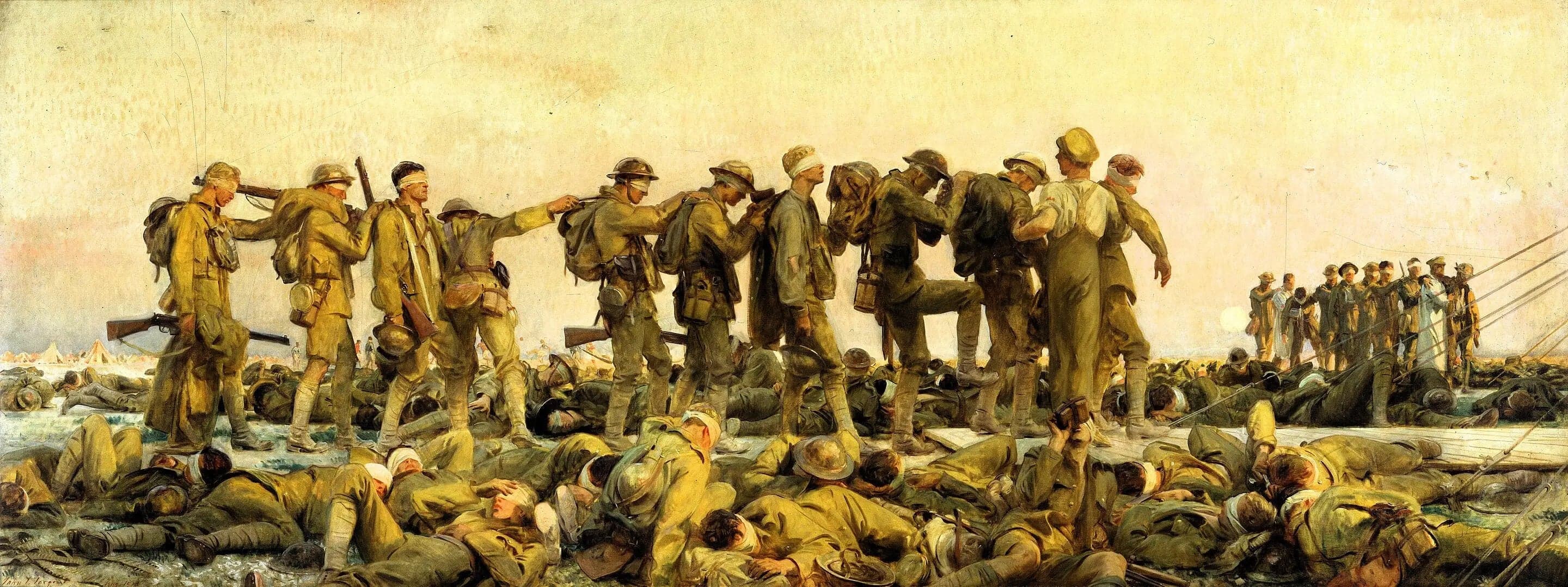
Gazes
- Original dimensions
- 611 x 231 cm
- Museum
- Imperial War Museum
- Year
- 1919
Scene depicted
The painting “Gazés” presents a poignant scene that evokes the vulnerability of individuals in the face of the ravages of war. The figures depicted, dressed in period costumes, are immersed in an atmosphere of contemplation and melancholy, perhaps reflecting on past sacrifices and hopes for a better future. Through this composition, Sargent immortalizes complex emotions and silent stories, making each character a protagonist of their own narrative.
Historical context
Created in 1919, the painting by John Singer Sargent is set against the tumultuous backdrop of post-war London, where memories of conflict intertwine with aspirations for renewal. This work reflects an era marked by the search for identity and reconciliation, solidifying Sargent's reputation as a master of portraiture and narrative canvas . The painting is currently housed at the Imperial War Museum, a place Sargent chose to host this monumental composition, measuring 611 x 231 cm.
Place in the artist's career
Created during a period of reflection and artistic maturity, “Gazés” represents one of Sargent's stylistic peaks. This painting reflects his evolution compared to earlier works such as “The Garden of the Villa de Castiglione” and “Madame X,” where the artist was already experimenting with light and emotions. With “Gazés,” Sargent manages to capture a new intensity, propelling his art into new dimensions.
Anecdote
“Every brushstroke sounds like a note of music, a melody captured forever.” These words, inspired by Sargent himself, resonate in the minds of those who contemplate his masterpiece . The inspiration for the painting came during a stroll in a peaceful garden, where the soft morning light illuminated every detail, every expression, revealing the soul of the subjects. This canvas is an invitation to contemplation, a work where every gaze provokes a deep reflection on the human condition.