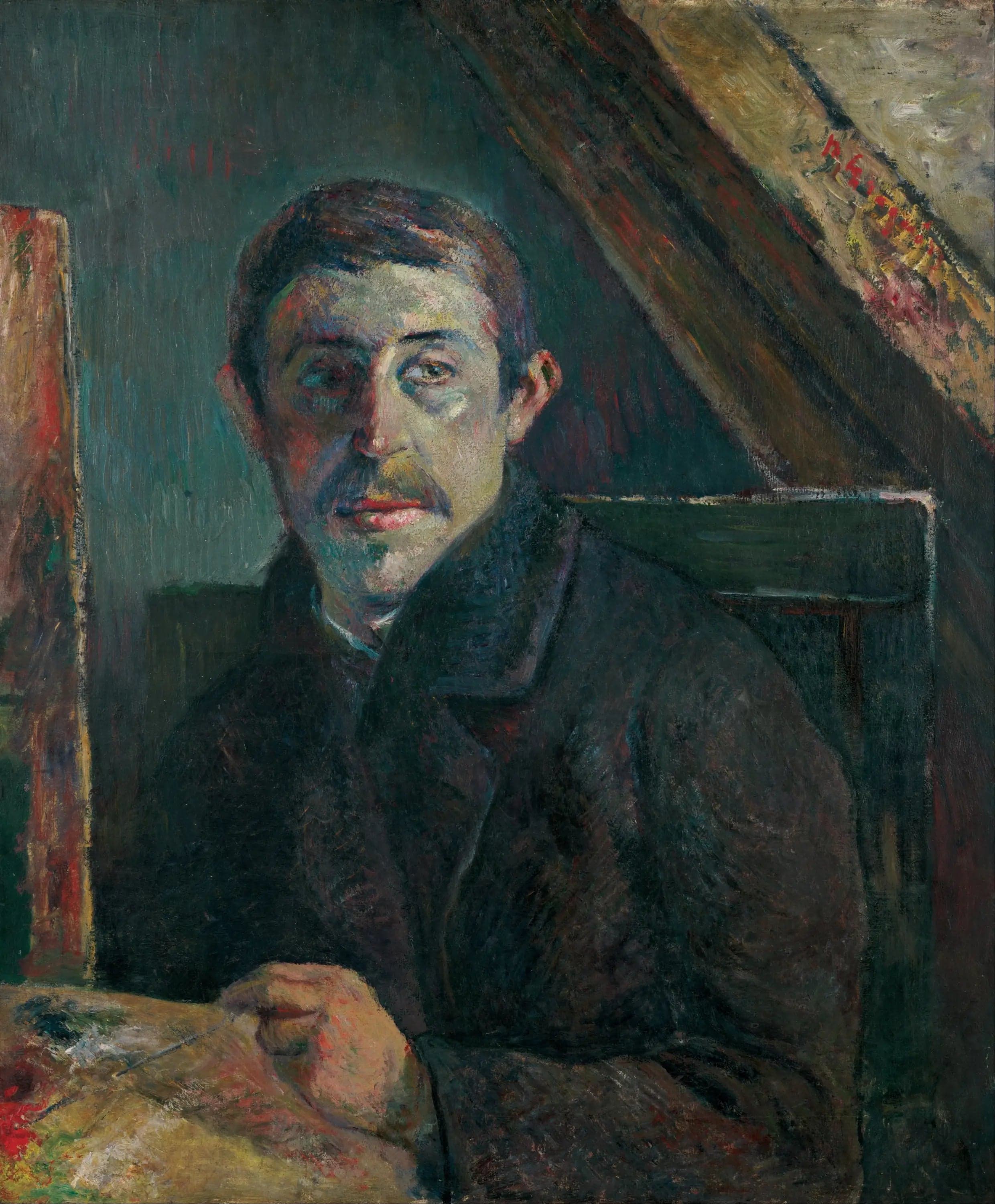
Gauguin in front of his easel
- Original dimensions
- 54.3 x 65.2 cm
- Museum
- Kimbell Art Museum
- Year
- 1885
Scene depicted
In the painting “Gauguin in front of his easel,” the artist reveals himself not only as the creator but also as the observer of his own creation. His active posture differs from simple contemplation; it is a vibrant dialogue between him and the nature that surrounds him. This canvas captures not only his integral side as an artist but also manifests the wonder of a painter in the face of the splendor of the world.
Historical context
Created in 1885, this painting perfectly illustrates the emergence of the post impressionist movement, of which Paul Gauguin is one of the pioneers. It is in Paris, a city then bubbling with new ideas, that the artist developed this canvas emblematic of his innovative spirit and his quest for a free and authentic artistic expression. The painting , currently exhibited at the Kimbell Art Museum , reflects a time when art is reinventing itself, where light and color become the true protagonists of the pictorial work.
Place in the artist's career
“Gauguin in front of his easel” is a painting pivotal in Gauguin's career, symbolizing a period of artistic maturation. In parallel, works such as “The Yellow Christ” and “The Bretons” testify to his evolution towards bold styles. This painting marks a turning point in his production: the artist abandons conventions to explore a more vibrant palette, deepening his connection with nature.
Anecdote
“A work will only live if it is inspired by the soul,” Gauguin might have said while contemplating a sunlit landscape vibrant with colors one morning. This painting is the fruit of this philosophy. The artist, seated in front of his easel, captures the fleeting beauty of light, transcribing in a brushstroke the emotion that overwhelms him. The moment is peaceful, almost sacred, and unites the artist with his creed of expression.