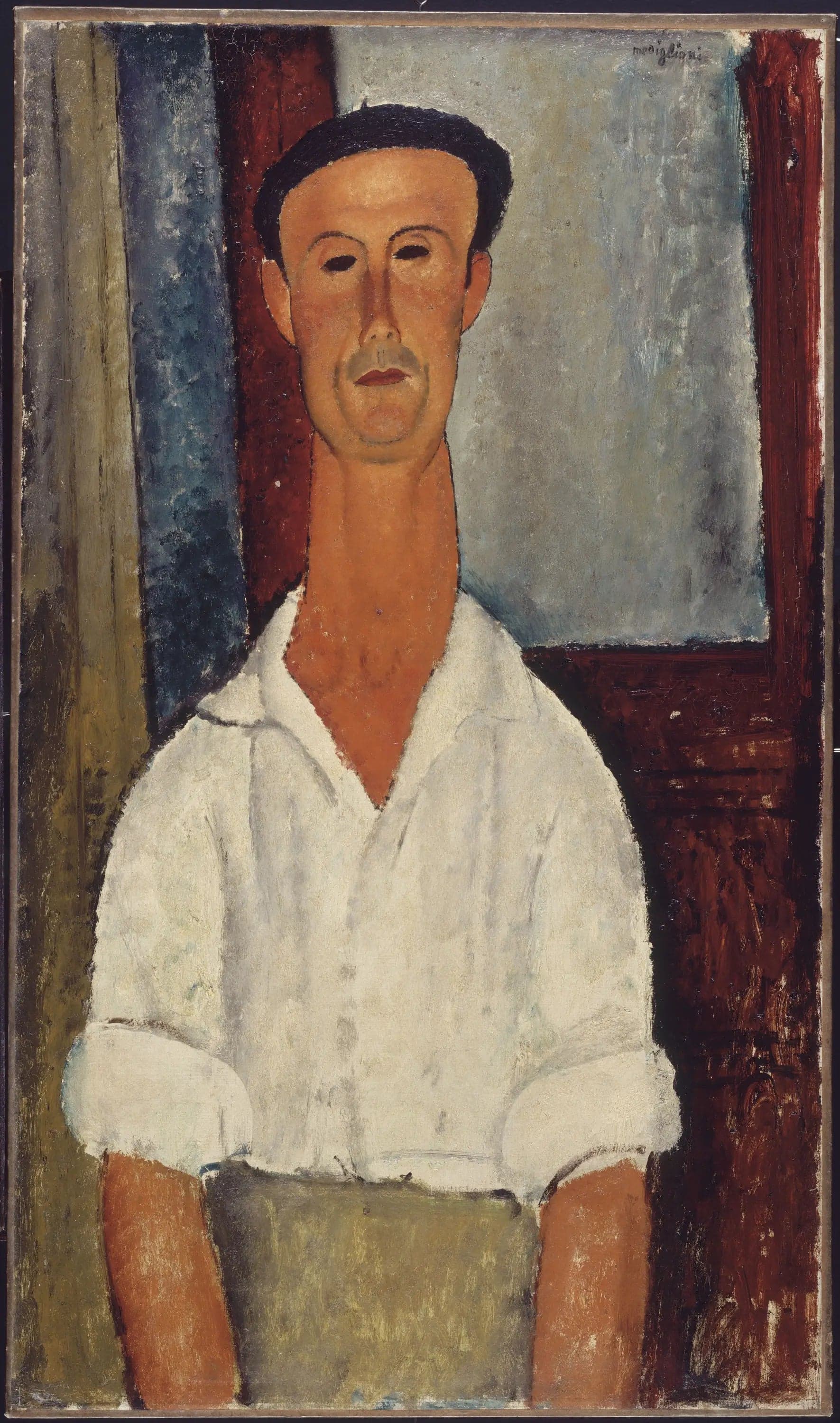
Gaston Modot
- Original dimensions
- 53.6 x 92.7 cm
- Museum
- Centre Pompidou
- Year
- 1918
Scene depicted
In this captivating painting, we discover a man with delicate features of rare expressiveness. Modot's muted posture, his striped shirt, seem enveloped in palpable intimacy. The light subtly caresses his face, creating a play of shadows that transcends the scene. This masterpiece, beyond its lines, tells a personal story of encounter and shared gaze.
Historical context
Created in 1918, amidst the artistic turmoil of Paris, this painting is part of the modernism movement. The French capital, vibrant under the influence of the avant-gardes, was the cradle of this pictorial work that captures the very essence of the era. Currently, the painting is exhibited at the Centre Pompidou, an iconic place. Its refined dimensions add to the striking presence of this masterpiece.
Place in the artist's career
Gaston Modot represents a turning point in Modigliani's career. After "Reclining Nude" and "Portrait of Jeanne Hébuterne," this painting asserts itself as a work of maturity. Halfway between portrait and snapshot, it embodies the fusion between the painter's stylized style and the sensory expression that characterizes his artistic evolution.
Anecdote
Modigliani, often immersed in a quest for authenticity, said: "Every face I paint is a story that needs to be told." On this winter day, perhaps he crossed paths with Gaston Modot in a sunlit alley of Montmartre, choosing to immortalize his penetrating gaze in his famous canvas. This fleeting moment infused vibrant life into this work .
Major exhibitions
Modigliani. Modern Gazes