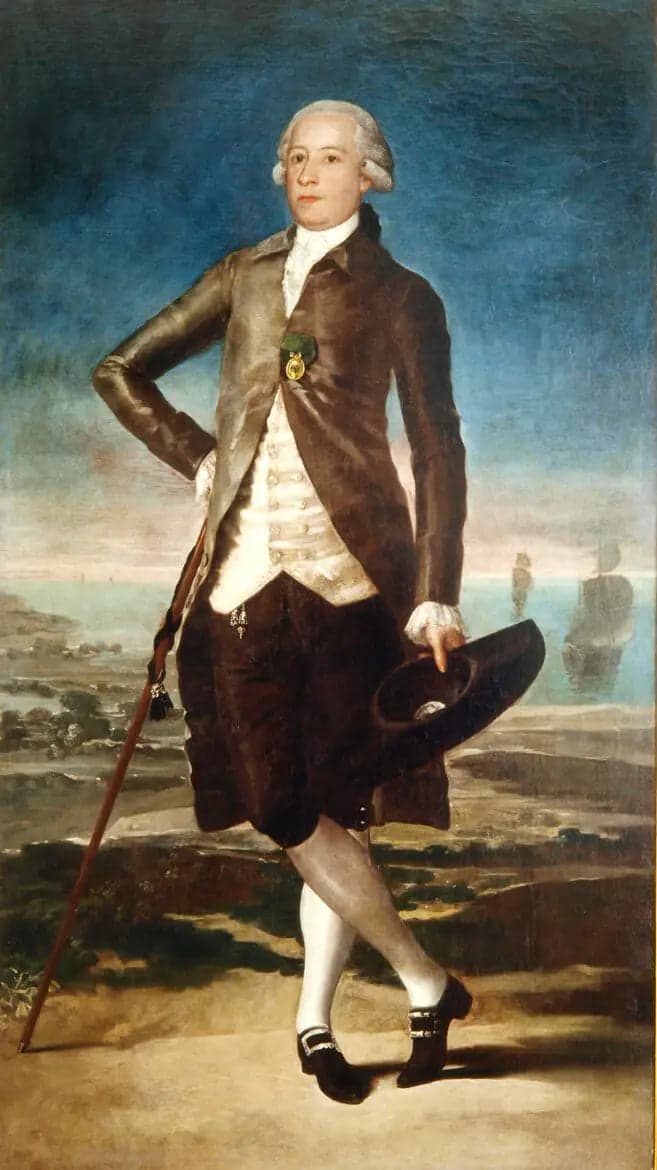
Gaspar Melchor de Jovellanos
- Original dimensions
- 116 x 205 cm
- Museum
- national museum of sculpture
- Year
- 1782
Scene depicted
The canvas depicts Gaspar Melchor de Jovellanos, a man of letters, in a thoughtful pose, perfectly capturing his passionate intellect. Goya portrays him as a beacon of thought, with simplicity and dignity, capturing the essence of his social and intellectual commitment. The depth of Jovellanos' gaze questions the viewer, inviting them to reflect on the challenges of his time.
Historical context
Created in the heart of Spain in the 18th century, this painting illustrates the artistic sensitivity of an enlightened movement, neoclassicism. The canvas is now located in the national museum of sculpture, a true institution in Valladolid, where visitors can marvel at this masterpiece while breathing in the history-laden air of the region. Goya, through his uniqueness, captures the essence of a time in full transformation.
Place in the artist's career
This painting stands out as a transitional function in Goya's career, marking a turning point towards deeper and more psychological works like “The Third of May 1808” and “The Family of Charles IV.” With each new canvas , the artist refines his expression, evolving through themes of intense human emotions and social critiques.
Anecdote
“I paint what I see and what I feel,” said Goya, inspired by the morning light dancing on the cobblestones of Madrid. That day, a gentle breeze swept through the alley, awakening the colors of his imagination. Gaspar Melchor de Jovellanos embodies this idea of an enlightened mind, symbolizing an engaged intellect. Each brushstroke on the canvas resonates with this quest for truth and humanity.