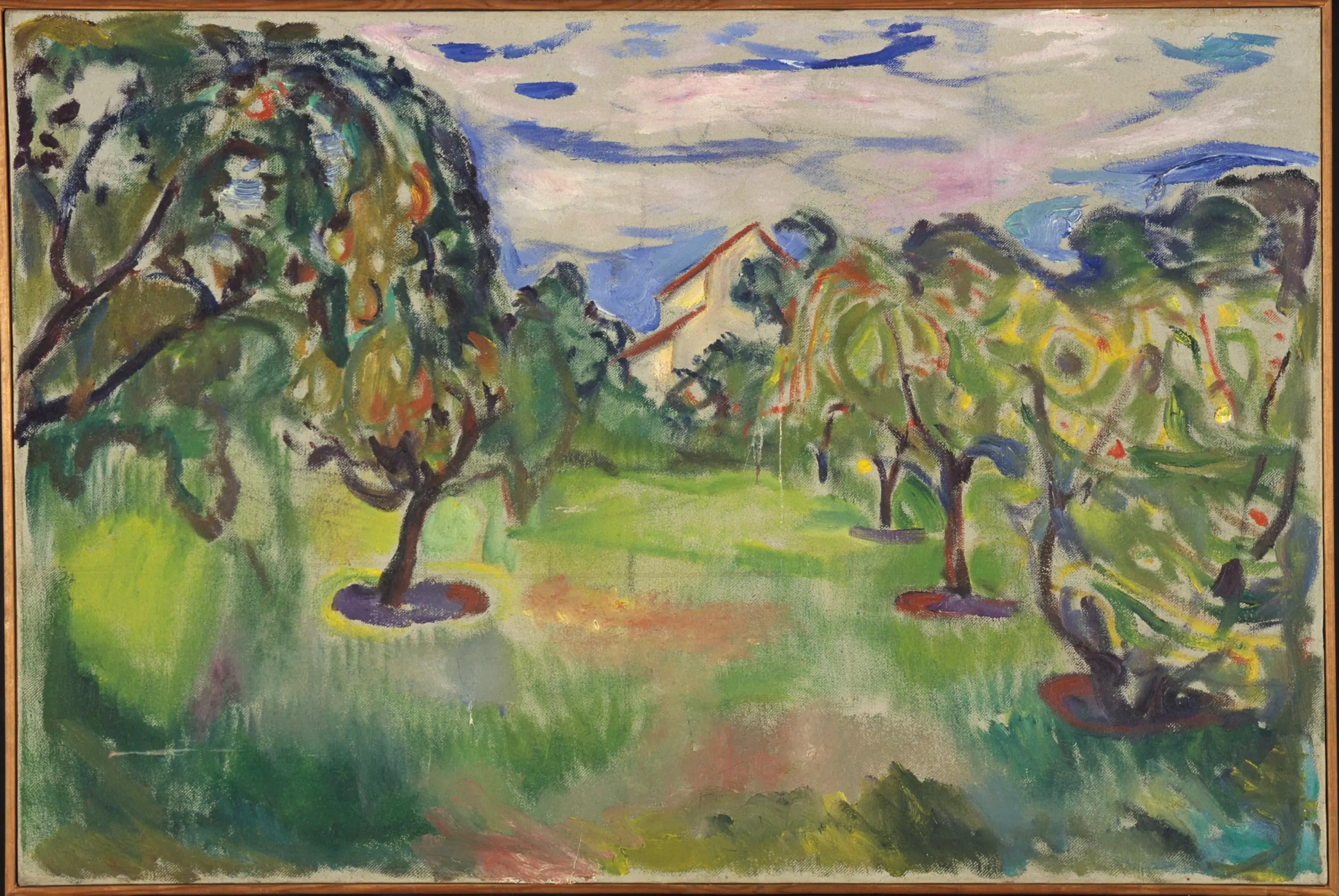
garden with apple trees
- Original dimensions
- 90 x 60 cm
- Museum
- Munch Museum
- Year
- 1920
Scene depicted
The painting “apple orchard” represents a field of blossoming apple trees, a gentle invitation to contemplation. The trees, majestic in their bloom, evoke both the beauty of nature and the fragility of life, immersing the viewer in a peaceful, almost melancholic atmosphere. Munch, with his unique style, transports us into a bucolic daydream.
Historical context
Created in 1920, this iconic painting has its roots in Oslo, Norway, at the heart of the expressionist movement that marked this era. The canvas, currently displayed at the Munch Museum, reflects a pivotal moment in modern art. Its dimensions, 90 x 60 cm, capture the beauty of a garden, a witness to the psychological fluctuations of the artist.
Place in the artist's career
This painting is part of a period of artistic maturity for Edvard Munch , marked by unparalleled emotional depth. Alongside his major works such as “The Scream” and “Madonna,” “apple orchard” reflects an evolution towards themes of nature and equality. The dialogue between these compositions reinforces his poetic and symbolist vision.
Anecdote
“Nature reveals what we have deepest within us.” These words from Edvard Munch resonate like the echo of a spring morning, when the artist, inspired by the vivid colors of his apple orchard, laid his palette on the canvas, capturing the ephemeral essence of life in a masterpiece .
Major exhibitions
Munch og Ekely: 1916-1944