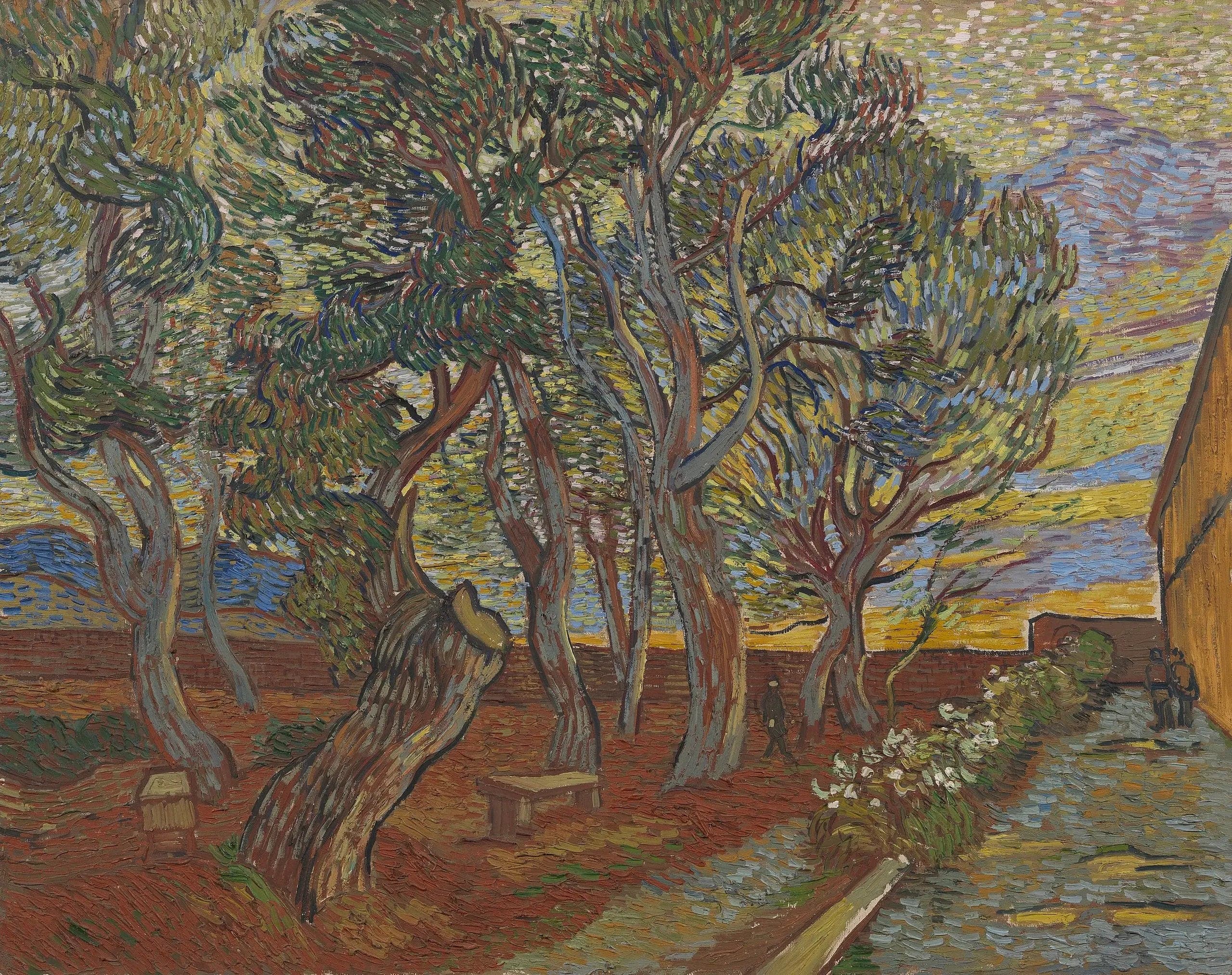
Garden of the Asylum
Scene depicted
In this painting , Van Gogh immerses us in a lush garden, a true refuge. The vibrant colors and arrangement of the flowers seem to come alive under a Californian sunbeam, while the background comes to life thanks to lush foliage, creating an atmosphere that is both serene and exuberant.
Historical context
Created in 1889, in the charming city of Saint-Rémy-de-Provence , Garden of the Asylum is part of the Post-Impressionist movement that shaped modern art. This painting , which is part of the collections of the Van Gogh Museum in Amsterdam, is a work of respectful size, measuring 90.5 x 71.5 cm, that reflects a period of deep introspection for the artist.
Place in the artist's career
Garden of the Asylum is part of Van Gogh's maturity period, marking his transition from a phase of experimentation to the affirmation of his unique style. Echoing his previous works such as The Starry Night and The Sunflowers , this painting reflects a growing mastery of vibrant colors and expressive brushstrokes.
Anecdote
Vincent van Gogh once confided: "Nature is everything. Like a poet, I perceive it in every detail." It is in the enchanting setting of the asylum in Saint-Rémy that the artist observed and captured the peaceful whisper of the flowers and the dance of the wind, moments of magic that led to the birth of this masterpiece .