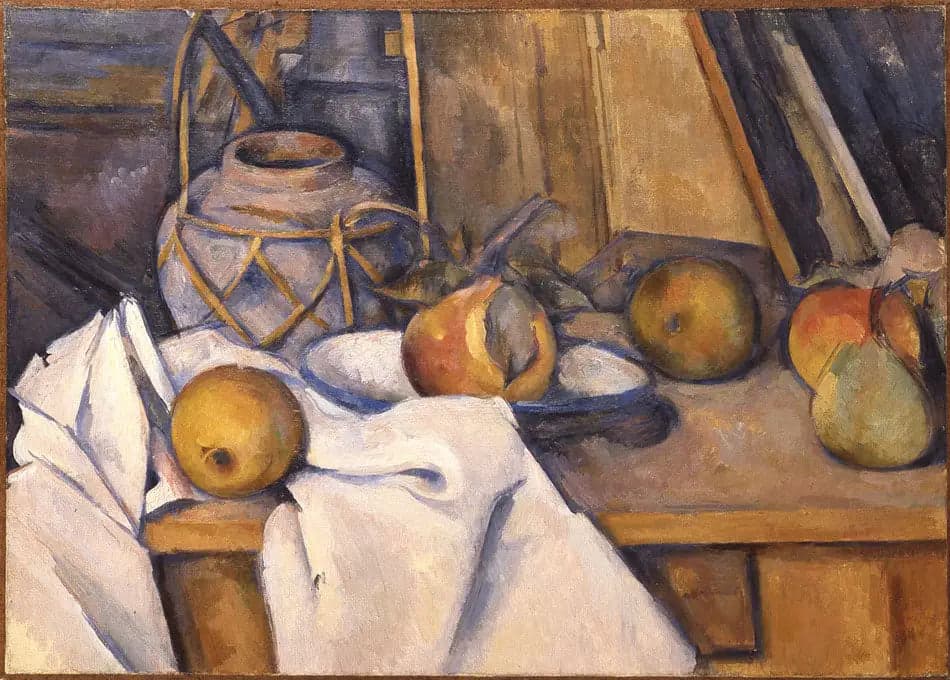
Fruits and Ginger Jar
- Original dimensions
- 46.5 x 33 cm
- Museum
- http://www.wikidata.org/.well-known/genid/507b2df6e15371cfb5307f9a06ae6feb
- Year
- 1891
Scene depicted
This canvas bursts with the promises of a golden day. The painting depicts a delicate still life, where the fruits stand proudly next to a pot of ginger, a symbol of exoticism and mystery. Through forms brushed with determination and sculpted shadows, Cézanne captures the viewer's gaze, inviting everyone to discover the tranquil harmony of simplicity.
Historical context
Created in 1891, this remarkable painting is at the heart of the Impressionist era, a vibrant and innovative artistic movement that emerged in Aix-en-Provence, Cézanne's hometown. This canvas can be admired in a museum dedicated to preserving our cultural heritage. In a context of major artistic transitions, this pictorial work refines the vision of nature, skillfully translating the nuances of light on carefully arranged fruits.
Place in the artist's career
Fruits et pot de gingembre represents a pivotal moment in Cézanne's career, testifying to his artistic maturity. At this precise moment, his pointillist style emerges, offering a taste of future iconic paintings like La Montagne Sainte-Victoire and Les Grandes Baigneuses. This artistic journey illustrates a constant dialogue between tradition and innovation, and this masterpiece majestically fits into this evolution.
Anecdote
“I take pleasure in observing nature, each fruit, each shadow tells me a story,” Cézanne might have declared during the conception of this masterpiece . Imagine him that morning, the light filtering through the veils of a gentle spring, ready to capture the essence of a pot of ginger surrounded by juicy fruits. This moment of creation intertwines with the palpable emotion of the painting .