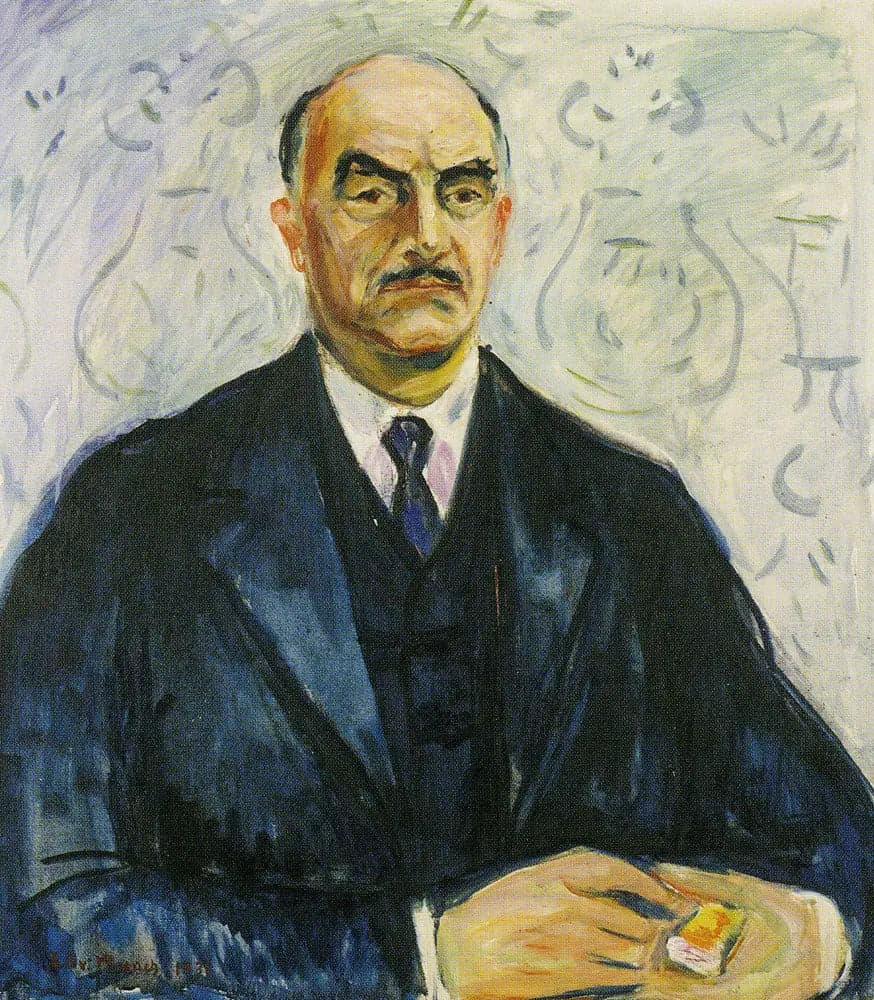
Fritz H. Frølich
- Original dimensions
- 65 x 87.5 cm
- Museum
- Munch Museum
- Year
- 1931
Scene depicted
This canvas reveals a glimpse of humanity confronting its own demons. The dynamic composition of “Fritz H. Frølich” highlights the feeling of anxiety and solitude. The figures intertwine, illustrating Munch's inner struggles while evoking a strong connection with the viewer.
Historical context
Created in the early 20th century, this remarkable painting is located in Oslo, Norway, at the very heart of the expressionist movement that characterizes the work of Edvard Munch . In the 1930s, the canvas embraces the torments of its time, capturing the essence of a changing society. Currently exhibited at the Munch Museum, this iconic work remains an open window into the artist's inner world.
Place in the artist's career
This painting is part of Munch's most introspective period, reflecting his quest for authenticity and truth. Compared to other canvases such as “The Scream” and “The Madonna,” this work reveals a technical evolution towards a more sophisticated abstraction while remaining true to its deep emotion.
Anecdote
“Beauty is everywhere, even in suffering,” said Munch, inspired by a chance encounter in a garden in spring. That morning, a golden light danced through the leaves, reinforcing his desire to make emotion palpable in the masterpiece . Thus, the painting becomes an echo of his reflections on life, vibrant and complex.
Major exhibitions
Edvard Munch : portraits