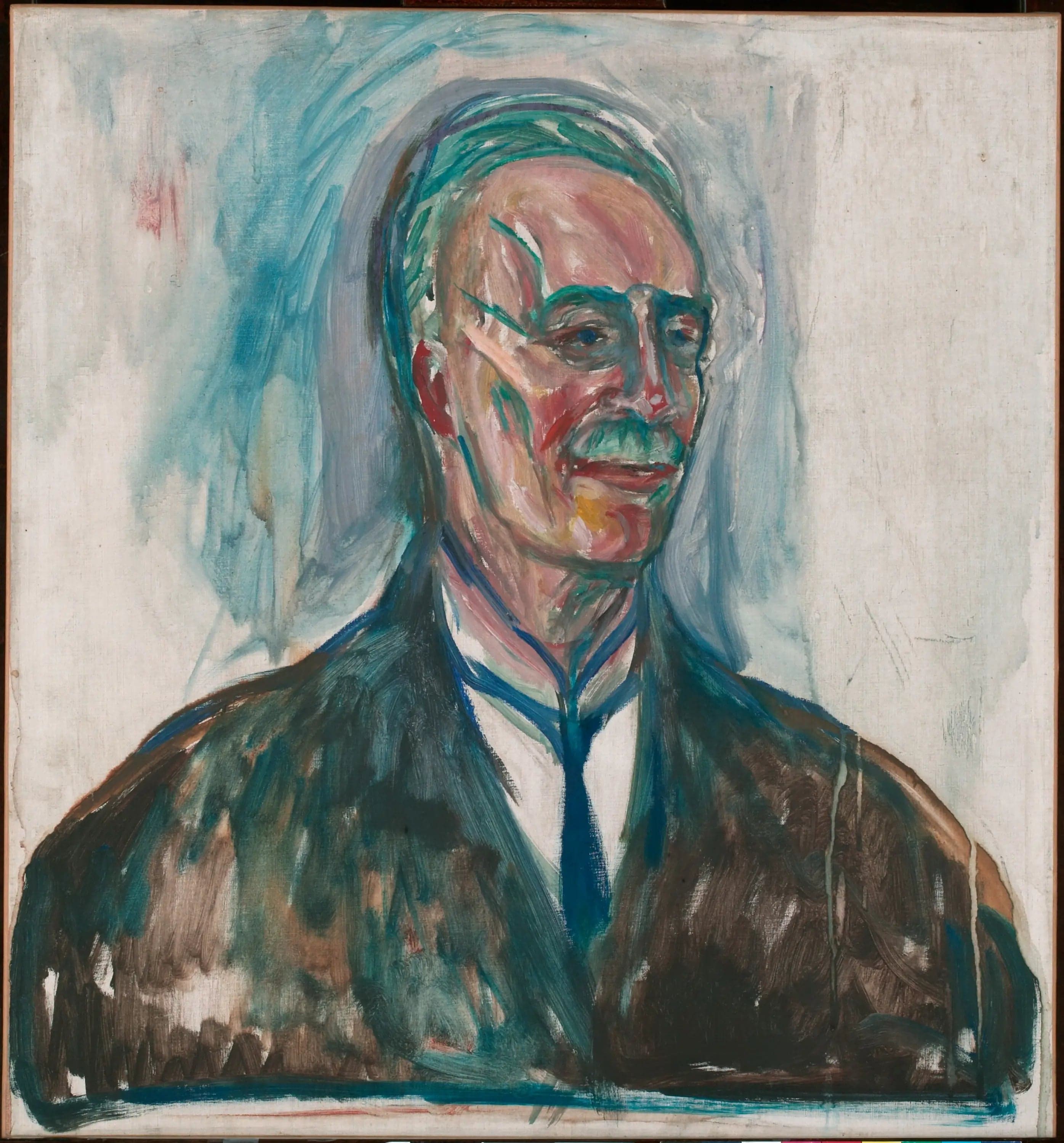
Frimann Koren
- Original dimensions
- 60 x 64.5 cm
- Museum
- Munch Museum
- Year
- 1927
Scene depicted
This painting immerses the viewer in a universe imbued with melancholy and delicacy. Frimann Koren, the central character, stands out through his contemplation and introspection. The shades and lights play on the protagonist's facial features, evoking both anxiety and the quest for meaning, symbolizing the conflict between the soul and the surrounding world. Through this pictorial work , Munch captures a moment of vulnerability, transfigured by often unnamed emotions.
Historical context
Created in 1927, the painting depicting Frimann Koren comes to life during a rich period in the Norwegian capital, Oslo. This iconic work belongs to the symbolism movement, an artistic movement that flourished at the end of the 19th century. At that time, Munch was engaged in a personal quest to explore human emotions and states of mind. Currently exhibited at the Munch Museum, this canvas is a true dive into the tormented soul of the artist, unfolding on a canvas of 60 x 64.5 cm.
Place in the artist's career
Frimann Koren is situated at the crossroads of a career in full evolution for Edvard Munch . While exploring the boundaries of painting, this painting testifies to a growing mastery. Alongside other masterpieces such as The Dance of Life and The Scream, Frimann Koren reveals an emotional richness and stylistic complexity that anchor it in a period of artistic maturity.
Anecdote
“The painting is for me a cry of the soul,” said Munch. The inspiration for Frimann Koren emerged during a morning walk through the vibrant streets of Oslo. He recalled the sweetness of a Nordic spring, a frozen moment where silence resonated with the troubling beauty of existence. This canvas then becomes the expression of a deep emotion, both personal and universal.