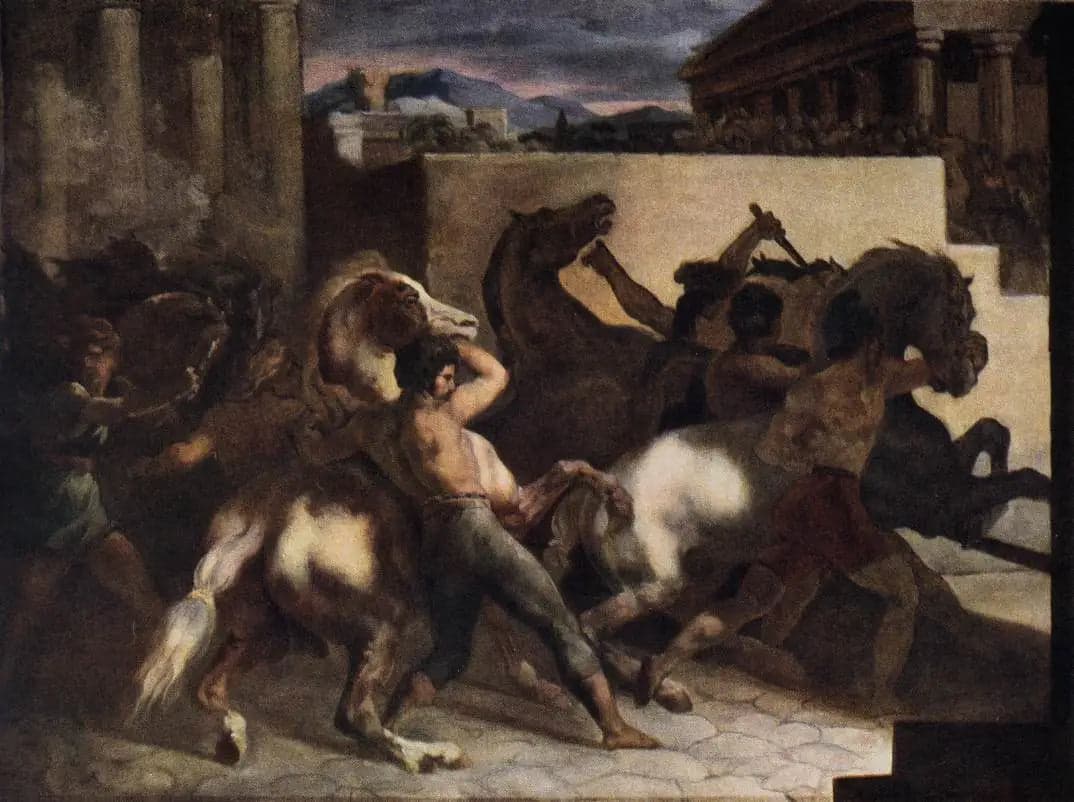
Free Horse Race: The Mossa
- Original dimensions
- 60 x 45 cm
- Museum
- room 941
- Year
- 1817
Scene depicted
This masterpiece illustrates the wild beauty of horses in full gallop, a symbol of freedom and vigor. The dynamic, dazzling composition highlights the movement of the horses, their manes flowing in the wind, representing a moment where nature is rendered in all its splendor. Through Géricault's eyes, each animal becomes a visceral expression of the raw force of existence.
Historical context
Created in 1817, the iconic painting by Théodore Géricault , “ Free Horse Racing : La Mossa”, is at the heart of the French romantic movement. This painting, displayed in the museum located in the City of Light, immerses us in a time when art is reformulated through the lens of human emotions. In room 941, this painting amazes us with its intimate dimensions of 60 x 45 cm, creating an unparalleled closeness to the work.
Place in the artist's career
“ Free Horse Racing : La Mossa” stands at a crossroads in Géricault's career, a stylistic peak where his mastery of painting reaches an enlightening maturity. In comparison, “ The Raft of the Medusa ” and “Studies of Horses” reveal a profound technical evolution, marked by sensitivity to human emotions and a spirit of rebellion.
Anecdote
“Beauty lies in the desolation of horses in their freedom,” Géricault might have said, as he observed the equines galloping in the meadows of Scotland on a cool spring morning. This fleeting moment, where nature and art meet, perfectly illustrates the soul of his painting , infused with passion and vital energy.