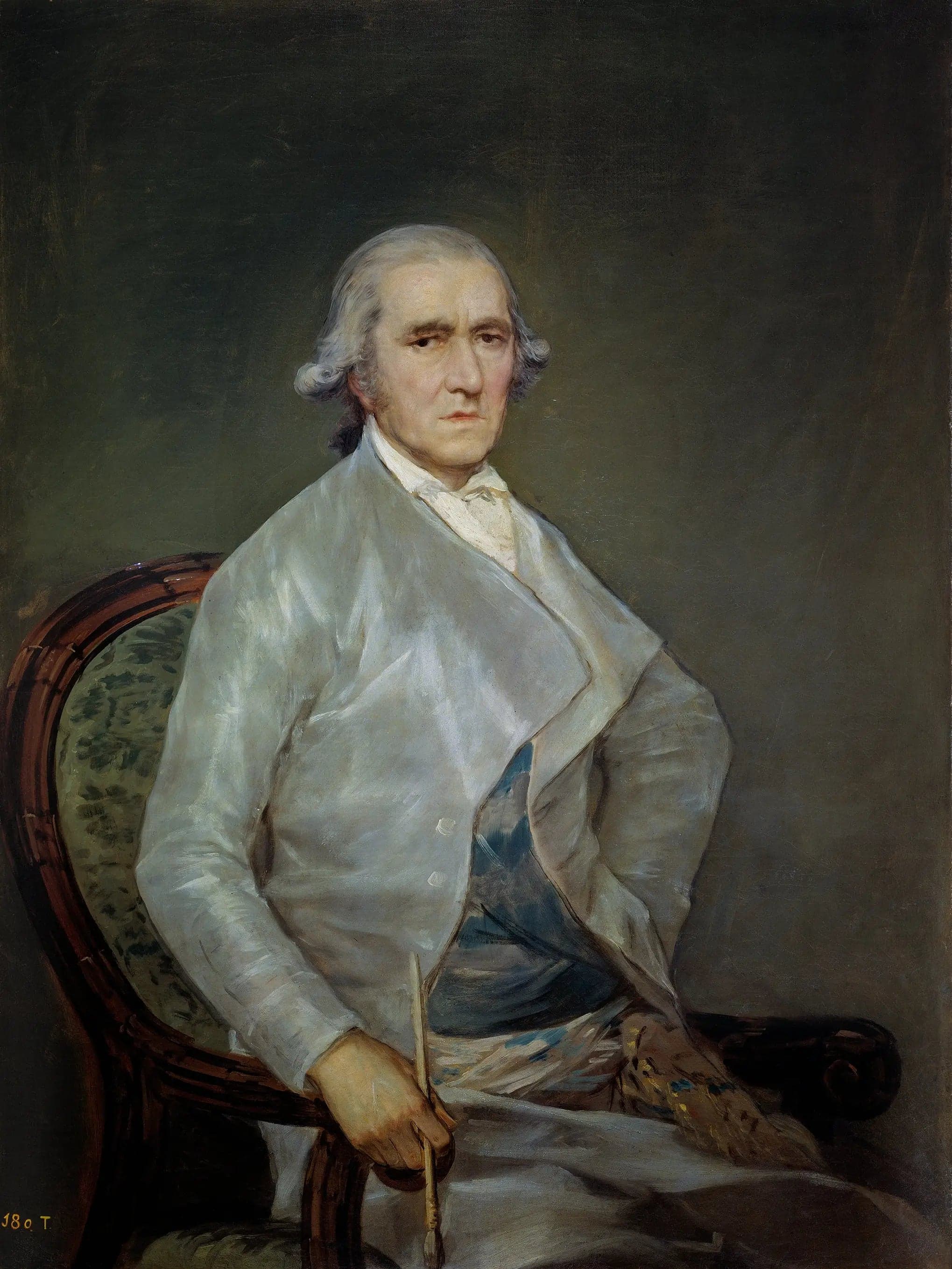
Francisco Bayeu
- Original dimensions
- 84 x 112 cm
- Museum
- Prado Museum
- Year
- 1795
Scene depicted
In this canvas , Francisco Bayeu is immortalized in an atmosphere of sweetness and serenity. The viewer's gaze is drawn to the meticulously painted details, revealing a facet of cultural and social life at court. This pictorial work elegantly showcases the charisma of its subject while integrating symbolic elements that question the nature of power and reputation.
Historical context
Created in 1795, this painting resides in the iconic setting of the Prado Museum in Madrid, a true sanctuary for Spanish art. A member of the Rococo painting movement, this canvas reflects the richness of an era where art merges with daily life, illustrating the customs and manners of the Spanish nobility. The influence of Francisco de Goya , both in his innovative approach and his critical view of society, makes this work an essential piece in the history of art.
Place in the artist's career
The painting Francisco Bayeu marks a significant milestone in Goya's career, a turning point towards artistic maturity. After "El sueño de la razón produce monstruos" and before "The Executions of May 3rd", this work demonstrates an evolution in his style: greater psychological depth and a pronounced interest in portraits. The dialogue between these canvases reveals an artist in full development, breaking free from traditional forms to explore bolder narratives.
Anecdote
“Art must be the reflection of truth, even if it displeases.” This thought, expressed by Goya himself, likely emerged from a winter morning in Madrid, where he observed the interactions of the people. It is in this context that the idea of the painting representing Francisco Bayeu materialized, offering a striking and personal vision of life and human relationships of his time.