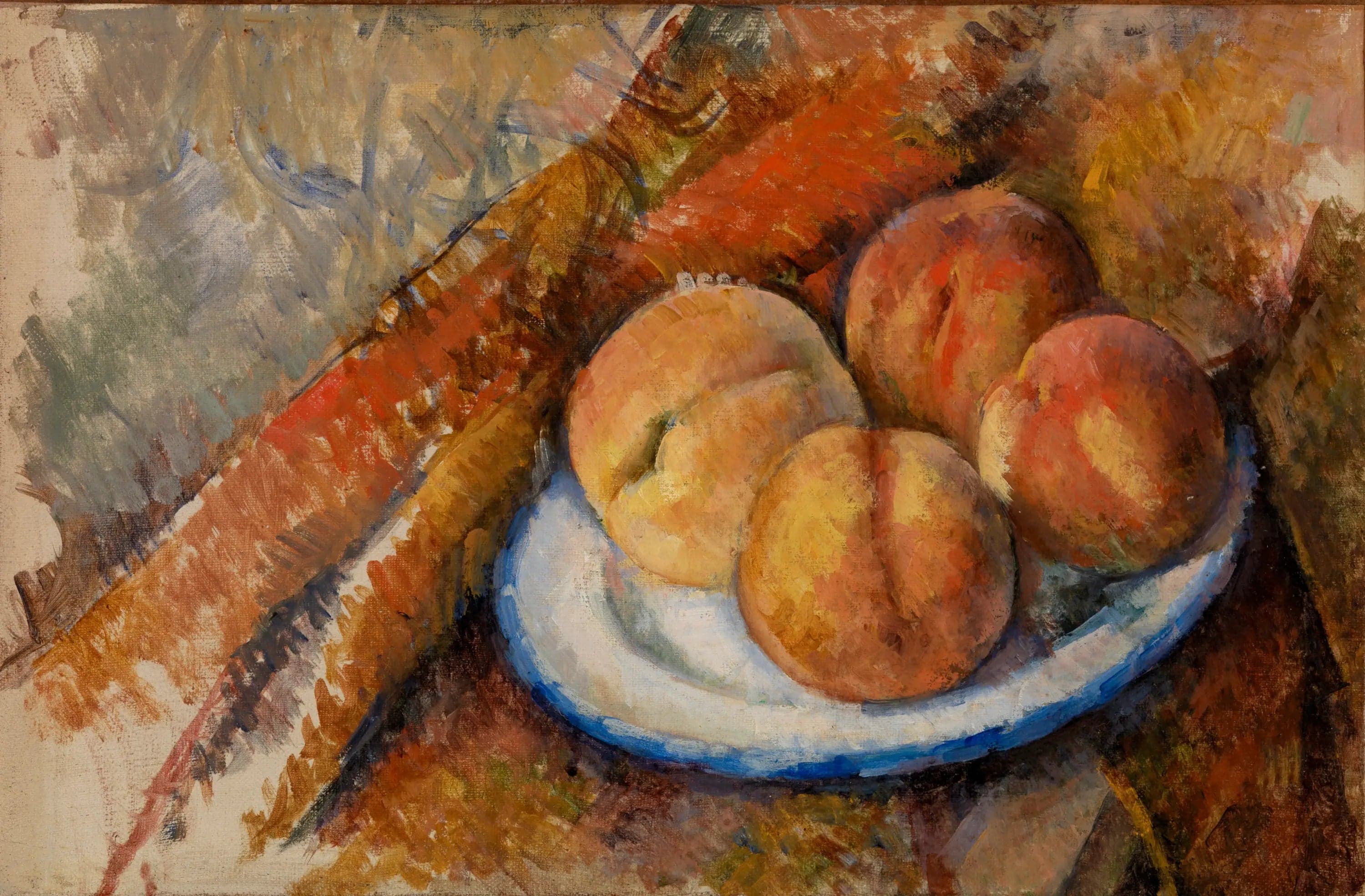
Four peaches on a plate
- Original dimensions
- 38.1 x 25.4 cm
- Museum
- Barnes Foundation
- Year
- 1892
Scene depicted
This painting , simple in appearance, presents four peaches beautifully placed on a plate, a visual testimony to Cézanne's extraordinary ability to transform banality into a fascinating composition . The materials meet, and a dialogue is established between the painted object and the viewer, making the life of the fruits palpable.
Historical context
Created in 1892, this painting is emblematic and was born in Aix-en-Provence. Paul Cézanne , a pillar of post-impressionism , is part of a revolutionary artistic movement by reinterpreting nature through a rich and deep palette. The canvas now rests at the Barnes Foundation , offering visitors a dive into the timelessness of his painting . Its generous dimensions invite contemplation.
Place in the artist's career
“Four Peaches on a Plate” is situated at a crucial turning point in Cézanne's career. In the midst of developing his unique style, this painting evokes the influences of his earlier works, such as “The Mont Sainte-Victoire” and “The Card Players,” while foreshadowing the emotional intensity and formal innovations of his later works.
Anecdote
“Nature is my best friend, and each fruit must sing like a note in a symphony,” Cézanne might have said one spring morning while painting this work . Inspired by the curves of the peaches on their plate, he captured the moment when light plays on the surfaces, making the colors vibrate and moving the soul.