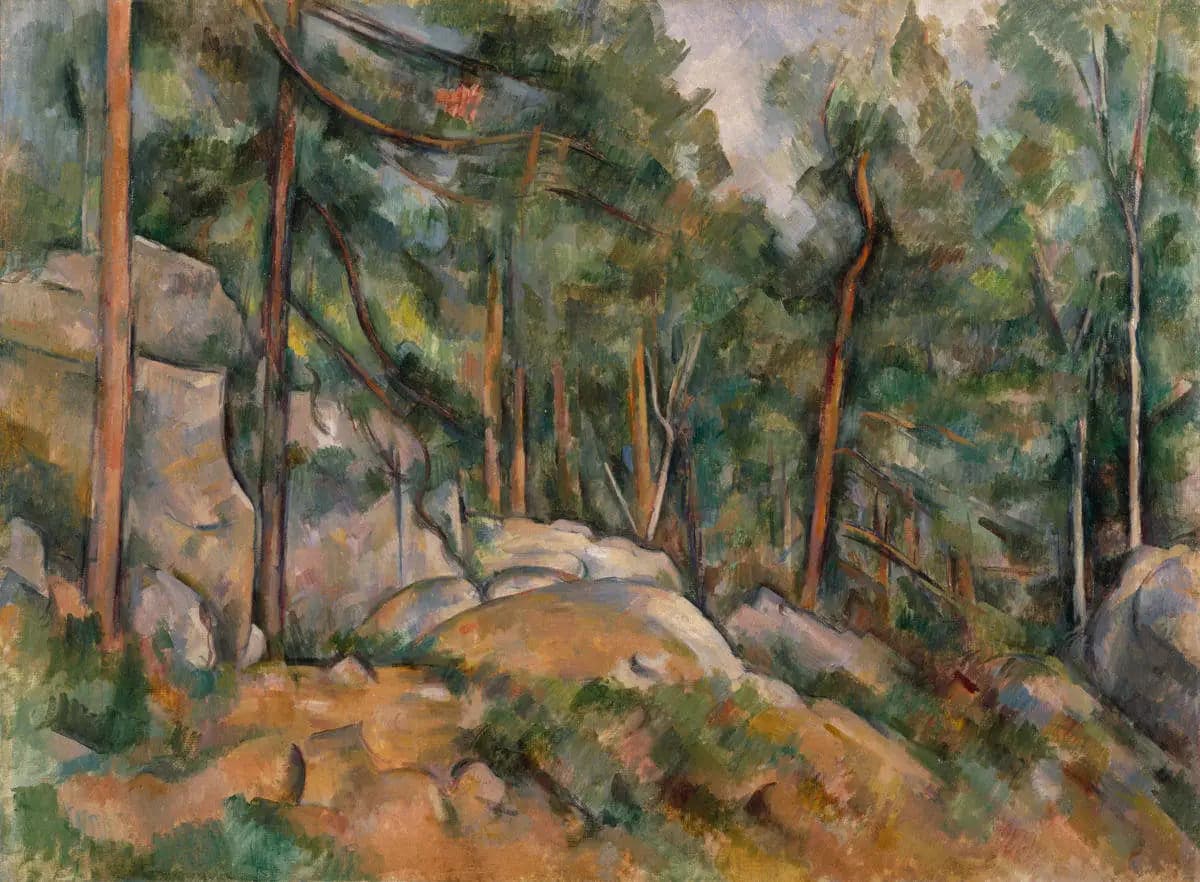
Forest Interior
- Original dimensions
- 81.3 x 61 cm
- Museum
- Princeton University Art Museum
- Year
- 1899
Scene depicted
In Forest Interior , the gaze is as if captivated by the density of the majestic trees. The composition invites exploration of a hidden world, where every blade of grass and every leaf seems to vibrate to the rhythm of the gentle wind, bringing a sense of serenity and intimacy. This painting illustrates a tranquility that awakens the senses, while providing a momentum towards a vibrant nature.
Historical context
Created in 1899 in the peaceful region of Aix-en-Provence, the painting titled Forest Interior represents a major milestone in the development of Impressionist movements. It is at the heart of this artistic movement, rich in colors and emotions, that this canvas was born. It currently resides at the Princeton University Art Museum , testifying to the French cultural heritage, while captivating visitors with its imposing dimensions of 81.3 x 61 cm.
Place in the artist's career
Forest Interior stands as a turning point in Cézanne's career, reflecting an expansion of his artistic vision. This dotted line juxtaposes with works such as La Montagne Sainte-Victoire and Les Grandes Baigneuses , highlighting his quest to capture the light and structure that underlie natural reality. The delicacy of this painting foreshadows its lasting influence on modern art.
Anecdote
Paul Cézanne once stated: “Nature is what I do.” It is in this reflection of commitment that Forest Interior was born, inspired by a morning walk in the heart of the Provençal forests, where light filtered through the leaves, evoking an almost mystical atmosphere. This painting thus becomes the receptacle of his emotions and his deep connection with nature.