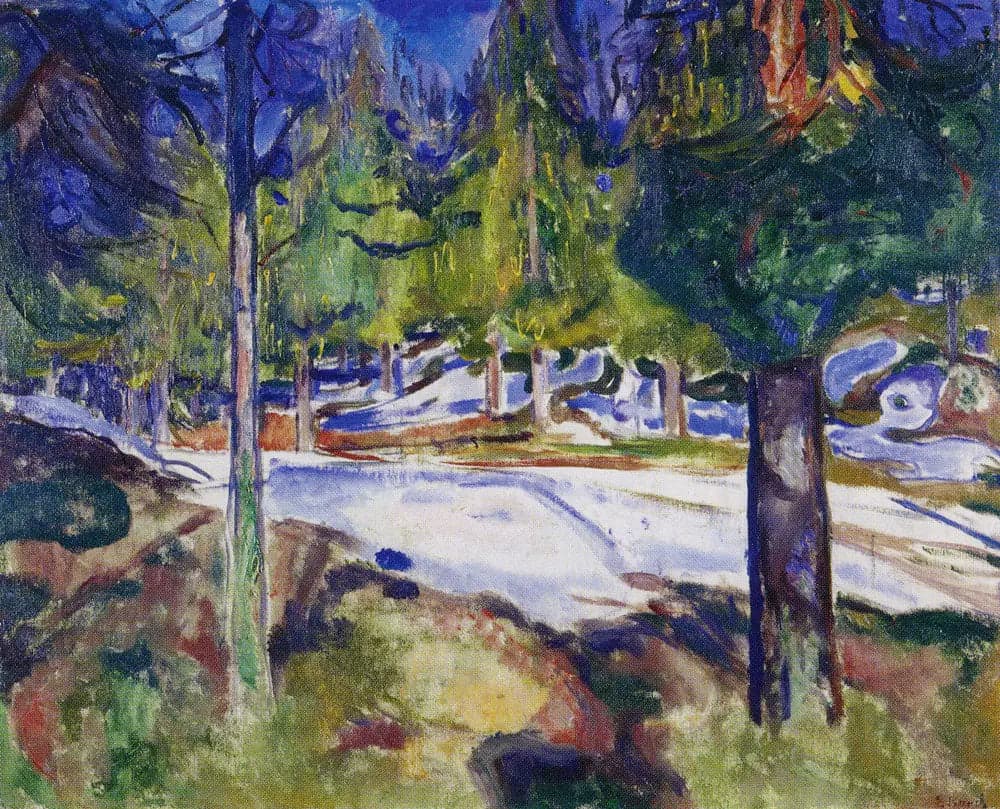
Forest
- Original dimensions
- 94 x 59 cm
- Museum
- Bergen Art Museum
- Year
- 1892
Scene depicted
The scene of "Forest" lives at the intersection of the inner and outer worlds, where nature becomes a mirror of human feelings. In this pictorial work, the massive trees seem to whisper forgotten secrets. Light plays through the foliage, creating an almost mystical atmosphere, dissipating the shadow to unveil the beauty of the existentialism dear to Munch.
Historical context
Created in 1892, the painting "Forest" by Edvard Munch is set against a tumultuous artistic backdrop, during the height of symbolism . This iconic canvas is currently housed in the Bergen Art Museum in Norway. It reflects Munch's era, where he explores the meanders of the soul and emotion, using his art to transcend the realities of everyday life.
Place in the artist's career
"Forest" proves to be a pivotal moment in Edvard Munch's career. It reflects a growing artistic maturity, alongside works like "The Scream" and "The Madonna," where he excels in an intense emotional exploration. Munch, through this canvas , codifies pain and beauty, resonating his artistic legacy through the ages.
Anecdote
Edvard Munch once stated: "The painting is an echo of the soul." This quote resonates deeply in the genesis of his masterpiece . Imagine him, one spring morning, in a softly lit forest, inspired by the ephemeral beauty of nature. It is here that each brushstroke becomes an extension of his own being, revealing the emotions that lie beneath the surface.
Major exhibitions
Kan hende er det vakkert. Kunstsamleren Rolf Stenersen