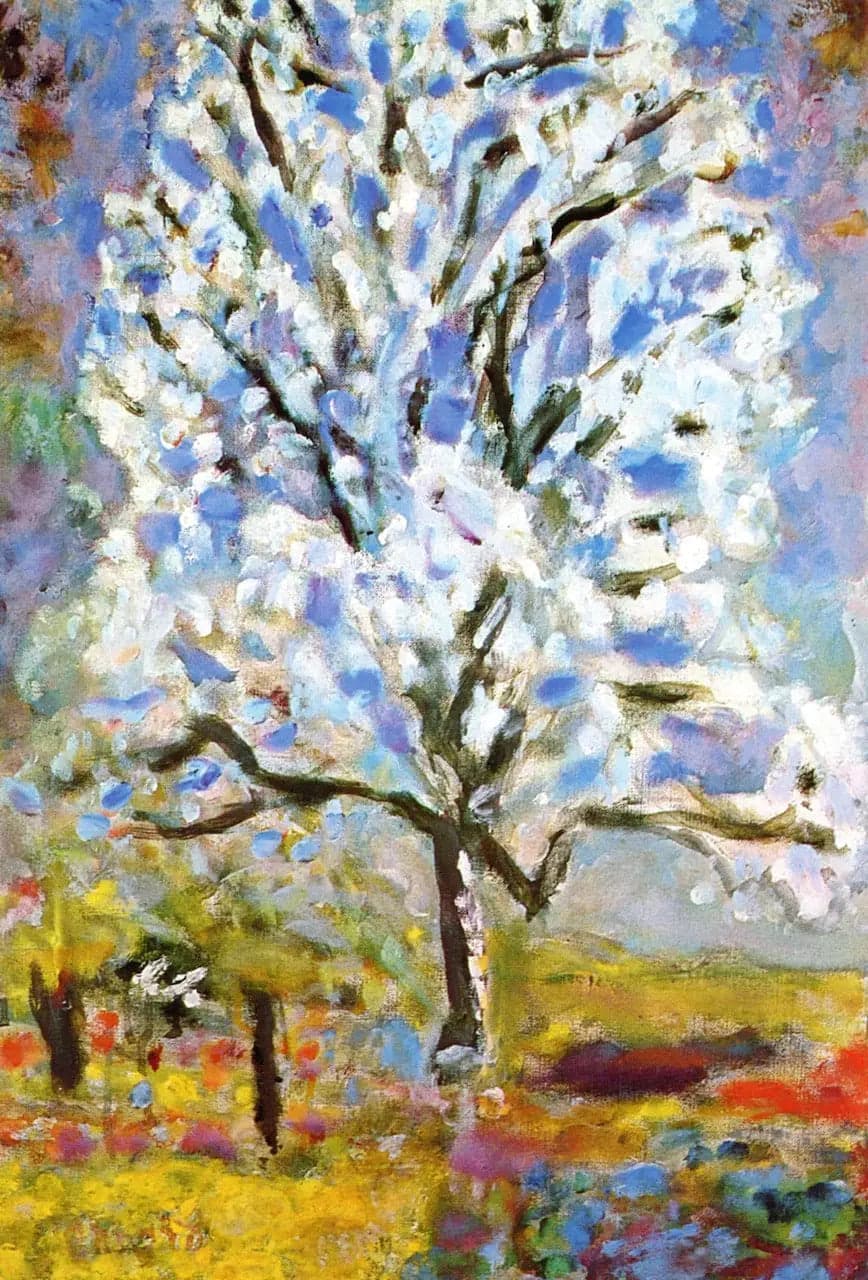
Flowers
- Original dimensions
- 38 x 67 cm
- Museum
- National Museum of Western Art
- Year
- 1933
Scene depicted
In this pictorial composition, we discover a tangle of radiant flowers that seem to dance under the caress of the wind. Each petal becomes an actor in this vibrant scene, bringing a unique dynamic to the whole. The painting invites a silent contemplation, where warm hues and organic shapes blend to create an atmosphere of tranquility and joy.
Historical context
Created in 1933, at the heart of the Parisian artistic effervescence, this painting is a reflection of a post-impressionist movement reinvented by Pierre Bonnard . This painting, currently preserved at the National Museum of Western Art , unfolds on a canvas vibrant with lights and colors that celebrate the joy of living and the beauty of nature.
Place in the artist's career
Flowers occupies a significant place in Bonnard's career, marking a turning point towards artistic maturity. At this time, the artist gradually abandons his impressionist influences to evolve towards a more personal expression. Comparable to masterpieces such as The Terrace at Vernon or The Large Nude , this canvas reveals a deepening of his visual and emotional language.
Anecdote
“I paint flowers before I see them wither, for they are a symbol of the ephemeral,” Bonnard might have said as he observed, amazed, the bright colors of the blooms that illuminated his studio. One spring morning, cradled by a soft light, the artist finds inspiration in a vibrant bouquet, a scene that nourishes the evocative power of Flowers .