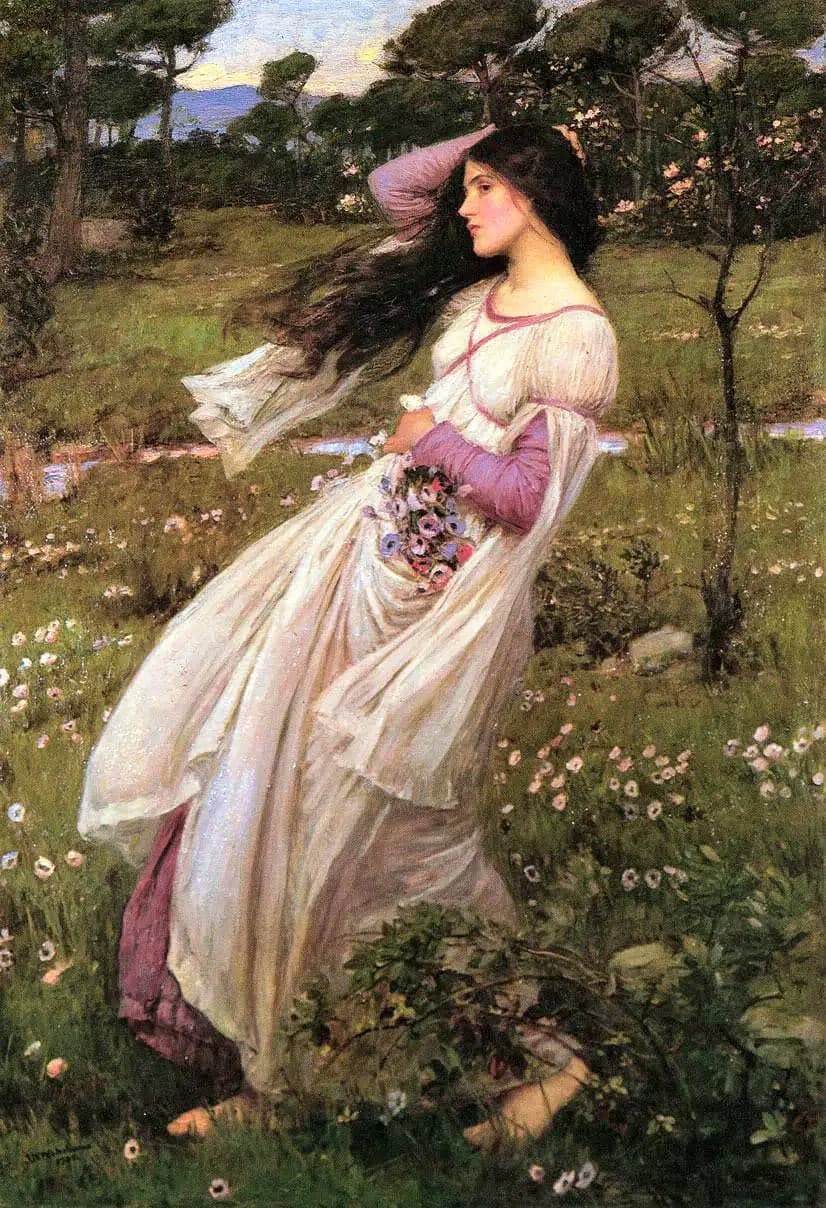
Flowers of the Winds
Scene depicted
The painting depicts an enchanting scene: a bouquet of flowers in a light breeze, making the delicate petals dance on a vibrant canvas. The atmosphere is imbued with sweetness, while the diffused light creates a communion between floral beauty and fresh breath, evoking the fragility and ephemerality of life.
Historical context
Created in 1900, the iconic Flowers of the Winds by John William Waterhouse is part of the Pre-Raphaelite movement. It was in London, the vibrant heart of British art at the end of the 19th century, that this pictorial work came to life. Currently, the painting is displayed in a private collection, hiding its charm under a veil of mystery. Its remarkable dimensions of 90 x 120 cm transcend the traditional frame, inviting immersive contemplation.
Place in the artist's career
Flowers of the Winds represents the pinnacle of a rich and varied career. It stands out at the heart of a period of maturity, alongside other masterpieces like The Nymph and the Poet and Ulysses and the Sirens , exploring themes of light and nature. The vibrant light, immersion in the subject, and fluid composition weave a common thread between these paintings, testifying to Waterhouse's artistic evolution.
Anecdote
Legend has it that, during a stroll in the botanical garden, Waterhouse whispered: "The ephemeral beauty of flowers inspires me with endless stories." This fleeting moment ignites the essence of Flowers of the Winds , merging inspiration and artistic sensitivity, a true ode to nature.