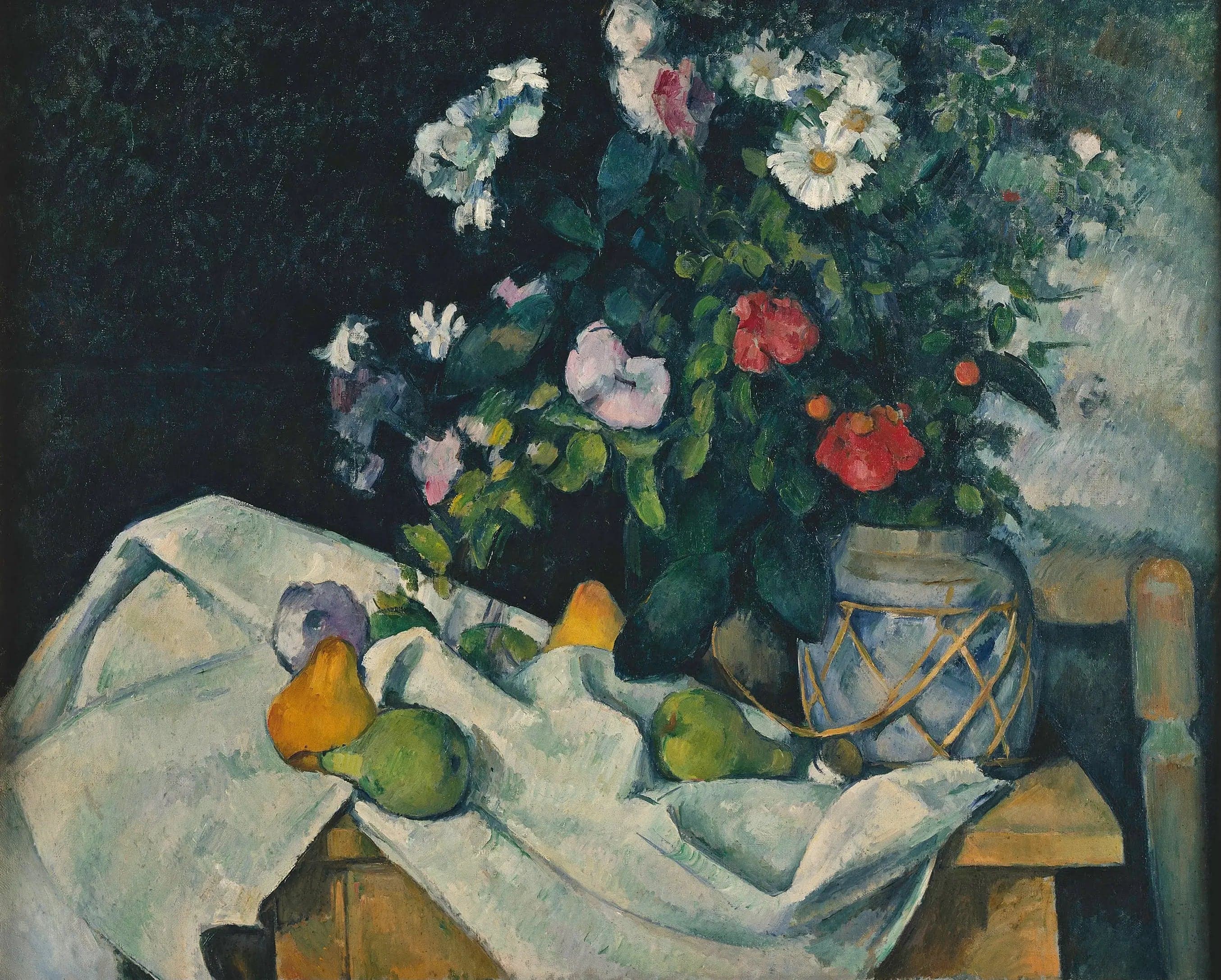
Flowers in a Ginger Jar and Fruits
- Original dimensions
- 82 x 65.5 cm
- Museum
- Alte Nationalgalerie
- Year
- 1888
Scene depicted
This painting reveals an intimate composition highlighting a ginger pot vibrant with colors, surrounded by bright flowers and juicy fruits. The shades chosen by Cézanne create an atmosphere that is both warm and welcoming, transcending the simple frame of still life to touch the viewer in an emotional and sensory way. The harmonious floral combinations and the carefully arranged objects testify to the artist's keen eye for detail.
Historical context
Created in 1888, this canvas is emblematic and was conceived in the beautiful city of Berlin, a cultural epicenter of the time. Paul Cézanne , a key figure of post-impressionism , managed to capture the ephemeral essence of nature through his distinctive stroke. "Flowers in a Ginger Pot and Fruits" is a work that manifests the transition to a bold artistic modernity, carefully preserved at the Alte Nationalgalerie . Its imposing dimensions, 82 x 65.5 cm, give it a strong and evocative presence.
Place in the artist's career
"Flowers in a Ginger Pot and Fruits" represents a period of maturity in Cézanne's career, marked by an increased mastery of color and form. In parallel with works such as "The Large Bathers" and "The Montagne Sainte-Victoire," this painting illustrates his relentless quest for truth and harmony through his compositions, revealing the natural elegance that forges his lasting legacy.
Anecdote
“I wish to paint nature as it is,” said Cézanne, inspired by urban landscapes and the softness of Provençal atmospheres. Imagine a spring morning, the scent of fresh flowers in the air, as he sketches this painting . This moment of serenity infused a vital force into this pictorial work , where each brushstroke inevitably resonates with emotions.