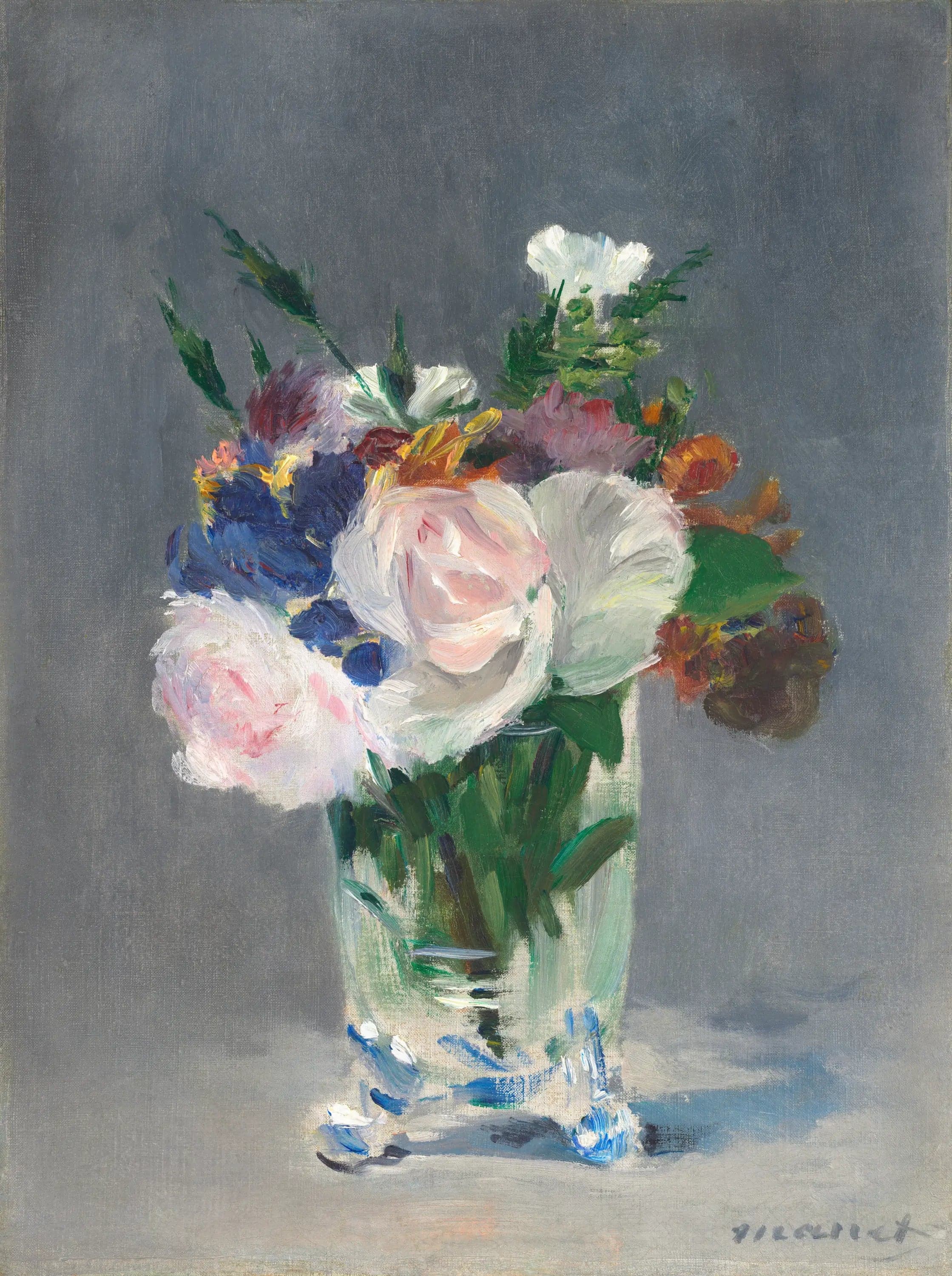
Flowers in a Crystal Vase
- Original dimensions
- 24.5 x 32.7 cm
- Museum
- National Gallery of Art
- Year
- 1882
Scene depicted
In this pictorial work , the delicacy of the flowers flourishes in a crystal vase, a symbol of fragile yet timeless beauty. The painting captures a subtle harmony between still life and living nature, allowing the viewer to feel the fragrance of the flowers and the clarity of the surrounding space. Each color, each texture resonates as a tribute to the magnificence of the everyday, elevated by art.
Historical context
Created in 1882, this painting is emblematic of the Impressionist movement, at a time when Paris, the city of light, became the nerve center of artistic innovation. Édouard Manet , a leading figure of this movement, created this canvas in a cultural and social context of great upheaval, where art transcends barriers. The painting is currently on display at the National Gallery of Art , a sanctuary dedicated to beauty and creativity.
Place in the artist's career
This painting , a centerpiece of his career, marks a turning point towards a bolder style. It stands alongside other landmark achievements such as “Luncheon on the Grass” or “Olympia,” illustrating his evolution from criticism to acceptance in the art world. The painting testifies to a growing stylistic maturity, reinforcing Manet's place among the great masters.
Anecdote
“Nature, with its brilliance and freshness, always inspires me. Each brushstroke is a moment of life frozen for eternity.” One sunny morning in spring 1882, as the flowers bloom, Manet draws his inspiration from the ephemeral beauty surrounding him. This moment of serenity is reflected in the evocative power of the painting , where each flower stands as a tribute to nature.