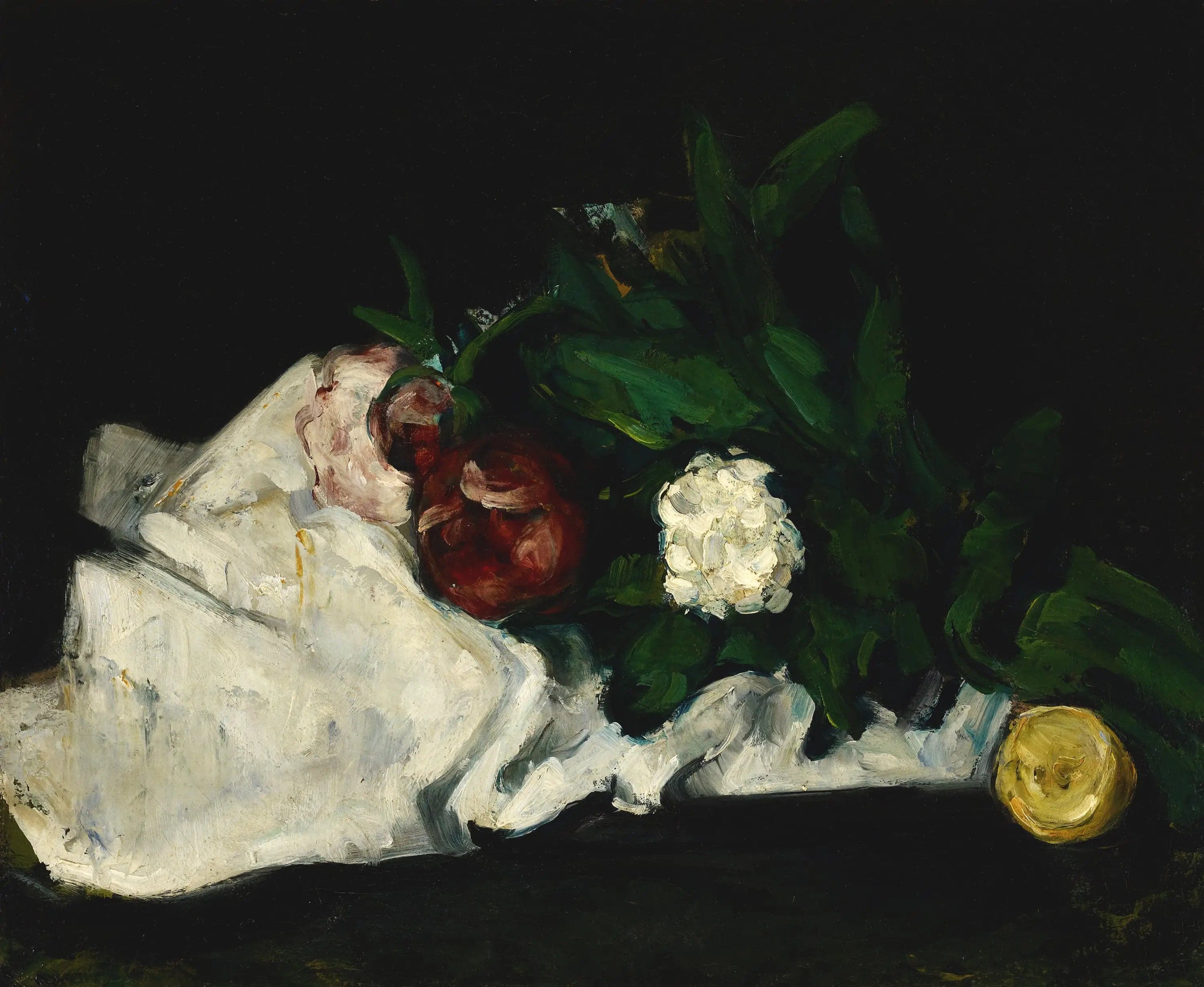
Flowers and Fruits
- Original dimensions
- 46 x 38 cm
- Museum
- Emil G. Bührle Foundation and Collection
- Year
- 1872
Scene depicted
This pictorial work presents a rich composition where vibrant flowers and juicy fruits harmoniously intertwine. Through this painting , Cézanne immortalizes the ephemeral beauty of nature, thus celebrating the abundance and diversity that surrounds it. Each everyday object, delicately arranged, becomes a reflection of a vibrant reality, touching the heart of the viewer.
Historical context
Created in 1872, this canvas emblematic is set in the bucolic setting of Aix-en-Provence, France. At that time, Paul Cézanne , a key figure of Post- Impressionism , explores the interactions between shapes, colors, and volumes. The painting , now preserved at the Emil G. Bührle Foundation, bears witness to a time when art begins to emancipate itself from conventions to embrace a personal and unique vision.
Place in the artist's career
This painting is revealing of a turning point in Cézanne's career, where he stands out with a unique signature. Following the example of paintings such as "The Card Players" and "Mont Sainte-Victoire," this period is marked by a constant search for form and volumes. Flowers and Fruits stands out for its brightness, becoming an essential element of his artistic journey.
Anecdote
In his words, Cézanne confided: "I want to make nature a masterpiece." It was at the turn of a sunny alley, one spring morning, that he found inspiration for this vibrant painting . The brilliance of colors and the sweet fragrance of flowers create an enchanting atmosphere, where each element of the canvas whispers its love for life.