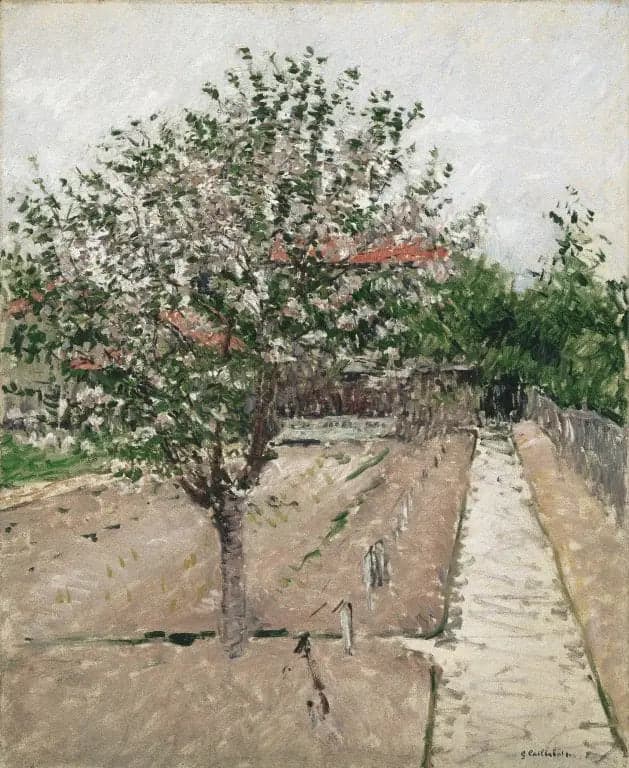
Flowering Apple Tree
- Original dimensions
- 60 x 73.3 cm
- Museum
- Brooklyn Museum
- Year
- 1885
Scene depicted
From azure blue to tender green, the composition of Apple Blossoms revolves around a majestic apple tree, overflowing with delicate flowers. This painting invites the viewer on a poetic stroll, where the branches bend under the weight of the flowers, emitting an intoxicating fragrance that seems to float in the air. The shades evoke the calm and serenity of awakened nature, a visual celebration of ephemeral beauty.
Historical context
Created in 1885, during the flourishing period of the Impressionist movement, this iconic work by Gustave Caillebotte is set in Paris, a city undergoing transformation. The painting, currently exhibited at the Brooklyn Museum , reflects a time when art and daily life began to meet vibrantly. With its generous proportions, this canvas captures the very essence of spring in a bucolic setting.
Place in the artist's career
This masterpiece fits into a period of artistic maturity for Caillebotte, who oscillated between his passion for realism and Impressionist experimentation. Alongside "The Bridge of Europe" and "Parisians in the Countryside," Apple Blossoms reveals a technical evolution marked by a bold use of light and color. Each painting tells a story, but this one particularly evokes the sweetness of life.
Anecdote
Caillebotte once said: "Nature is a sweetness that cannot be painted without feeling it." On a cool spring morning, while walking in his garden, inspired by the brilliance of the apple trees in bloom, he captured this revelation in his painting . This initial emotion resonates through every petal and every shade of his masterpiece.