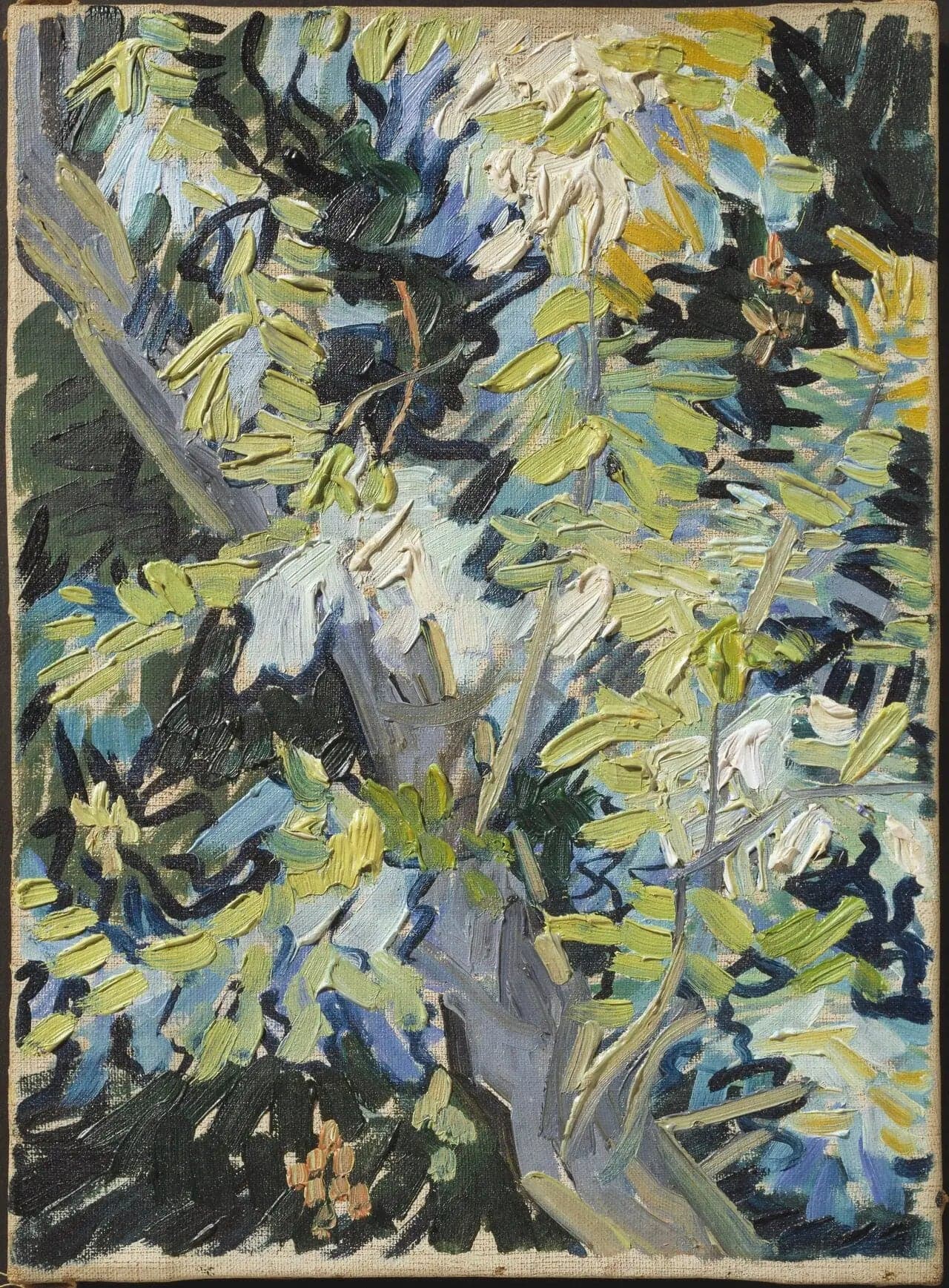
Flowering Acacia Branches
Scene depicted
In this work, the acacia branches in fleurs stand with a touching grace, embodying a moment of sweetness and ephemeral beauty. Each petal evokes a breath of life, while the delicate shades give the impression of a communion with nature. The painting opens up to a world where the beauty of the fleurs is about to explode, thus capturing the very essence of the season.
Historical context
Created in 1890, this painting was born in the heart of Auvers-sur-Oise , an iconic town of the post-impressionist era. Branches d'acacia en fleurs is part of the artistic movement that embodies the quest for light and color, typical of the later works of Vincent van Gogh . Today, the painting is preserved at the Nationalmuseum , a prestigious place in Stockholm, where its dimensions of 24 x 33 cm captivate visitors.
Place in the artist's career
Branches d'acacia en fleurs represents a pivotal phase in Van Gogh's career, oscillating between the creative frenzy of his early days and the serenity of his later works. To be related to The Starry Night for its bold use of color and The Sunflowers for its rich texture, this painting demonstrates an evolution towards a simplicity imbued with depth.
Anecdote
“Spring calls me with its vibrant colors and soft whispers,” Van Gogh might have declared one cheerful morning, as he drew inspiration from the flowering branches of the acacia. This fleeting moment, marked by the golden light of a spring day, imbues the painting with its essence, revealing the depth of a feeling of renewal.