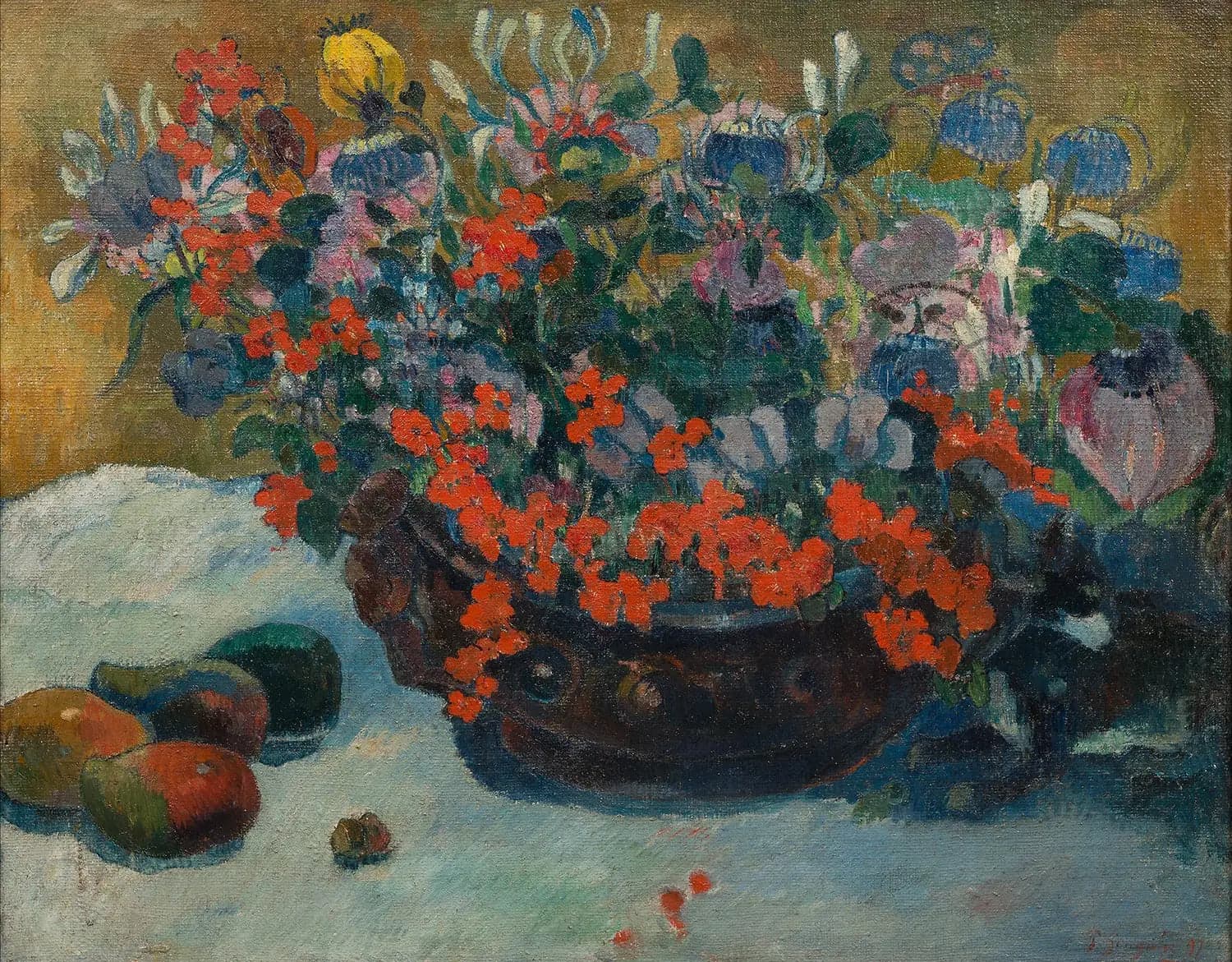
Flower Bouquet
- Original dimensions
- 93 x 73 cm
- Museum
- Marmottan Monet Museum
- Year
- 1897
Scene depicted
The vibrant composition of this canvas reveals a bouquet of lush flowers, a tribute to floral beauty that transcends time. The petals vibrate under a delicate play of light, and each color hums a sweet melody, elevating the spirit towards ideal contemplation. Gauguin was redefining the way to approach nature, offering it a symbolism of escape and infinite daydreaming.
Historical context
Created in 1897, this magnificent canvas is rooted in the vibrant environment of Pont-Aven, where Gauguin proposed a bold reinterpretation of the Impressionist currents of the time. It embodies the Post-Impressionist movement, propelling the artist towards unexplored chromatic and emotional horizons. Today, the painting rests at the Marmottan Monet Museum in Paris, where it continues to amaze visitors with its splendor.
Place in the artist's career
This painting marks a major turning point in Gauguin's career. At this time, he distanced himself from academic techniques and embraced a more intuitive and symbolist path, as evidenced by his iconic works such as Vision after the Sermon and The Joyful Fishermen . Bouquet of Flowers perfectly illustrates this evolution, marking the peak of his innovative pictorial language.
Anecdote
“Art is not a mere reflection of nature; it must be nature itself.” These words resonate as an echo of the inspirations that guided Gauguin in the creation of this masterpiece . One spring morning, while observing his garden, the artist captured the very essence of the flowers, their scents floating in the air, and transformed this vision into a palpable emotion in his painting .