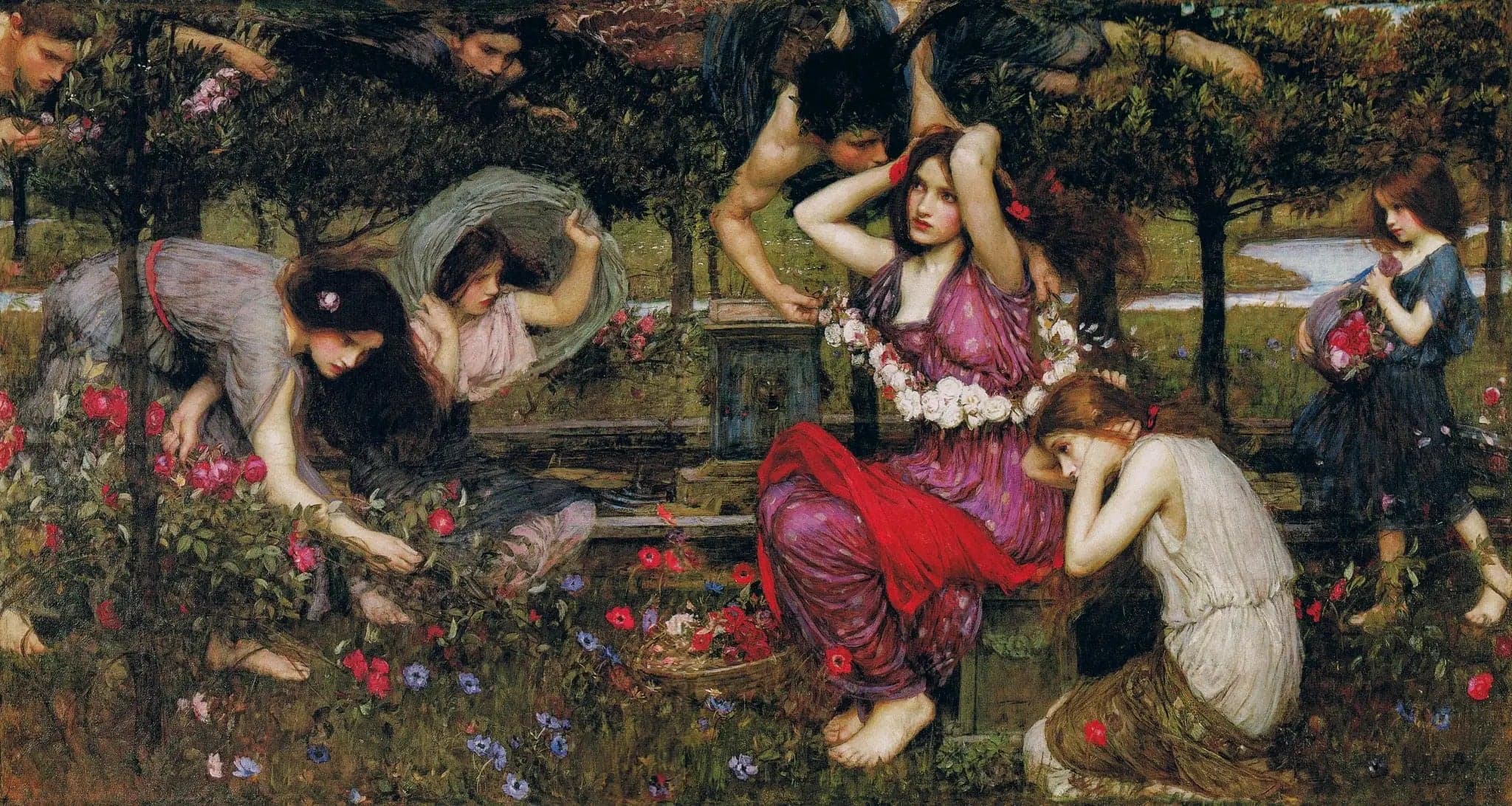
Flora and the Zephyrs
Scene depicted
This painting represents Flora, the Roman goddess of flowers and spring, surrounded by the Zephyrs, the spirits of the wind. The figures delicately intertwine in a dreamlike universe, where nature and mythology create a tableau of passion and renewal. Each glance at this canvas tells a story, a dance between life and nature, between momentum and softness.
Historical context
Created in 1898 in London, this painting is emblematic of the Pre-Raphaelite movement, famous for its rich compositions and mythological themes. The painting, currently housed at the Tate Britain , evokes a time when art traces myths and natural beauty. Measuring 60 x 120 cm, this canvas offers a window into reverie and imagination.
Place in the artist's career
The painting Flora and the Zephyrs marks a significant milestone in Waterhouse's career, where he finds himself at the peak of his artistic maturity. Compared to The Nymph and the Ferryman and Ulysses and the Sirens, this canvas reveals a notable stylistic evolution in terms of light and movement, showcasing an increasing mastery of textures and emotions.
Anecdote
“Every brushstroke is a declaration of love for the fleeting beauty of nature,” said Waterhouse. Inspired one spring morning by the sweet song of birds, he crafted this composition in an atmosphere perfumed by blooming flowers. This fleeting moment is powerfully transcribed in the painting , each detail resonating with the very essence of the legend.