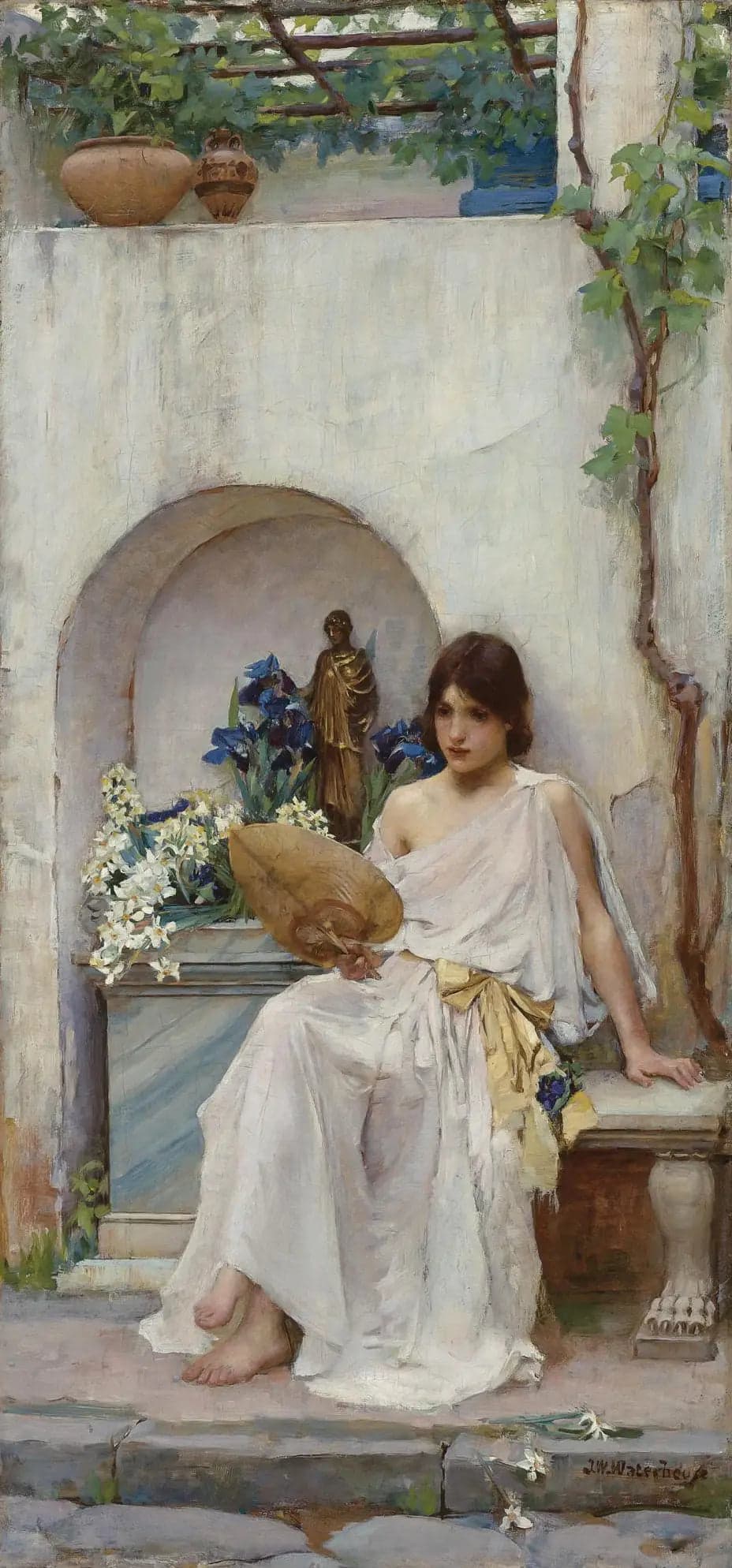
Flora
Scene depicted
The painting "Flora" testifies to a suspended moment, where the goddess, draped in delicate fabrics, expresses the renaissance and beauty that bloom in spring. The azure of her gaze and the vibrant colors are invitations to awaken, seeking the connection between the human and the divine. The composition of this pictorial work reveals a light, almost enchanting atmosphere, where every detail seems to whisper a forgotten story of nature and passion.
Historical context
Created in 1900, the painting "Flora" is the result of the talent of a master of visual arts, John William Waterhouse , an emblematic representative of the Pre-Raphaelite movement. This canvas was born in London, the nerve center of artistic and cultural England during the Edwardian era. Currently, the original work enriches the collection of the Tate Britain in London, measuring 123 x 92 cm, captivating the gaze of visitors who immerse themselves in it.
Place in the artist's career
"Flora" is situated at a turning point in Waterhouse's career, marking his bold use of color and light. At the height of his art, this canvas echoes his previous paintings such as "The Lady of Shalott" and "Nymphs and Silenes," each exploring the theme of desire and feminine beauty. The common thread is undoubtedly light, which transcends mere pictorial rendering to evoke the hidden emotions within each subject.
Anecdote
"Beauty is an embrace between the spirit and nature," Waterhouse is said to have declared, evoking the very essence of his masterpiece . It was on a spring morning, as a sweet scent of flowers floated in the air, that he captured this image of Flora, the goddess of flowers, gracefully emerging at the heart of nature. This painting then becomes a visual poem, vibrant with emotions, connecting the artist to his muse.