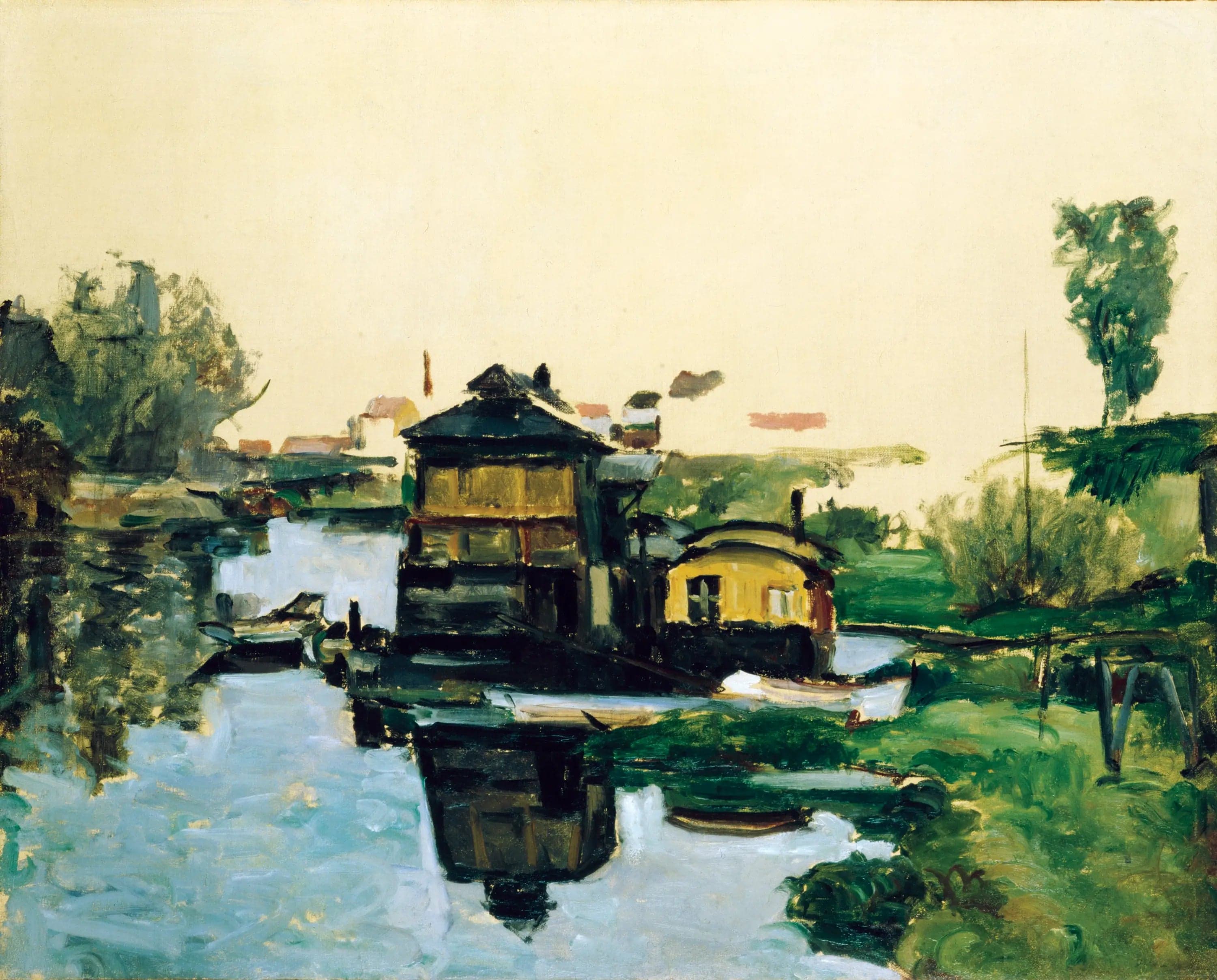
Floating Houses on a River
- Original dimensions
- 72 x 58 cm
- Museum
- Maison-Blanche
- Year
- 1875
Scene depicted
This painting evokes an idyllic scene where houses suspended in the air seem to float above the water. Far from urban hustle, this composition invites daydreaming and escape, capturing the serenity of a natural setting that almost dialogues with its architecture. The reflections in the water bring a captivating dynamic, creating an almost mystical link between nature and human heritage.
Historical context
Created in 1875, this painting is emblematic of the Impressionist movement, at a time when Paul Cézanne was undergoing artistic evolution in Aix-en-Provence, his hometown. This pictorial work reveals the beginnings of a technique that would mark the history of art, balancing between tradition and innovation. Today, this canvas is carefully preserved at the Maison-Blanche, offering admirers a window into the peaceful landscape of yesteryear.
Place in the artist's career
This canvas represents a crucial step in Cézanne's career, oscillating between his promising beginnings and his period of maturity. Alongside The Card Players and Mont Sainte-Victoire , this painting demonstrates the evolution of his style, oscillating between realism and a more abstract approach that would characterize him later.
Anecdote
“I want to make painting a full happiness,” said Cézanne when discussing his inspirations. The creation of Floating Houses on a River was born on a quiet morning, when the soothing sound of the river and the scent of spring flowers captured his gaze, an intensity that translated into vibrant strokes on the canvas.