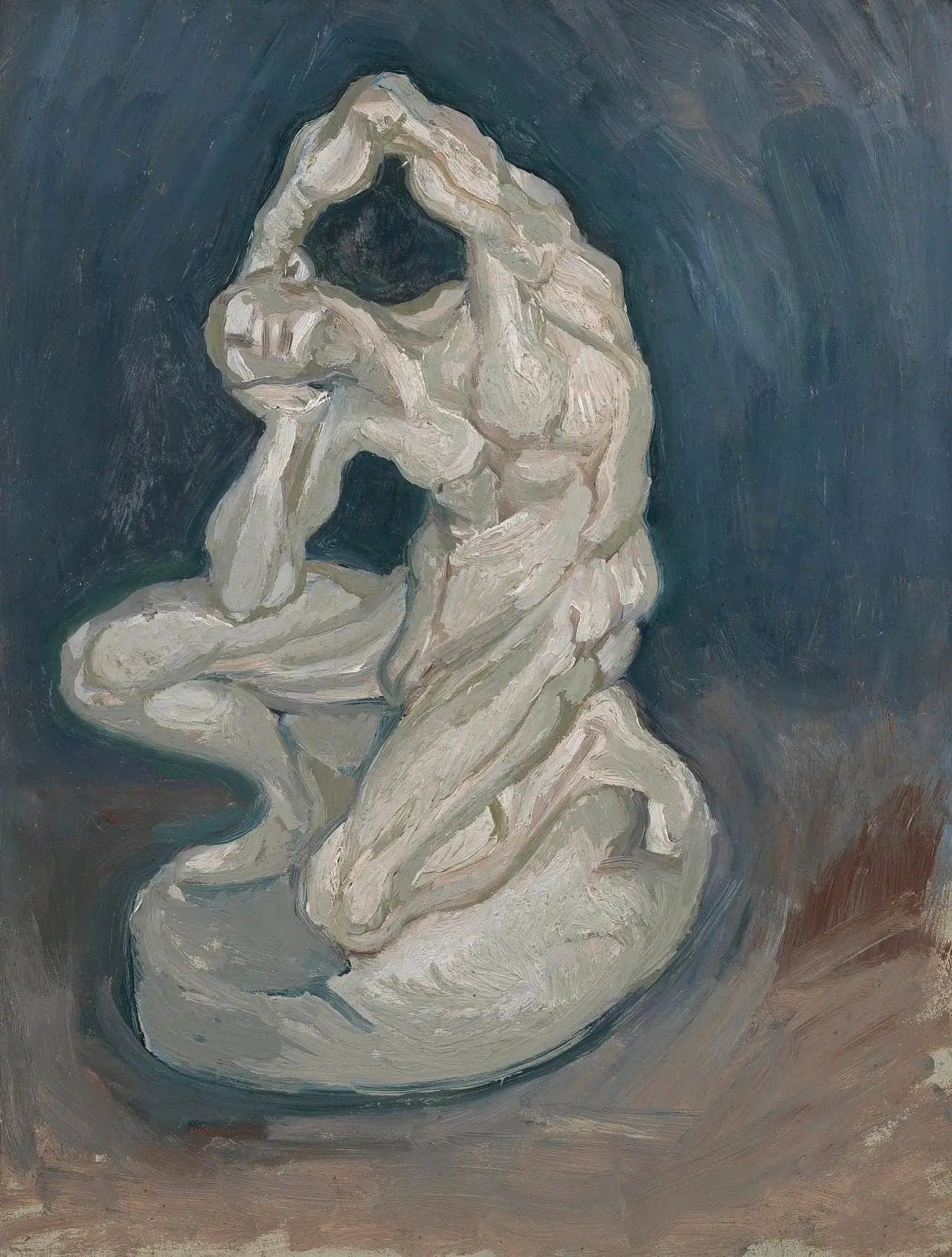
Flayed Kneeling
- Original dimensions
- 27 x 35 cm
- Museum
- Van Gogh Museum
- Year
- 1886
Scene depicted
This painting illustrates a human body in deep introspection, a flayed man transferring human pain and soul onto the canvas. Van Gogh aimed to transcribe the essence of the human condition, revealing the deep layers of flesh, as a psychological exploration. Against this vibrant color background, the viewer is invited to feel empathy in what seems to be an internal struggle.
Historical context
Artwork: Kneeling Flayed Man |BRK| Artist: Vincent van Gogh |BRK| Year: 1886 |BRK| Museum: Van Gogh Museum |BRK| Place of Creation: Paris |BRK| Dimensions: 27 x 35 cm
Place in the artist's career
Kneeling Flayed Man represents a turning point in the career of Vincent van Gogh , a work that foreshadows his bold and emotional style. In parallel with works like The Potato Eaters and Starry Night , one perceives a stylistic evolution: from raw realism to a more spiritual and exalted vision of human existence.
Anecdote
“Color is a powerful language that sensitive souls understand,” Vincent might have said, when he captured the essence of a moment, perhaps during a walk in a studio in Paris , where the smell of fresh paints and the whisper of brushes guided him towards visions of his masterpiece .