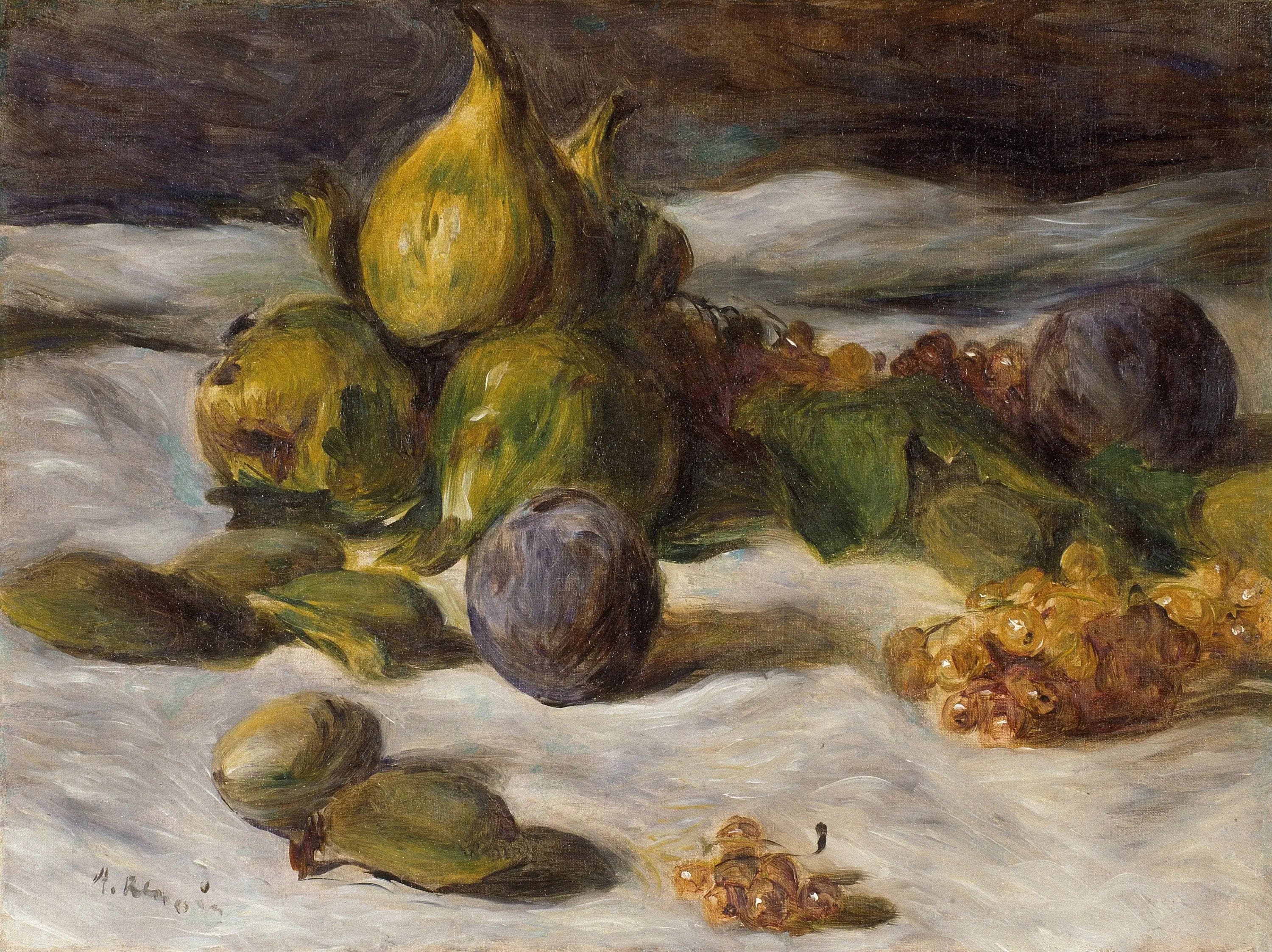
Figs and Currants - Pierre
- Original dimensions
- 33 x 25 cm
- Museum
- Kunsthalle Bremen
- Year
- 1871
Scene depicted
This painting describes a simple yet poetic moment: juicy figs and bright currants, harmoniously arranged on a table, as if inviting the viewer to linger. The composition creates a dialogue between shapes and colors, while light plays on the surfaces, bringing a warm and lively atmosphere that echoes the pleasures of domestic life.
Historical context
Created in 1871, the painting "Figs and currants" is set in a post-impressionist context that saw the emergence of artists seeking to celebrate the beauty of everyday elements. Located in Bremen, this work was created during a period marked by a renewed fascination with fruits, nature, and bright colors that evoke a season full of promises. Today, the canvas finds refuge at the Kunsthalle Bremen , where it is displayed in all its splendor.
Place in the artist's career
"Figs and currants" represents a significant milestone in the career of Auguste Renoir , marking both a promising beginning and an affirmation of his unique style. By juxtaposing it with other works such as "Luncheon of the Boating Party" and "La Grenouillère," one perceives Renoir's evolution towards a freer and more joyful expression of his art, while maintaining that delicate attention to detail that has always characterized him.
Anecdote
"Nature is the most beautiful of teachers," Renoir said while observing the fruits of his garden one spring morning. It is perhaps in this breath of morning freshness that the inspiration for this masterpiece was born. Each fig and currant captured on the canvas evokes the grace of nature, revealing a vibrant palette that expresses his wonder at ephemeral beauty.