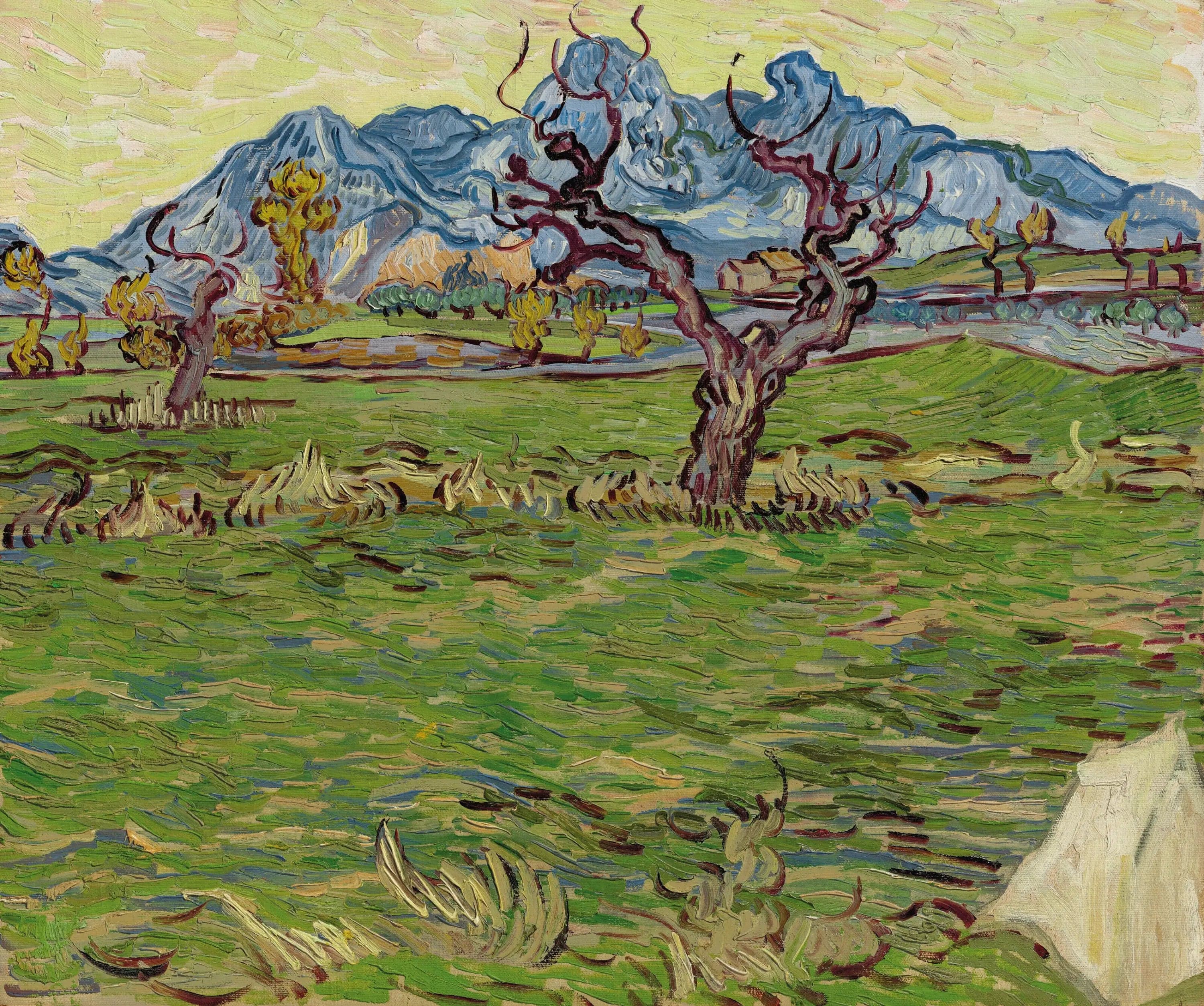
Fields near the Alpilles
Scene depicted
Fields near the Alpilles is a painting that seeks to capture the very essence of the Provençal landscapes . The composition evokes an open horizon, where the fields blend with the iconic hills of the Alpilles. The gaze is drawn to the play of light through the golden wheat in the wind, offering a sensation of deep peace, almost meditative. Each brushstroke conveys a harmony between nature and colors, paying tribute to the vibrant landscape of southern France.
Historical context
Created in 1889, the painting titled Fields near the Alpilles is set in the picturesque setting of Saint-Rémy-de-Provence , a town that has seen the birth of many masterful works by Vincent van Gogh . This canvas is emblematic of the post-impressionist movement, where the artist brilliantly expresses color and light. Although the painting is not displayed in a well-known museum, its dimensions of 55 x 45 cm make it a precious work of art to discover.
Place in the artist's career
This canvas , Fields near the Alpilles , is part of a period of artistic maturity for Vincent van Gogh , where the artist begins to assert his distinctive style. Compared to The Sunflowers and The Starry Night , one can observe a significant evolution in his approach to color and forms. This painting reveals his desire to transcend reality, creating an emotional connection between the viewer and the landscape .
Anecdote
Vincent van Gogh once stated: “Nature is something that must be deciphered, like a secret text.” This thought drove him each morning to observe the world from a unique angle. When creating Fields near the Alpilles , he wandered through the flowering fields, dazzled by the golden morning light playing in the stalks and leaves. This painting thus reflects his love for nature, marked by a vibrant tranquility.