Field Work
Scene depicted
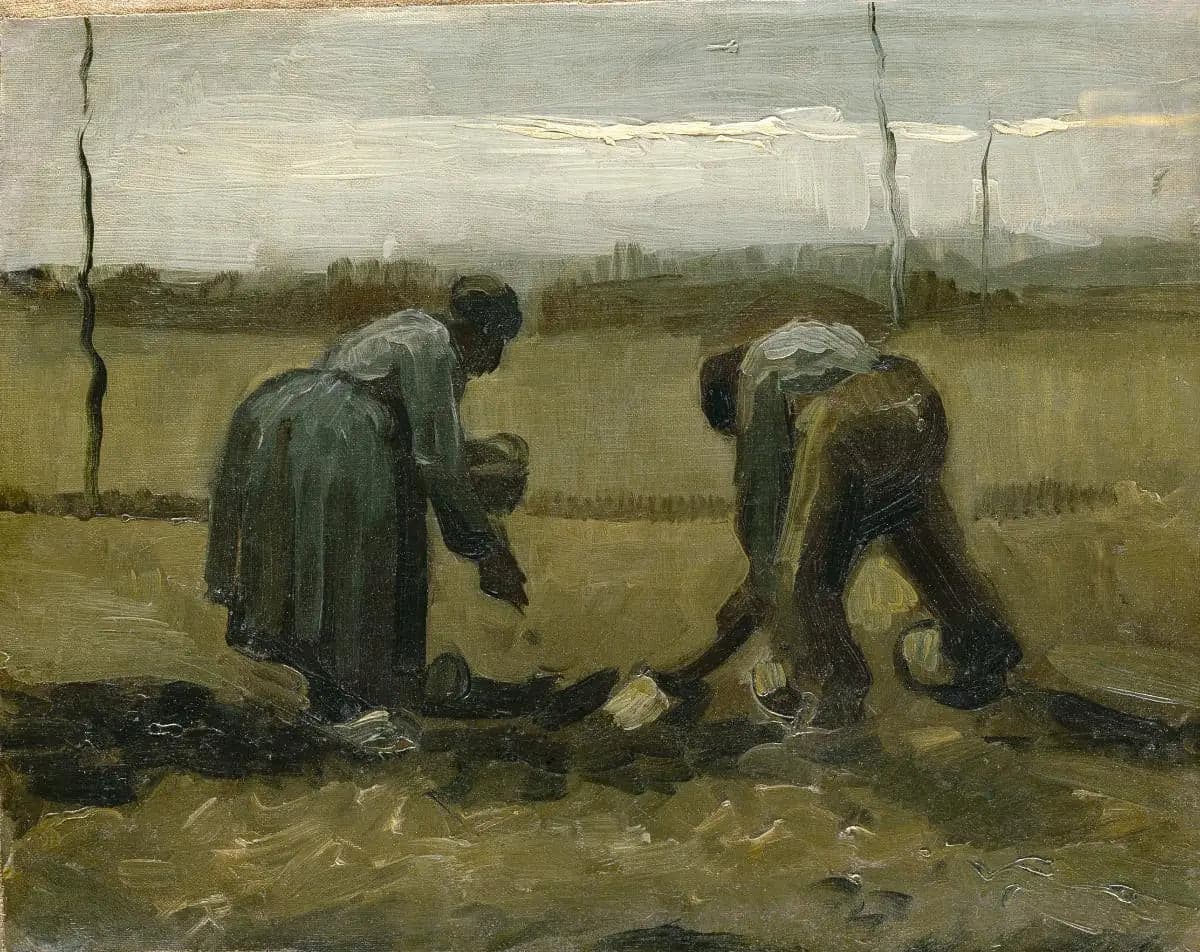
In this painting , Vincent van Gogh depicts peasants working in a wheat field, testifying to the nobility of field work. The human figures, anonymous yet symbolic, are immersed in a harmony of colors reminiscent of the earth, where each brushstroke seems to tell the story of hard labor and a deep connection with nature.
Historical context
Created in 1885, this painting emblematic was made in Nuenen , in the heart of the Netherlands, during a significant period of the pictorial work of Vincent van Gogh . Evolving within the post impressionist movement, this painting is currently preserved at the Kunsthaus in Zurich , measuring 41 x 33 cm.
Place in the artist's career
Located at the beginning of Van Gogh's career, Work in the Fields represents a key stage in his artistic evolution. Alongside other masterpieces like The Potato Eaters and The Sunflowers , it becomes evident that this painting evokes both the humanity of work and the impressionist sensitivity of the artist in full maturation.
Anecdote
In a moment of deep connection with nature, Van Gogh reportedly said: “The earth, I feel it vibrating under my feet, that is where I draw my creative energy.” Imagine him, one spring morning, scrutinizing a fertile landscape, as he realized the emotional impact of rural life, thus forging the evocative strength of Work in the Fields .