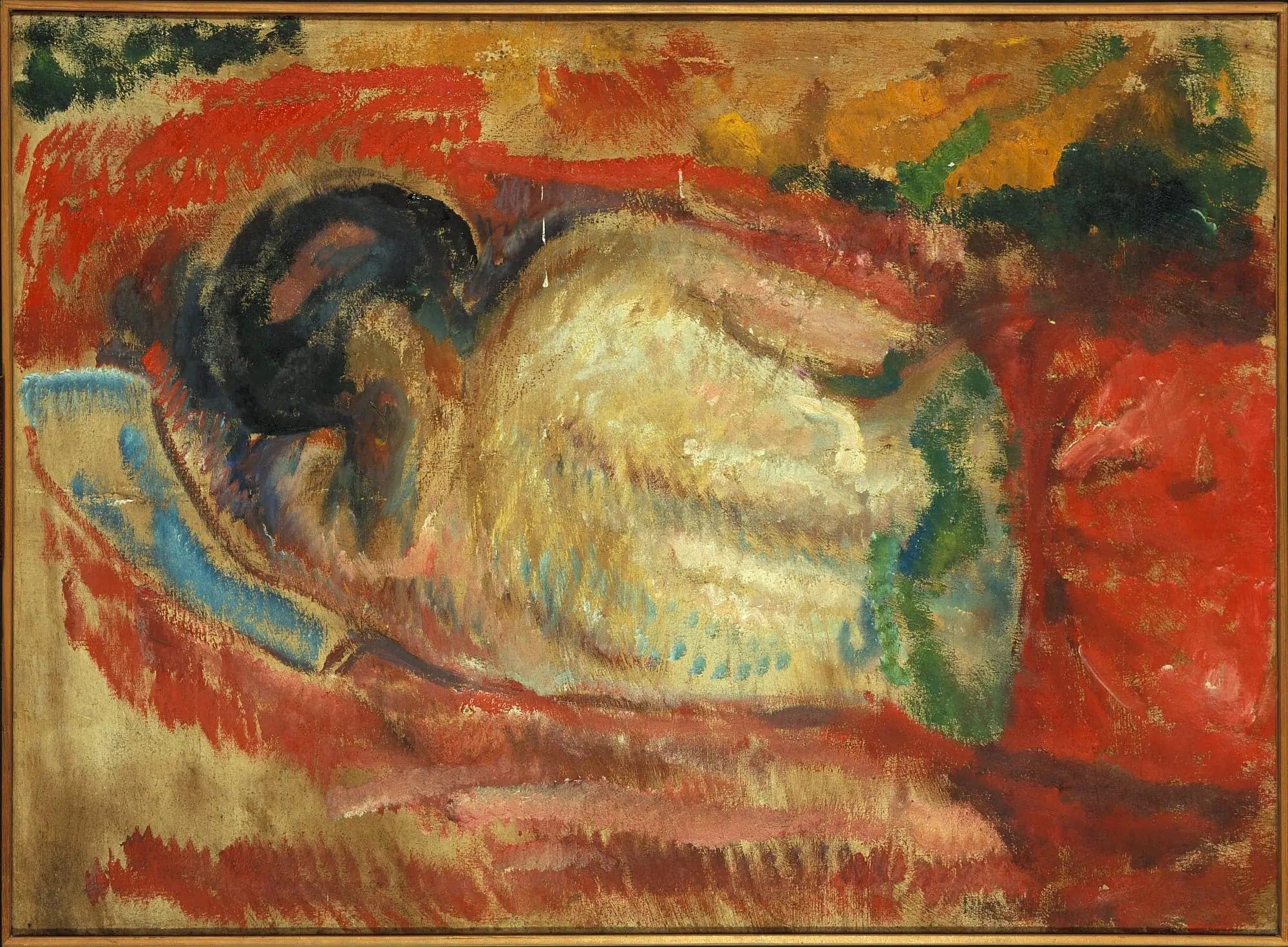
Female Nude from Behind
- Original dimensions
- 105 x 76.5 cm
- Museum
- Munch Museum
- Year
- 1917
Scene depicted
This painting, depicting a female silhouette from behind, evokes an intimate atmosphere, both melancholic and serene. The composition highlights the beauty of the female body and its relationship to introspection. This choice to pose the subject in a diverted manner integrates Munch into a broader discussion about sexuality, solitude, and the expression of emotions.
Historical context
Created in 1917 in Oslo, this painting is an iconic work by Edvard Munch that belongs to the Expressionist movement, an artistic current that explores human emotions through distorted forms and vivid colors. Avant-garde for its time, Munch develops a deep exploration of the human psyche. Today, this masterful canvas is preserved in the Munch Museum, where it continues to move many visitors.
Place in the artist's career
The Nu féminin de dos is a centerpiece in the middle of Edvard Munch 's career, belonging to a period where he reaches his artistic maturity. This painting can be compared to other works such as "The Scream" and "The Doctor's Words," where he represents his favorite themes: anxiety and human nature. This stylistic evolution reflects his deep commitment to the representation of emotions.
Anecdote
Edvard Munch said: "What is more important than seeing is feeling." This quote resonates particularly in the genesis of his masterpiece , inspired by a moment of silent contemplation in his studio, bathed in morning light. In this delicate atmosphere, he captures the essence of femininity and vulnerability, sublimated in the Nu féminin de dos .