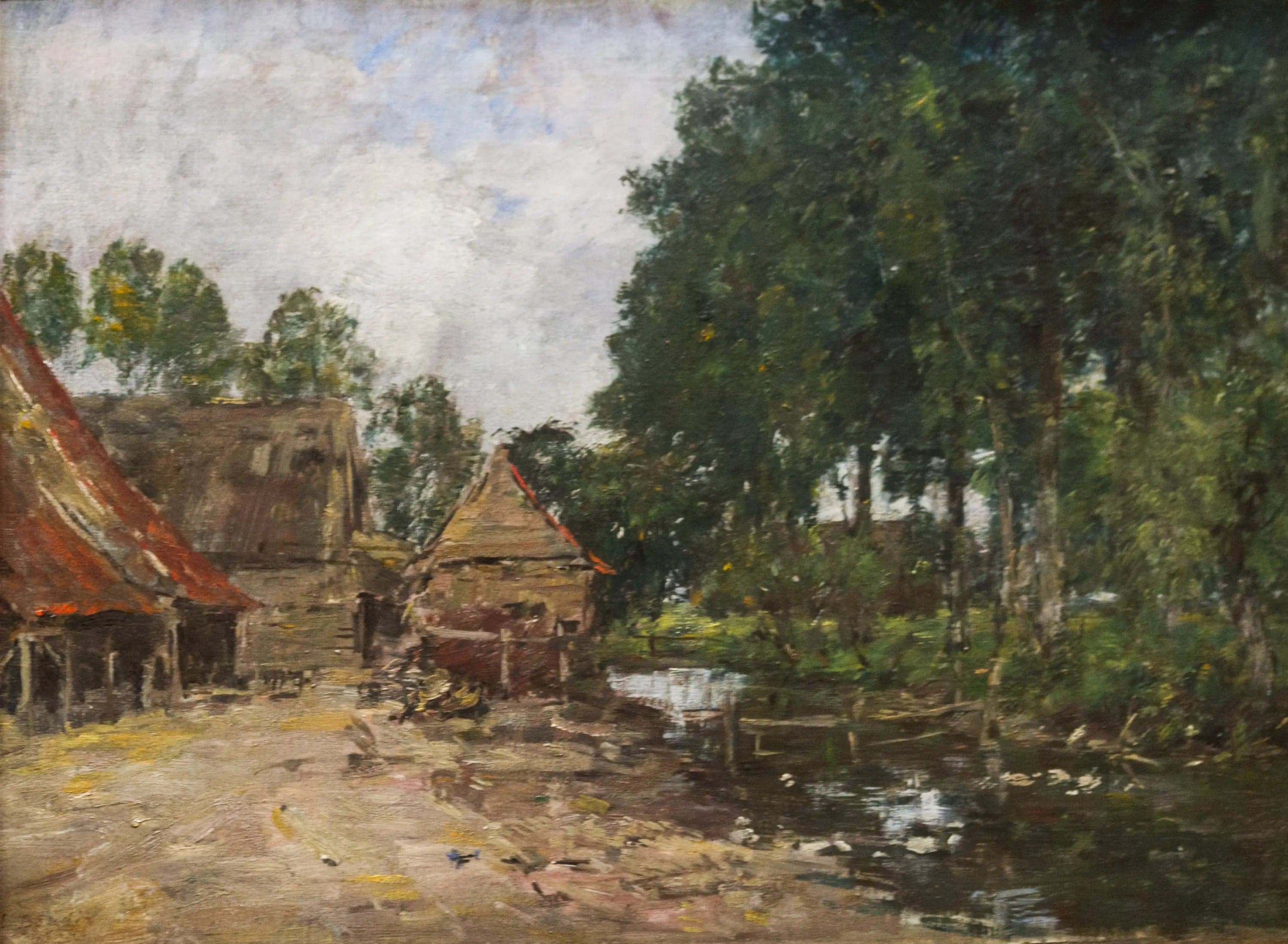
Farmyard
- Original dimensions
- 55.5 x 41.5 cm
- Museum
- Fine Arts Museum of Rennes
- Year
- 1890
Scene depicted
This painting depicts a peaceful farmyard, where the simplicity of rural life unfolds in all its splendor. The characters seem busy with their daily tasks, while the light plays in the shadows, creating a serene and welcoming atmosphere. Boudin, with his mastery, manages to evoke an intimate connection between the observer and the depicted scene.
Historical context
This painting emblematic was created in 1890 in the bucolic setting of Normandy, a true artistic stronghold of the impressionist movement. Eugène Boudin , pioneer of plein air painting, captured the very essence of rural life of the time. The painting currently resides in the Fine Arts Museum of Rennes, testifying to its importance in the artistic heritage.
Place in the artist's career
Farmyard represents a significant milestone in Boudin's career, marking his period of maturity. At that time, he asserted himself alongside his contemporaries such as Monet and Sisley. In parallel, works like Trouville Beach and The Seine at Argenteuil also show his stylistic evolution, skillfully blending light with the dynamics of nature.
Anecdote
“Every brushstroke reveals a story, an emotion...” It was a sunny morning near a Norman farm that Boudin found inspiration to create this masterpiece . The soft murmur of birds and the scent of flowers intertwine to bring to life Farmyard , where time seems suspended.