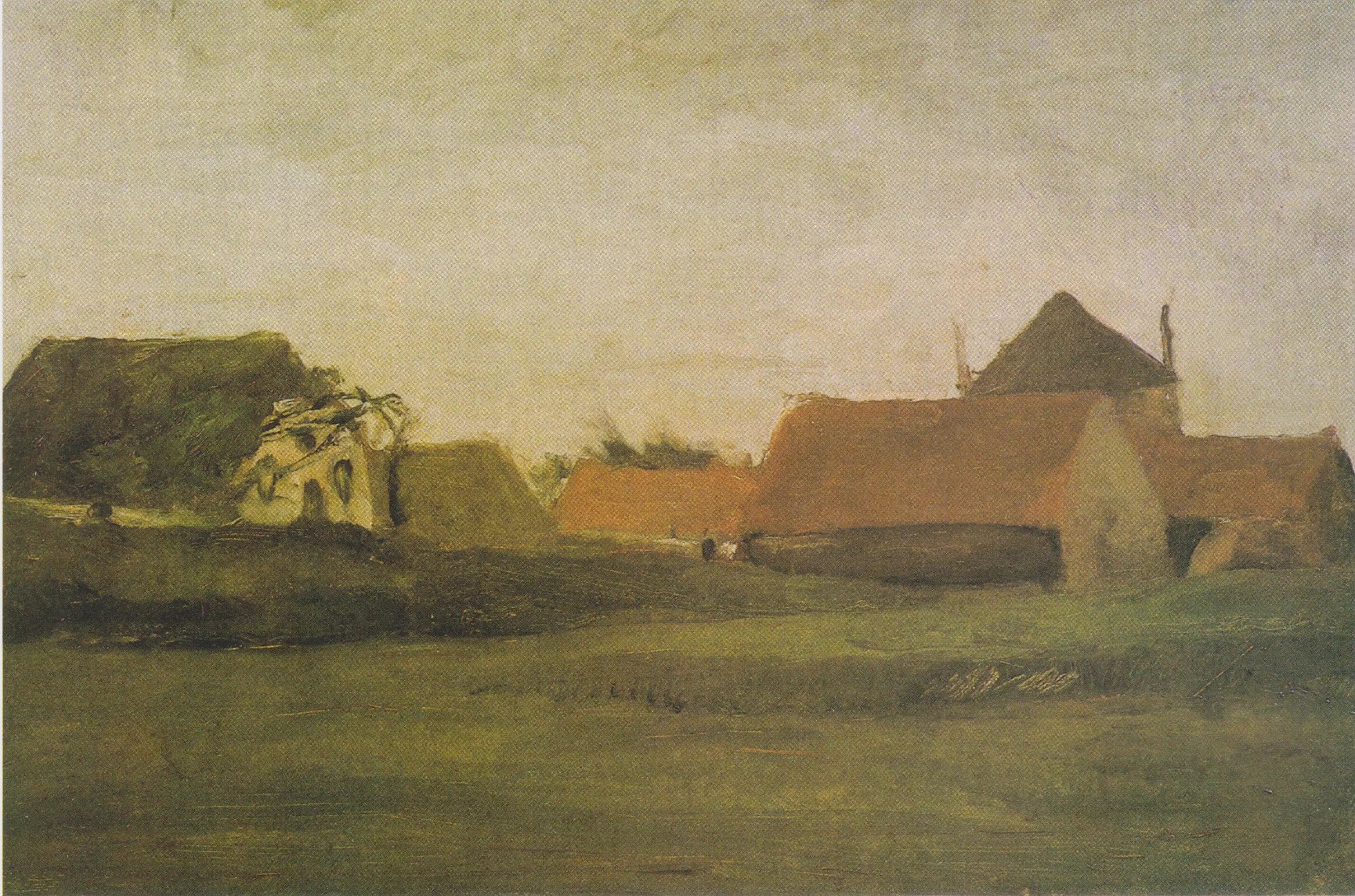
Farms in Loosduinen near The Hague at Dusk
Scene depicted
The painting depicts a fleeting moment of tranquility at nightfall. The farms, bathed in twilight light, evoke a sense of calm and a return to one’s roots. The composition, rich in details, highlights the gentle lines of the landscape, sheltering a simple yet deeply rooted life in the earth, accessible to contemplative gazes.
Historical context
Created in 1883, this painting emblematic of Vincent van Gogh finds its roots in The Hague, a Dutch city rich in history. Registered in the post impressionist movement, this painting illustrates the connection between man and nature at dusk, a time when light fades and shadows lengthen. Currently preserved in museum reserves, this work has dimensions of 50 x 33 cm.
Place in the artist's career
Farms in Loosduinen near The Hague at Dusk is situated at a key stage in Van Gogh's artistic maturation. It shares context with other paintings such as “ The Potato Eaters ” and “ Starry Night ,” each marking an evolution in his palette and pictorial vision. Here, we find the beginning of his exploration of light effects and atmosphere, laying the groundwork for his bolder future works.
Anecdote
“I have always believed that art should capture the soul of places.” This quote resonates particularly when observing Farms in Loosduinen near The Hague at Dusk . Van Gogh, influenced by the quietly inhabited landscapes of farms, drew his inspiration during a walk at dusk, feeling the peaceful ambiance and the melody of souls working the land.