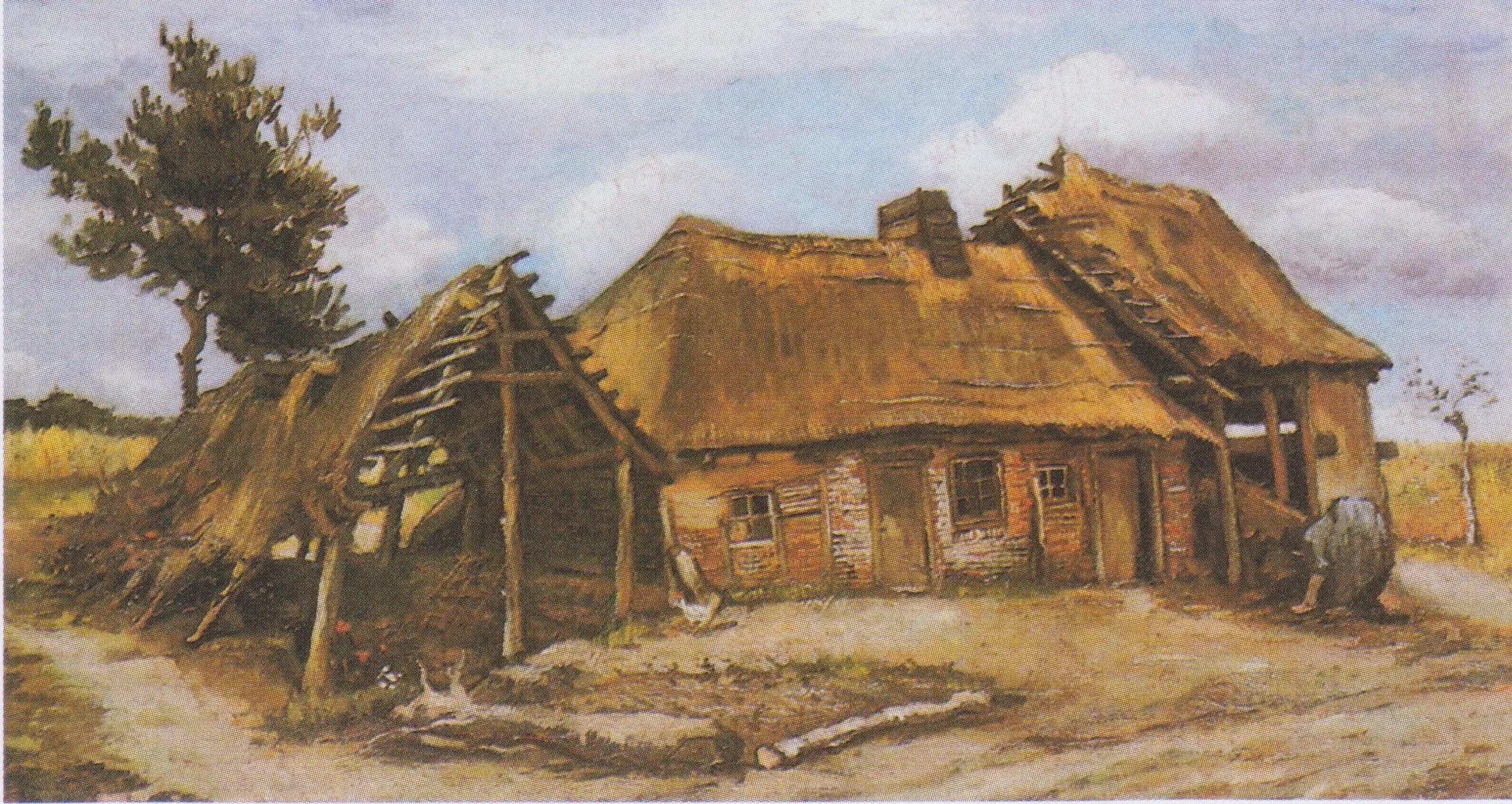
Farm with a Hunched Peasant Woman in a Blue Dress
Scene depicted
This painting depicts a peasant woman surrounded by fields, her bent silhouette contrasting with the grandeur of the nature around her. Van Gogh scrutinizes the hard work of these women in their daily lives, thus offering an ode to the tenacity and dignity of the earth's workers. The composition highlights meticulous details that emanate warmth and humanity.
Historical context
Created in 1885, this iconic work was born under the cloudy sky of Nuenen , in Holland. This painting is an integral part of the post-impressionist movement, characterized by vibrant colors and bold brushstrokes. Although the provenance of the painting is not specified, its impact on the history of art is undeniable. The dimensions of this artwork measure 113 x 62 cm, revealing a theme intimately linked to rural life and the daily struggles of peasants.
Place in the artist's career
The painting “Farm with a Bent Peasant in a Blue Dress” illustrates a key period in Van Gogh's career. Emerging from his early works, this piece testifies to his growing mastery in expressing raw emotions. Compared to “ The Potato Eaters ” and “ The Starry Night ”, this canvas reveals a marked stylistic evolution, shifting from gravity to a more poetic exploration of colors.
Anecdote
“Beauty lies in the simplicity of everyday life,” Van Gogh might have said, inspired by a peaceful morning when he observed a peasant woman, bent by labor, a symbol of a life steeped in dedication. This fleeting moment captured the very essence of the canvas , an echo of his admiration for the hardworking and authentic life.