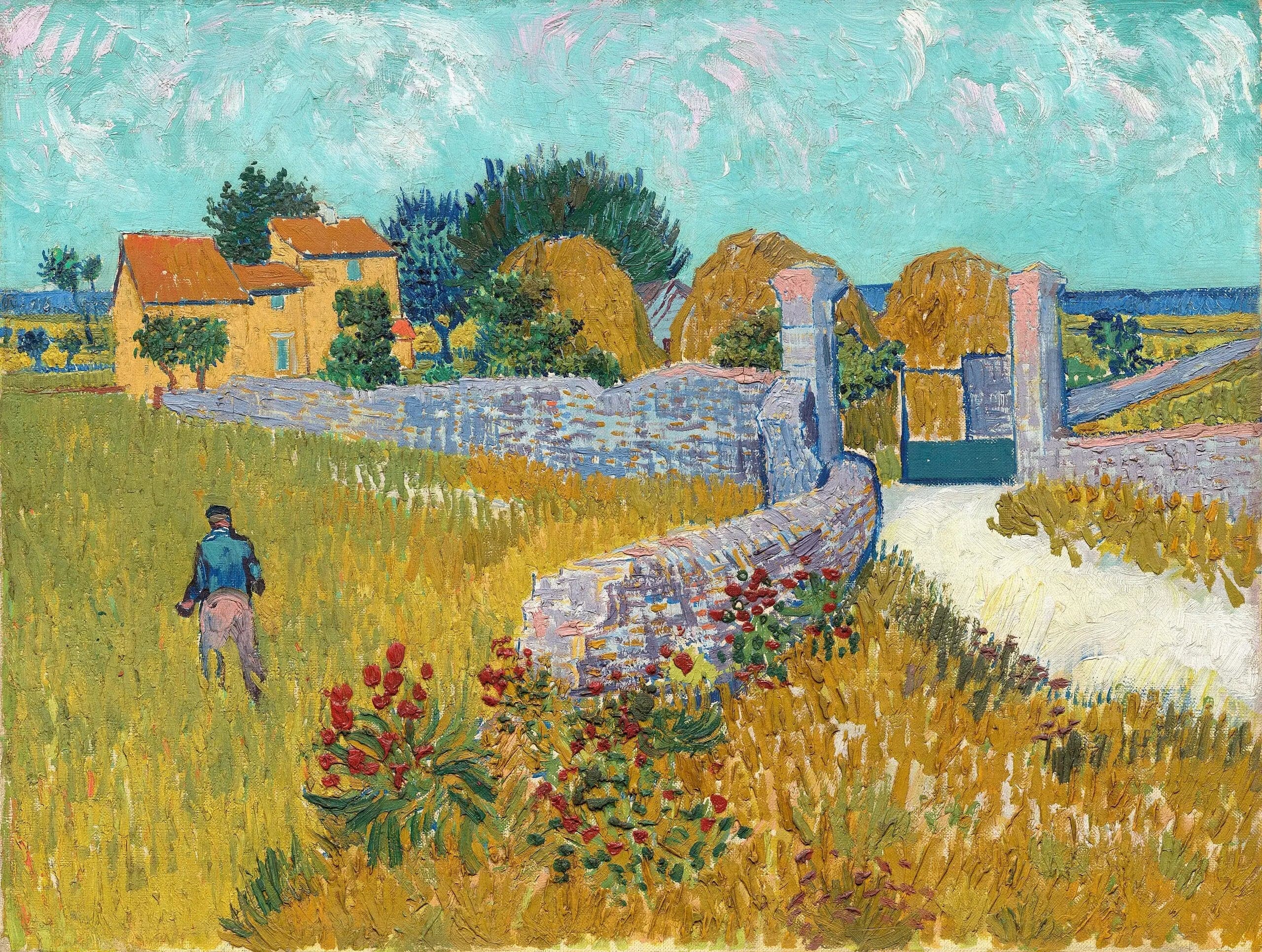
Farm in Provence
- Original dimensions
- 60.9 x 46.1 cm
- Museum
- National Gallery of Art
- Year
- 1888
Scene depicted
This painting reveals a farm in Provence, enveloped by golden fields under a starry sky, a haven of peace that evokes the bucolic simplicity of rural life. The composition, bright and lively, transports us to a suspended moment, where every detail is a tribute to the beauty of the everyday.
Historical context
This iconic painting , created during the summer of 1888, is directly connected to the excitement of Post-Impressionist movements. The painting finds its essence in Arles , a sun-drenched city where the artist explores light and color in an unprecedented creative surge, rooted in a period of artistic flourishing.
Place in the artist's career
At the heart of Van Gogh's career, this painting stands as a gem, revealing his artistic maturity. In parallel, works such as The Starry Night and The Sunflowers demonstrate the stylistic evolution of an artist who blends raw emotion and innovative techniques. Farm in Provence shares this quest for color, affirming Van Gogh's unique presence in the pantheon of art.
Anecdote
Vincent van Gogh once shared: “I dream of painting and then I paint my dreams.” It is in this quest for beauty that he awakened each morning, facing the Provençal landscapes , fruits of a vibrant and enchanting nature. Farm in Provence embodies this intense dialogue between the artist and his environment, a communion through the bold choice of colors and forms.