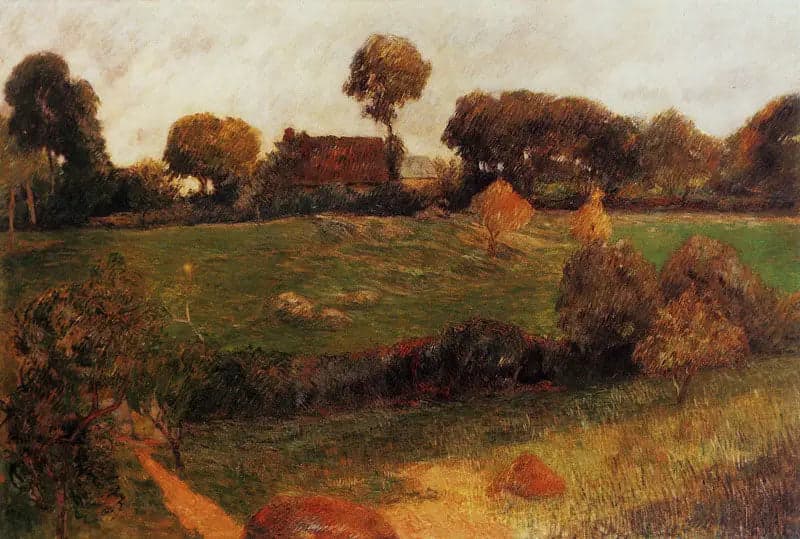
Farm in Brittany II
- Original dimensions
- 112 x 73 cm
- Museum
- Not specified
- Year
- 1886
Scene depicted
In Farm in Brittany II , Gauguin captures a scene of peaceful life. A simple agricultural building stands, surrounded by lush greenery. The natural elements intertwine to create an aquiline atmosphere, where the earth, sky, and humans seem to merge in a silent dance. The painting serves as a mirror of an era, revealing the tenderness of a simple life, imbued with beauty and wisdom.
Historical context
Created in 1886, Farm in Brittany II is part of the post-impressionist movement, at a time when Paul Gauguin sought to express his emotions beyond mere representation. This pictorial work evokes Breton rurality, rooted in a landscape imbued with light and vibrant colors. Despite the absence of a designated museum, the painting continues to captivate art lovers, celebrating the authenticity of a region rich in beauty and culture, measuring 112 x 73 cm.
Place in the artist's career
Farm in Brittany II marks a crucial period in the career of Paul Gauguin , illustrating his artistic evolution and his approach to more symbolist styles. At this time, his works such as Vision after the Sermon and The Writings of the Invisible navigate this exploration of color and a striking vision of reality beyond what is visible.
Anecdote
Gauguin once stated: "Art is a path to the souls of men." This quote perfectly illustrates the genesis of his masterpiece . One morning, while walking through the green fields of Brittany, he was struck by the simple beauty of rural life, thus inspiring the tumultuous harmony of Farm in Brittany II . Each brushstroke conveys the essence of this frozen moment, with the tranquility of nature's sounds caressed by the breeze.