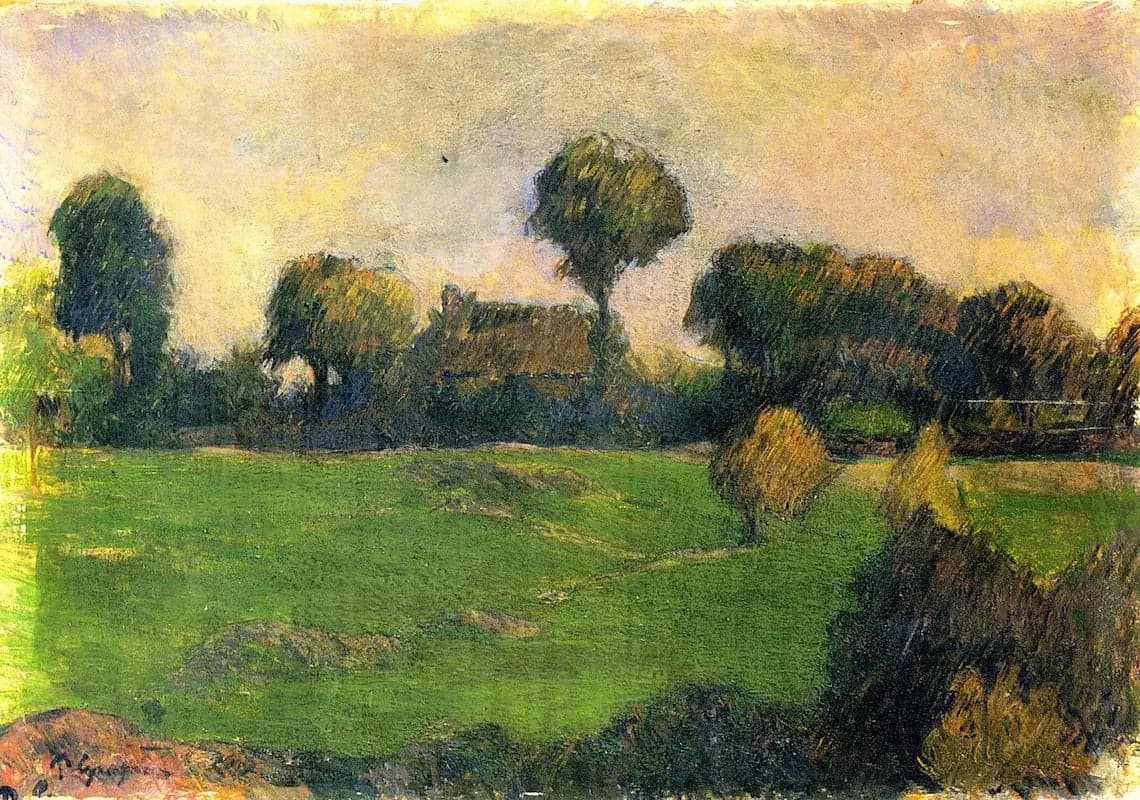
Farm in Brittany I
- Original dimensions
- 30 x 21.5 cm
- Museum
- Not specified
- Year
- 1886
Scene depicted
This canvas invites a dive into a bucolic landscape, where a farm peacefully stretches under a often changing sky. The simple geometric shapes of the architecture intertwine with the surrounding nature, creating a harmonious balance. Gauguin, through his study of shadows and lights, does not just paint a place, but an atmosphere, an emotion of softness and tranquility.
Historical context
Created in 1886, the painting "Farm in Brittany I" resonates with the Breton soul, at the heart of the post-impressionist movement. This canvas is emblematic of a period when Gauguin, in search of authenticity, captures the simple and sincere beauty of rural life. Although the current museum of this work is not specified, its impact remains indelible, touching the viewer with its emotional dimension.
Place in the artist's career
"Farm in Brittany I" marks a significant turning point in Gauguin's career, indicating an evolution towards a more symbolic and emotional approach to art. Alongside other works such as "Vision after the Sermon" and "The Nap", this canvas reveals the maturation of his style, integrated into the artistic landscape of his time.
Anecdote
Paul Gauguin once stated: "Nature reveals itself when you know how to look at it." This thought followed him during the creation of this masterpiece , as he was inspired by the morning calm of a Breton farm, where the soothing sounds of church bells and the scent of blooming fields awakened his artistic spirit.