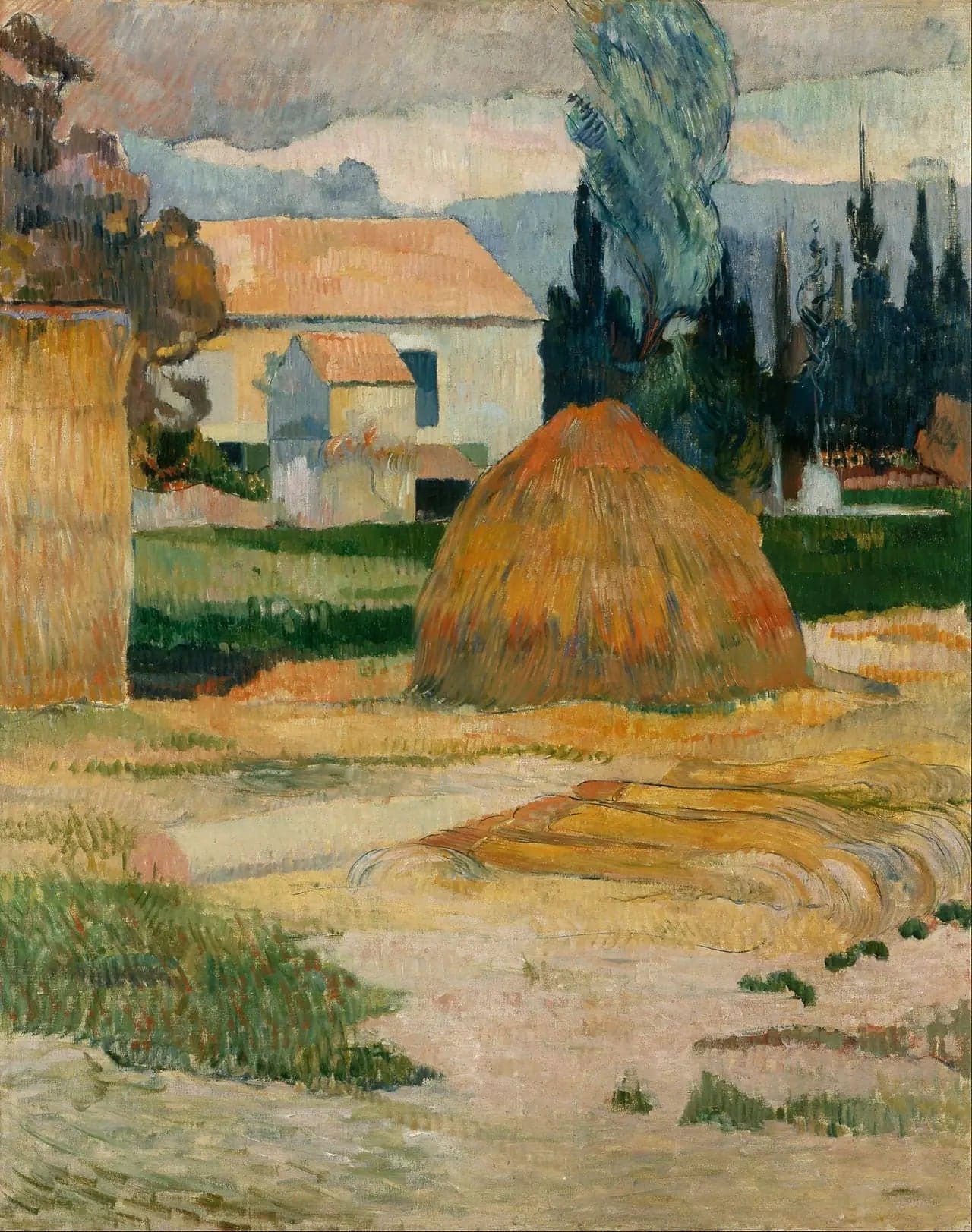
farm in Arles
- Original dimensions
- 72.5 x 91.5 cm
- Museum
- Indianapolis Museum of Art
- Year
- 1888
Scene depicted
The canvas "farm in Arles" depicts a rural landscape where life flows peacefully. Verdant trees stretch as far as the eye can see while the farm itself emerges like an oasis of calm. The intimacy of the houses, the human silhouettes absorbed in their daily routine: everything converges to create a living picture, filled with authenticity and human warmth.
Historical context
Created in 1888, this painting emblematic of Paul Gauguin evokes not only the tranquility of rural life in Arles but also the post-impressionist movement that redefined the codes of pictorial art. Through this canvas , Gauguin captures the essence of Provence, bathed in light, and resonates with the artistic heritage of the time. The masterpiece is currently housed at the Indianapolis Museum of Art , a visual treasure that deserves to be admired.
Place in the artist's career
This painting occupies a remarkable place in Gauguin's career, marking a crucial step in his artistic evolution. Alongside other canvases like "Vision after the Sermon" and "The Yellow Christ," this masterpiece testifies to his perpetual quest for vibrant colors and expressive forms, heralding his radically innovative style.
Anecdote
Gauguin once stated: "Art is a revelation of the beauty of life." Imagine him that morning, facing the farm, the songs of birds and the sweet scent of flower fields. He captures this precious moment, infusing his canvas with palpable emotion. It is this inspiration that gives birth to the tangible painting of this bucolic scene.