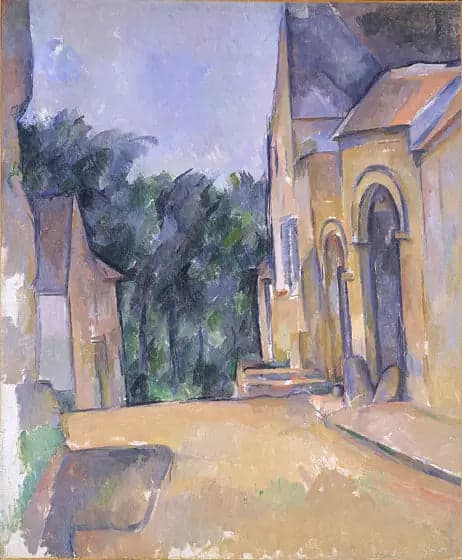
Farm at Montgeroult
- Original dimensions
- 52 x 64 cm
- Museum
- Arkansas Arts Center
- Year
- 1898
Scene depicted
The painting “Ferme à Montgeroult” depicts a bucolic scene where a farm harmoniously blends into its natural environment. The stone houses, surrounded by lush greenery, testify to the tranquility and simplicity of life in the countryside. Cézanne plays with the light that caresses the roofs, revealing subtle shades of colors and inviting the viewer to dive into this nostalgic atmosphere.
Historical context
Created in 1898, this painting is set in the pastoral framework of Montgeroult, a picturesque village located in the Île-de-France region. At that time, Paul Cézanne , a major figure of the Impressionist movement, sought to capture the beauty and simplicity of rural life. This canvas fabulous is currently at the Arkansas Arts Center, where it continues to inspire visitors.
Place in the artist's career
This painting is at the heart of Cézanne's mature period, when he explores his unique style, combining structure and color. Alongside him, works like “Mont Sainte-Victoire” and “The Large Bathers” illustrate his technical evolution. Each painting reveals a different aspect of his approach to the world, testifying to his relentless quest for harmony.
Anecdote
“I wish to translate the feelings that pass through me in the face of nature,” Cézanne might have said while contemplating the gentle landscapes of Montgeroult. It was at that precise moment, in the calm of an April morning, that the emotion of this masterpiece was forged, marking a time of gentle introspection for the artist.