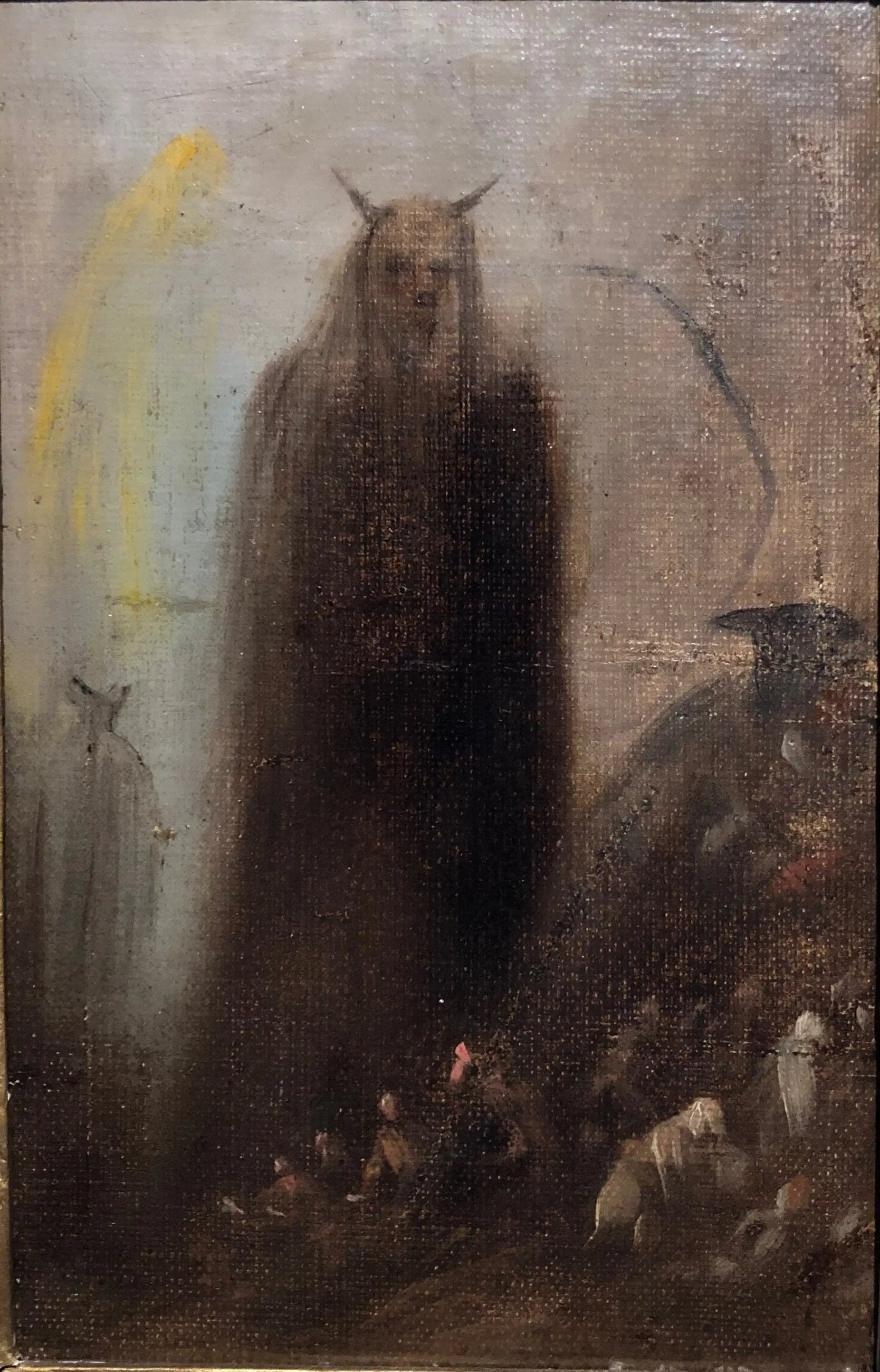
Fantastic Vision
- Original dimensions
- 17 x 26 cm
- Museum
- Not specified
- Year
- 1801
Scene depicted
The painting Vision fantastique presents an exhilarating visual confrontation between the tangible world and supernatural apparitions. The composition reveals graceful forms floating in a dark sky, an invitation to reflect on existence beyond the concrete. Each element evokes a powerful mystique, like a dream shared between shadow and light, capturing the viewer's imagination as a whole.
Historical context
Created in 1801, this painting emerges in the tumultuous context of the early 19th century in Spain, a period marked by rising political tensions and social upheaval. Goya, a major figure of the romantic movement, uses this canvas to explore themes of the fantastic and imagination, immersing the viewer in a universe where the unreal coexists with the real. Currently, this iconic piece is preserved in a private collection, its moving essence deserving a true tribute.
Place in the artist's career
Vision fantastique stands as a turning point in the career of Francisco de Goya . From his beginnings as a portraitist to his crucial engagement in romantic painting, he transcends established conventions with this pictorial work . In parallel, one can mention The Caprices (1797) and La Maja desnuda (1800), which reveal the evolution of his style towards bolder and more expressionist interpretations.
Anecdote
“Art is the echo of an inner vision.” These words from Goya resonate deeply with the genesis of his painting Vision fantastique. One autumn morning, as the bright colors of the sky mingled with the scent of falling leaves, he captures a scene inspired by his dreams and visions. This canvas reflects a fleeting moment, an explosion of creativity mixed with the melancholy that accompanies the artist throughout his life.