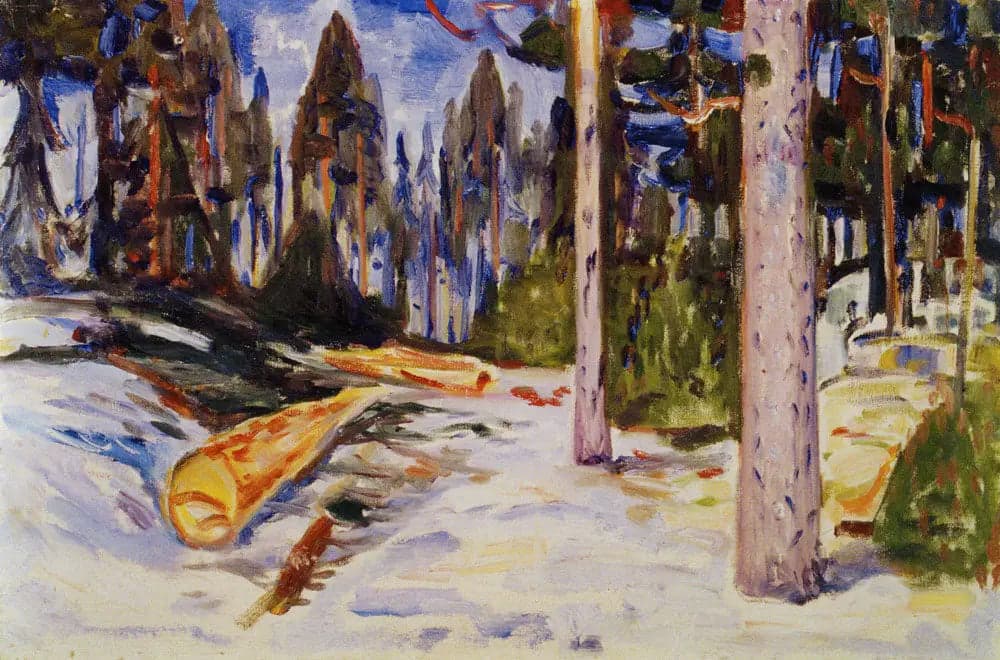
Fallen Trees
- Original dimensions
- 102 x 68 cm
- Museum
- Not specified
- Year
- 1912
Scene depicted
In "Cut Trees," Munch depicts a poignant scene where nature, wounded by man, evokes themes of devastation and loss. The mutilated trunks, representing deforestation, stand almost like ghostly silhouettes, symbolizing the fragility of life in the face of humanity's destructive choices. This canvas captivates and questions, inviting the viewer to reflect on the harmony between Man and nature.
Historical context
Created in 1912, the painting "Cut Trees" by Edvard Munch is set against an artistic backdrop marked by the emotional and psychological changes of the early 20th century. Made in Norway, the artist's homeland, this work belongs to the expressionist movement, distinguished by its ability to convey the anxiety and melancholy of its time. Currently, this canvas is preserved in private collections, reflecting its importance and lasting impact on the art world.
Place in the artist's career
"Cut Trees" is situated at a pivotal moment in Munch's career. Following the monumental success of "The Scream," this canvas expresses a shift towards more social and environmental concerns. In parallel, works such as "The Madonna" and "The Dance of Life" reveal a marked technical and emotional evolution, broadening the artist's exploration and placing this masterpiece among his most impactful achievements.
Anecdote
“Nature is a refuge, a place where the soul can truly flourish.” These words of Edvard Munch resonate deeply when contemplating his painting . One autumn morning, in a forest of vibrant colors, the artist felt the pain of ephemeral beauty, an experience that crystallizes powerfully in "Cut Trees." This fleeting moment of inspiration, imbued with sadness, gave birth to this masterpiece vibrant with emotions.