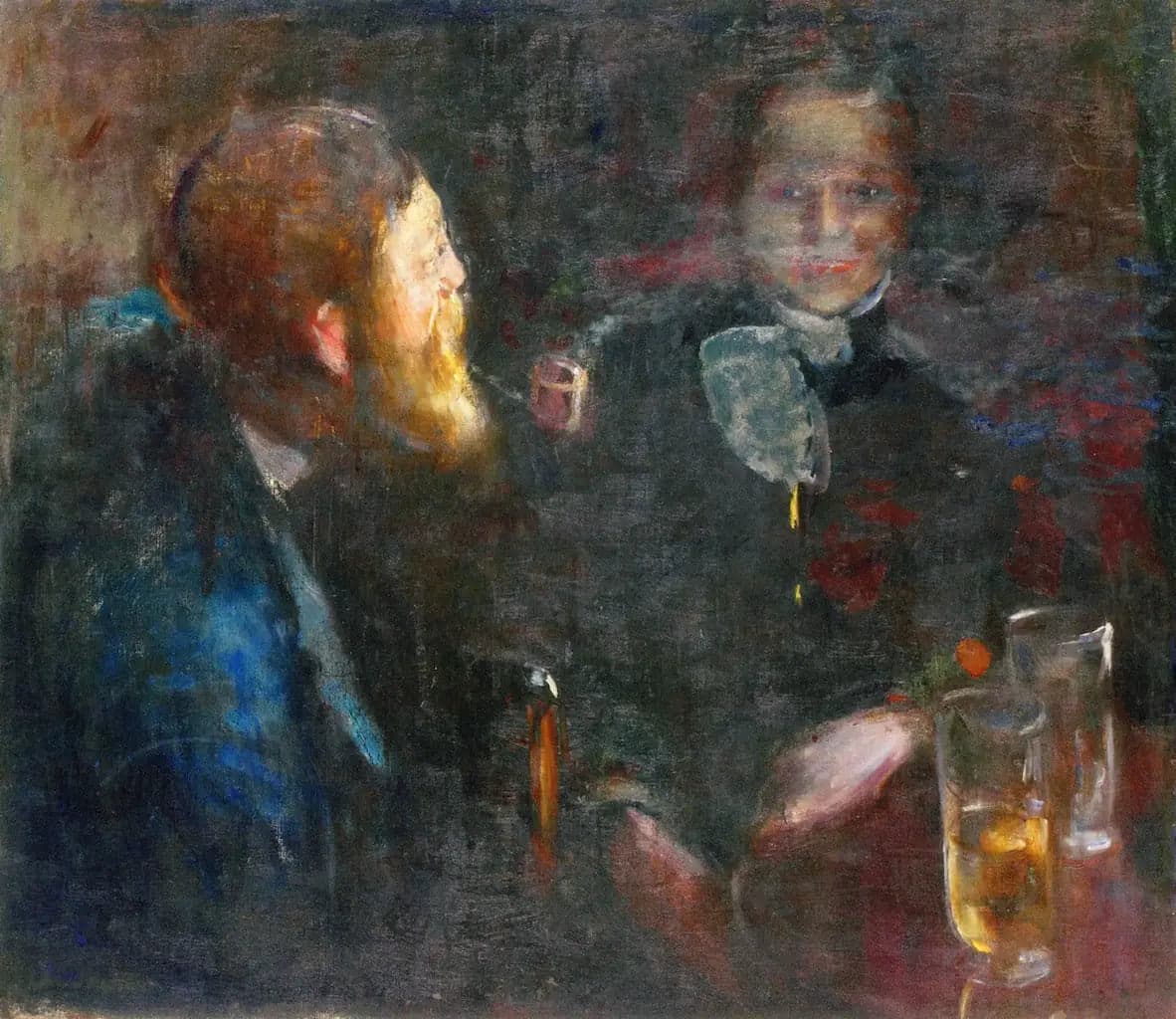
Face to Face
- Original dimensions
- 76 x 66 cm
- Museum
- Munch Museum
- Year
- 1885
Scene depicted
This canvas depicts a silent dialogue between two figures, capturing a tension that is both intimate and universal. The depth of the gazes, the closeness of the bodies, and the delicacy of the gestures testify to a suspended moment, an emotional contact that transcends time. Munch, with his unique ability to express contradictory feelings, introduces a warm welcome within this atmosphere filled with precious moments.
Historical context
Created in 1885, this painting is emblematic of the rich symbolist movement at the heart of Oslo, Norway. At a time when artists explore deep and subjective emotions, Edvard Munch , a prominent figure, redefines the artistic landscape with this canvas that is now preserved in the Munch Museum, where it continues to move viewers with its evocative power.
Place in the artist's career
This canvas , fruits of the exploration of human relationships, marks a significant milestone in the artist's career. The early 1880s see Munch establishing himself on the artistic scene with works like "The Scream" and "The Madonna," giving voice to often-silenced emotions. Tête-à-tête, on the other hand, represents an evolution towards a nuance of more intimate and personal sensitivity.
Anecdote
Edvard Munch once confided: "Every painting is a confession of the soul, a moment captured in the light of the world." Inspired by an unusual encounter on a sunny street, he immortalizes this fleeting memory in the canvas we discover here. In this pictorial work , the duality of human feelings emerges strongly, making Tête-à-tête a beacon of emotion.