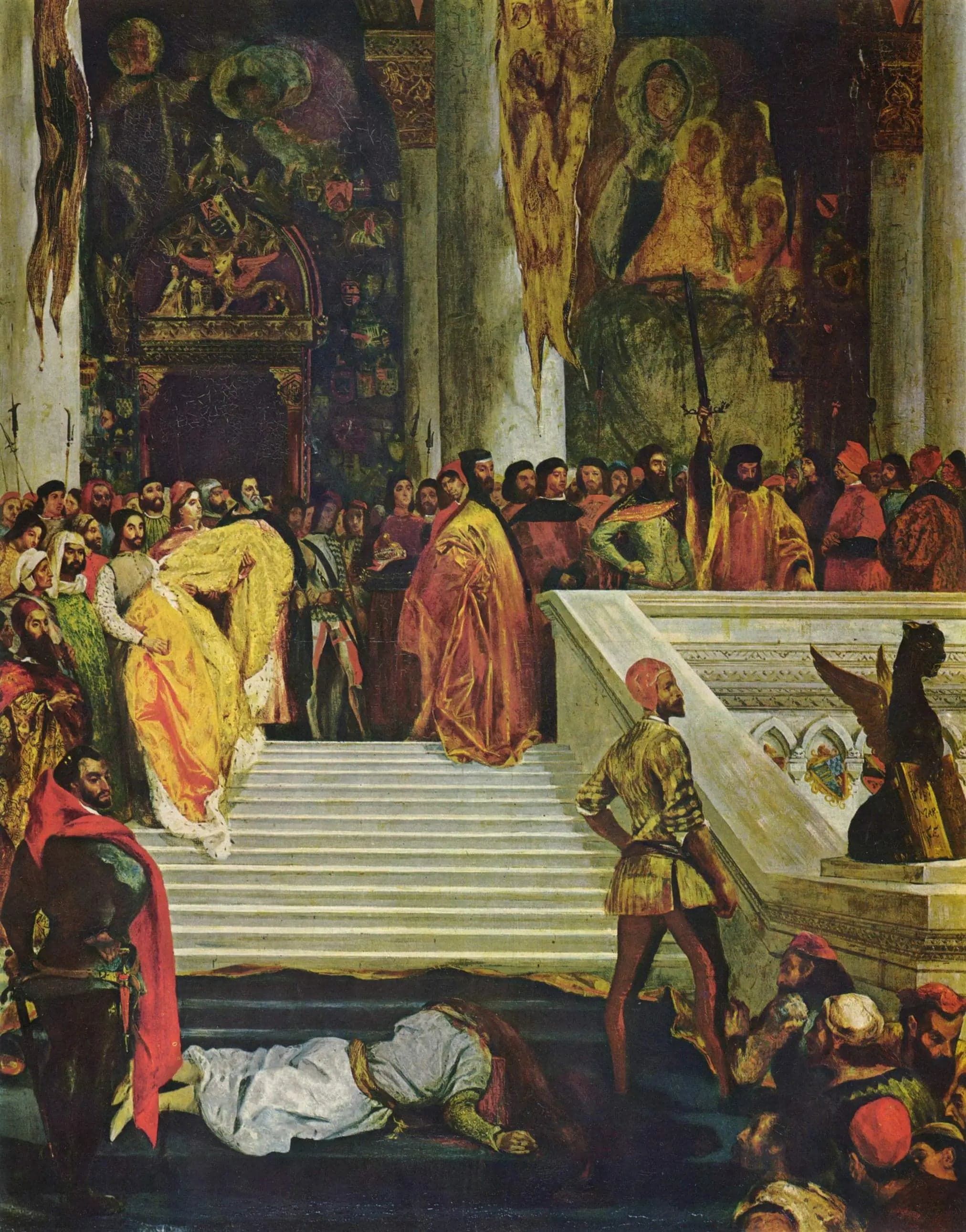
Execution of the Doge Marino Faliero
- Original dimensions
- 113.8 x 145.6 cm
- Museum
- Wallace Collection
- Year
- 1826
Scene depicted
In this canvas , the viewer is transported to the heart of the execution of a doge, a tragic act in Venetian history. The figures gathered around the condemned embody both rage and suffering, illuminated by a dramatic light that seems to dance on the frozen expressions of the protagonists, offering a poignant representation of the conflict between power and freedom.
Historical context
Created in 1826, this painting is part of the romantic movement, vibrant with emotions and intensity. The painting, now housed in the Wallace Collection in London, evokes a tumultuous and pivotal period in history, immersing the viewer in the fervor of 19th-century Venice. This masterpiece by Delacroix perfectly illustrates the union of history and art, resonating with the echoes of a time when feelings burst forth on the canvas.
Place in the artist's career
The Execution of Doge Marino Faliero represents a turning point in Delacroix's career, solidifying his reputation as a master of the romantic movement. Alongside his previous painting, The Death of Sardanapalus , and his later work, July 28: Liberty Leading the People , this painting testifies to a stylistic evolution where vibrant colors and dramatic energies merge.
Anecdote
“I paint the soul of things, not their appearances,” Delacroix might have said in a burst of creative passion. This canvas came to life on a fresh spring morning, as Eugène, alone in his studio, listened to the melodious song of a maritime wind, infusing his brushstrokes with the brutal force and tragic beauty of his subject.
Major exhibitions
Salon of 1827