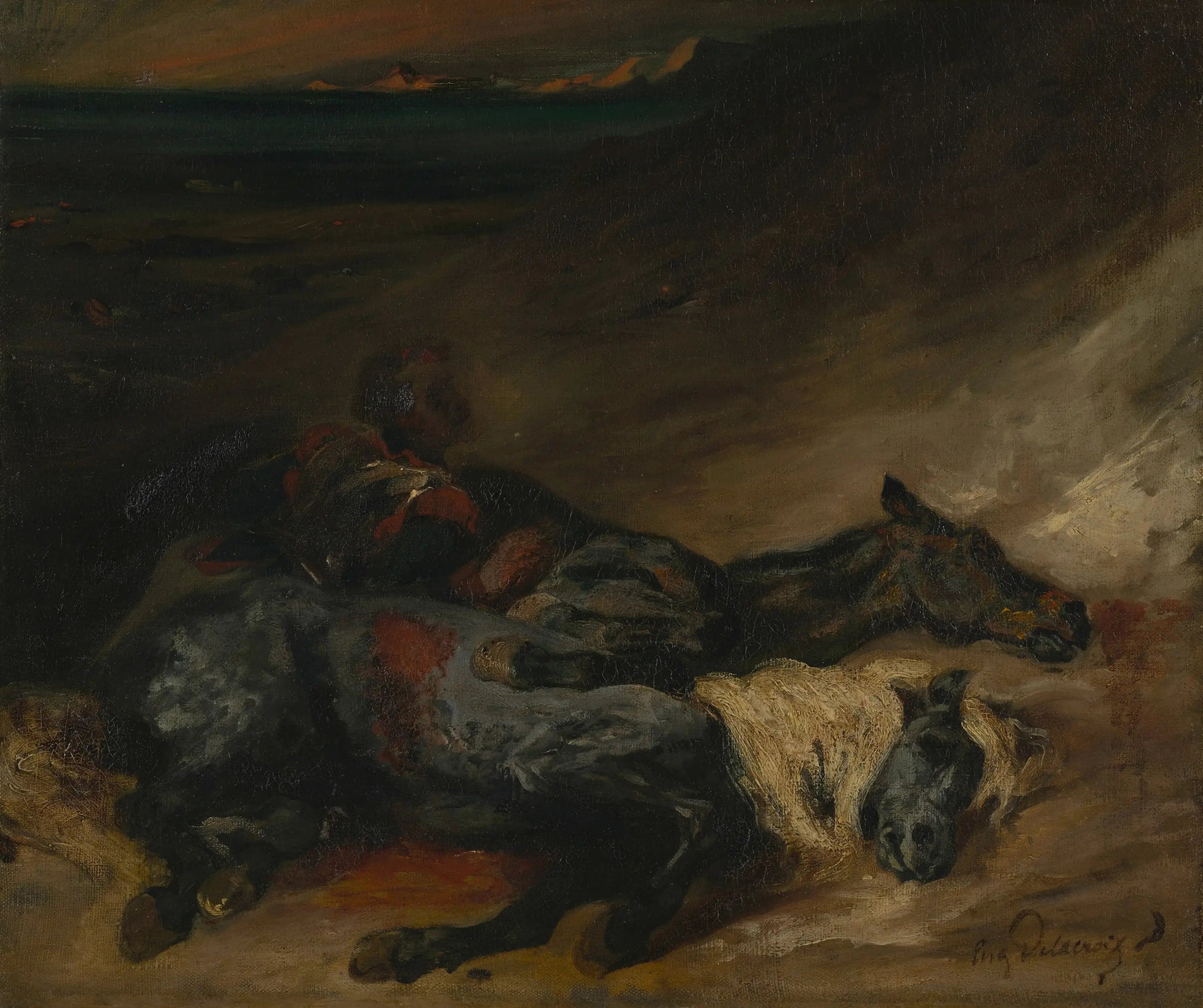
Evening After a Battle
- Original dimensions
- 56 x 48 cm
- Museum
- Mesdag Collection
- Year
- 1825
Scene depicted
The canvas “Evening After a Battle” depicts a landscape enveloped in an atmosphere of melancholy and resilience. Through vibrant brush strokes and rich colors, Delacroix captures the essence of a moment that follows the tumult of a battle. The silhouettes of soldiers, exhausted yet dignified, intertwine with nature, testifying to a poignant dialogue between life and death. The scene conveys an ambiance laden with history and contemplation, inviting the viewer to ponder the cost of conflict.
Historical context
Created in 1825, this painting resonates with the romantic spirit of the 19th century. Located in The Hague, the Mesdag Collection preserves this canvas from a time when artistic expression was breaking free from classical conventions, fitting into the romantic movement that sought to capture human passions and deep emotions. Its format, which proves to be captivating, testifies to an era where each masterpiece stood as a visual narrative of human experience.
Place in the artist's career
This painting fits into a pivotal period of Delacroix's career, where he imposes his unique style, combining dramatic tension and brilliant light. Alongside canvases such as “ Liberty Leading the People ” and “ The Massacre at Chios ”, Evening After a Battle reflects both a technical and emotional evolution, revealing mastery of color and movement, hallmarks of his romantic approach.
Anecdote
Delacroix once declared: “The painting must speak to the souls, not to the eyes.” This quote resonates particularly with the genesis of Evening After a Battle, inspired by the echoes of a troubled night where the cries of struggle slowly fade into darkness. In the streets of Paris, the dim light of an autumn twilight ignited the master's imagination, bringing to life this composition that breathes emotion.