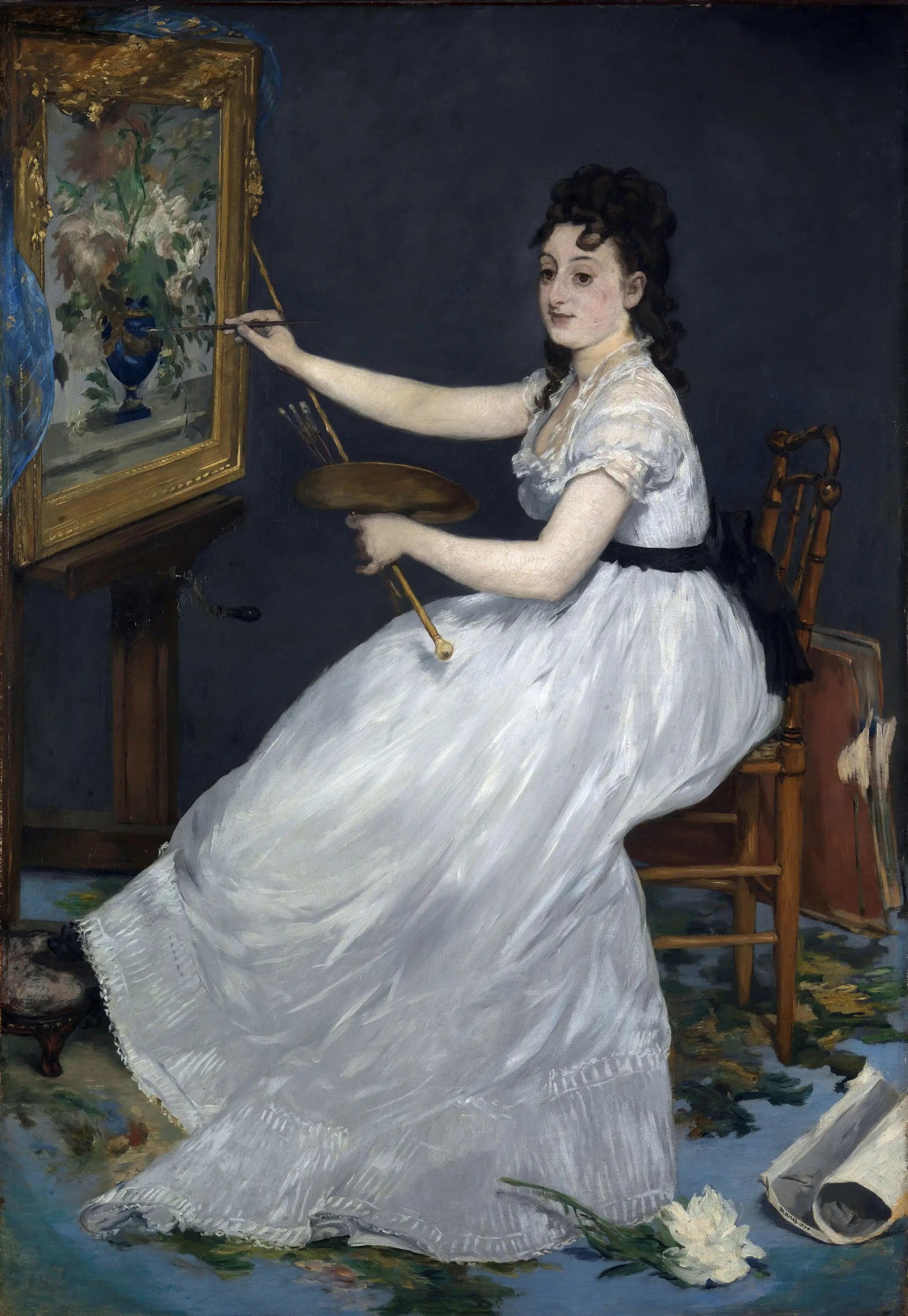
Eva Gonzalès
- Original dimensions
- 133.4 x 191.1 cm
- Museum
- National Gallery
- Year
- 1870
Scene depicted
The scene captured in this canvas shows the young artist Eva Gonzalès, painting with concentration. Manet explores here the themes of creativity and identity, offering an intimate look at a woman asserting herself in a male-dominated world. The composition, of great modernity, highlights the meticulous details while allowing a warm and thoughtful atmosphere to shine through.
Historical context
This painting emblematic was created in the heart of Paris, during the rise of the Impressionist movement. In 1870, Édouard Manet , already recognized as a pioneer of modernity, created this canvas that illustrates the fascinating beauty and complexity of social relationships of his time. Now preserved at the National Gallery, this work is a gateway to the vibrant universe of the late 19th century.
Place in the artist's career
The painting "Eva Gonzalès" is part of a crucial turning point in Manet's career. This masterpiece represents not only the pinnacle of his unique style but also paves the way for a new understanding of the female portrait. At the same time, other works such as "Luncheon on the Grass" and "Olympia" show the ongoing evolution of his bold and innovative approach to the subject.
Anecdote
Manet once declared: "Every brushstroke tells a story." The inspiration behind the canvas "Eva Gonzalès" was born one morning, when the golden light of the Parisian sun gently caressed the face of his model, infusing a unique essence into every shade of painting . This fleeting moment is reflected in the emotional strength conveyed by the painting .
Major exhibitions
Salon of 1870