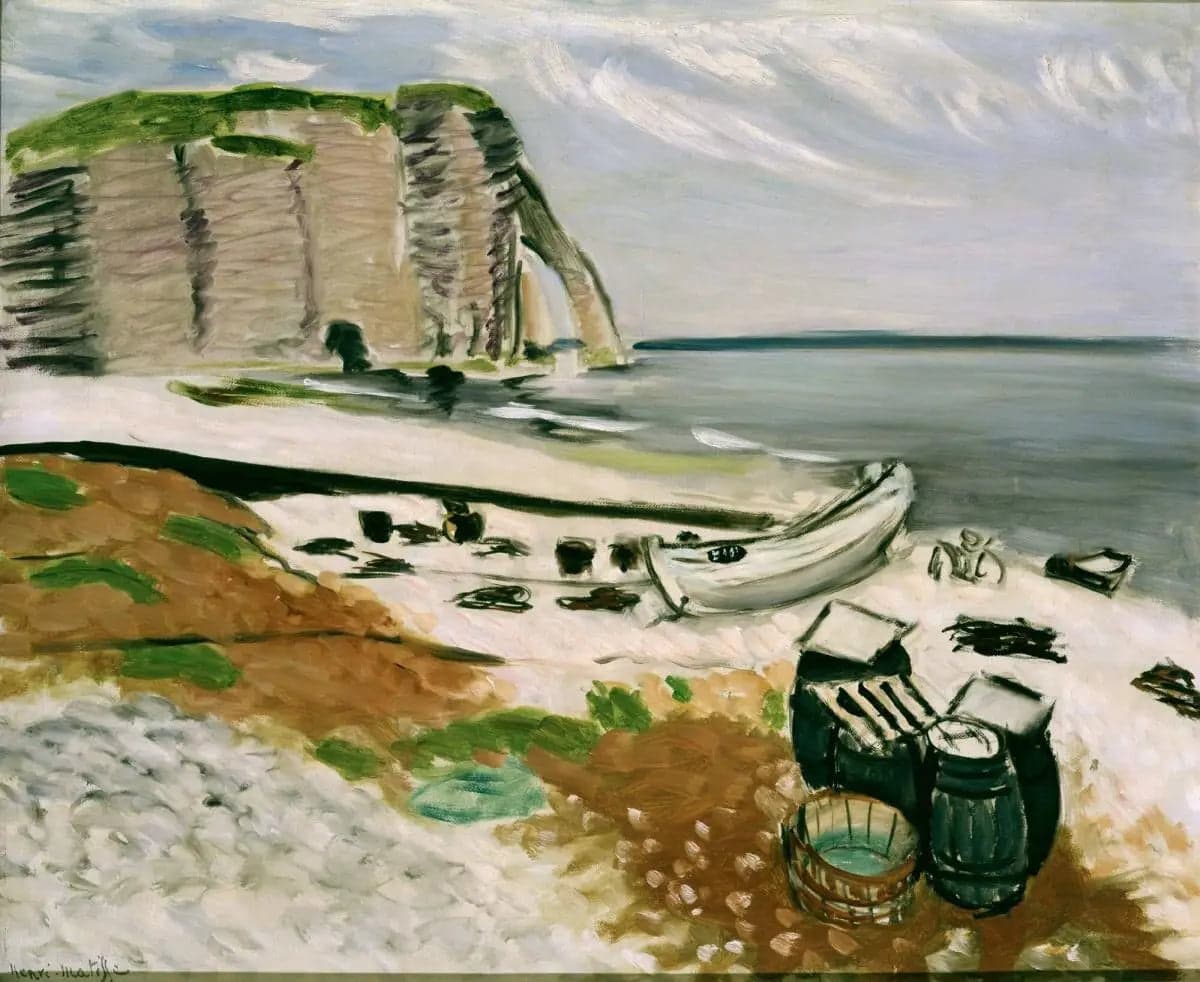
Étretat
- Original dimensions
- 66 x 55 cm
- Museum
- Moderna Museet
- Year
- 1926
Scene depicted
In the canvas "Étretat," Matisse immortalizes the captivating panorama of the Normandy coast. The undulating shapes of the cliffs, enhanced by a bold play of colors, create a lively and vibrant atmosphere, where the sky meets the sea in a colorful dance. The artist manages to capture not only the landscape but also the soul of this tranquil place.
Historical context
Created in 1926, this painting is set in the coastal town of Étretat, in Normandy, famous for its majestic cliffs. Made primarily at the heart of the Fauvist movement, it captures the artistic effervescence of a time when color and emotion surpass realism . Today, the canvas resides at the Moderna Museet, a famous museum in Stockholm, where it continues to enchant visitors with its vast dimensions of 66 x 55 cm.
Place in the artist's career
"Étretat" represents a significant milestone in Matisse's career, merging his technical mastery with exceptional emotional sensitivity. Compared to "The Dance" and "The Joy of Life," this painting illustrates his constant quest for pure color and his ability to evoke deep emotions through his distinctive compositions.
Anecdote
Henri Matisse once stated: "Painting is the means to realize the emotions evoked by natural beauty." On a gentle spring morning, he stood facing the imposing cliffs of Étretat, absorbing the bright light and the whispers of the waves. This pictorial work derived from this inspiration is deeply felt in the expressive strength of the painting .