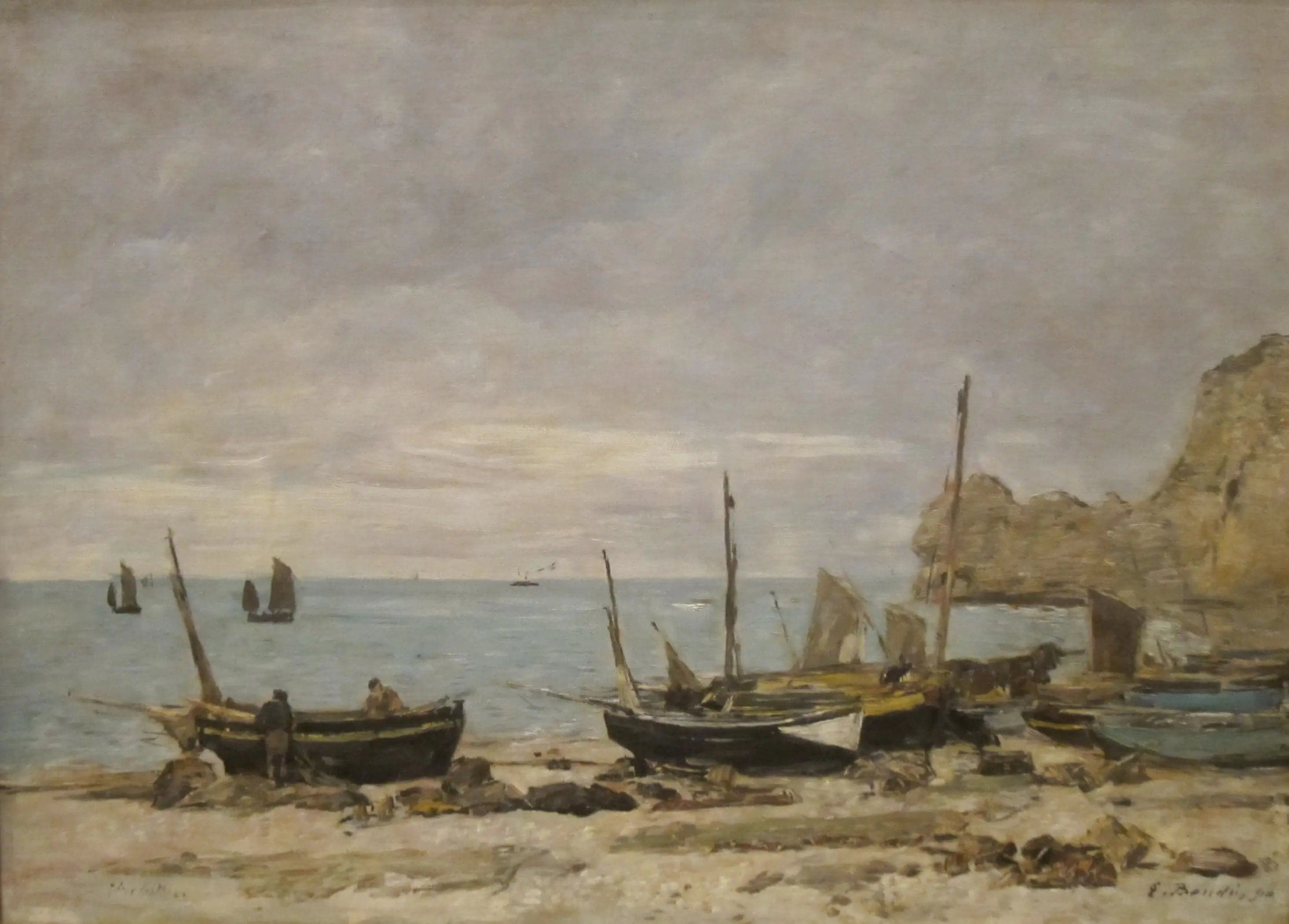
Étretat
- Original dimensions
- 110.3 x 78.5 cm
- Museum
- Chazen Museum of Art
- Year
- 1891
Scene depicted
In its composition, the painting “Étretat” finely depicts the famous cliffs overlooking the sea, revealing shades of deep blue and bright white. The sunlight dancing on the waves creates a sense of escape, while the boats slowly come to life on the water, evoking the tranquil movement of a summer day on the Alabaster Coast.
Historical context
Created in 1891 in the charming town of Étretat, this iconic painting by Eugène Boudin is firmly rooted in the Impressionist movement. At a time when light and nature are explored with a new intensity, this current painting is displayed at the Chazen Museum of Art, offering visitors a window into the soul of a place that has become mythical.
Place in the artist's career
“Étretat” represents a milestone in Eugène Boudin 's career, encapsulating his mature style and mastery of plein air painting. Compared to other paintings such as “La plage de Trouville” and “Le port de Honfleur,” this work illustrates his evolution towards a brighter palette and a more fluid technique, a true reflection of his appreciation for coastal landscapes.
Anecdote
“Every wave that crashes against the cliffs whispers secrets that only painting can capture.” Eugène Boudin was able to transcribe this inspiration during a peaceful morning by the sea, where the colors of the sky blend with those of the ocean, creating a magical atmosphere that inspires this pictorial work .