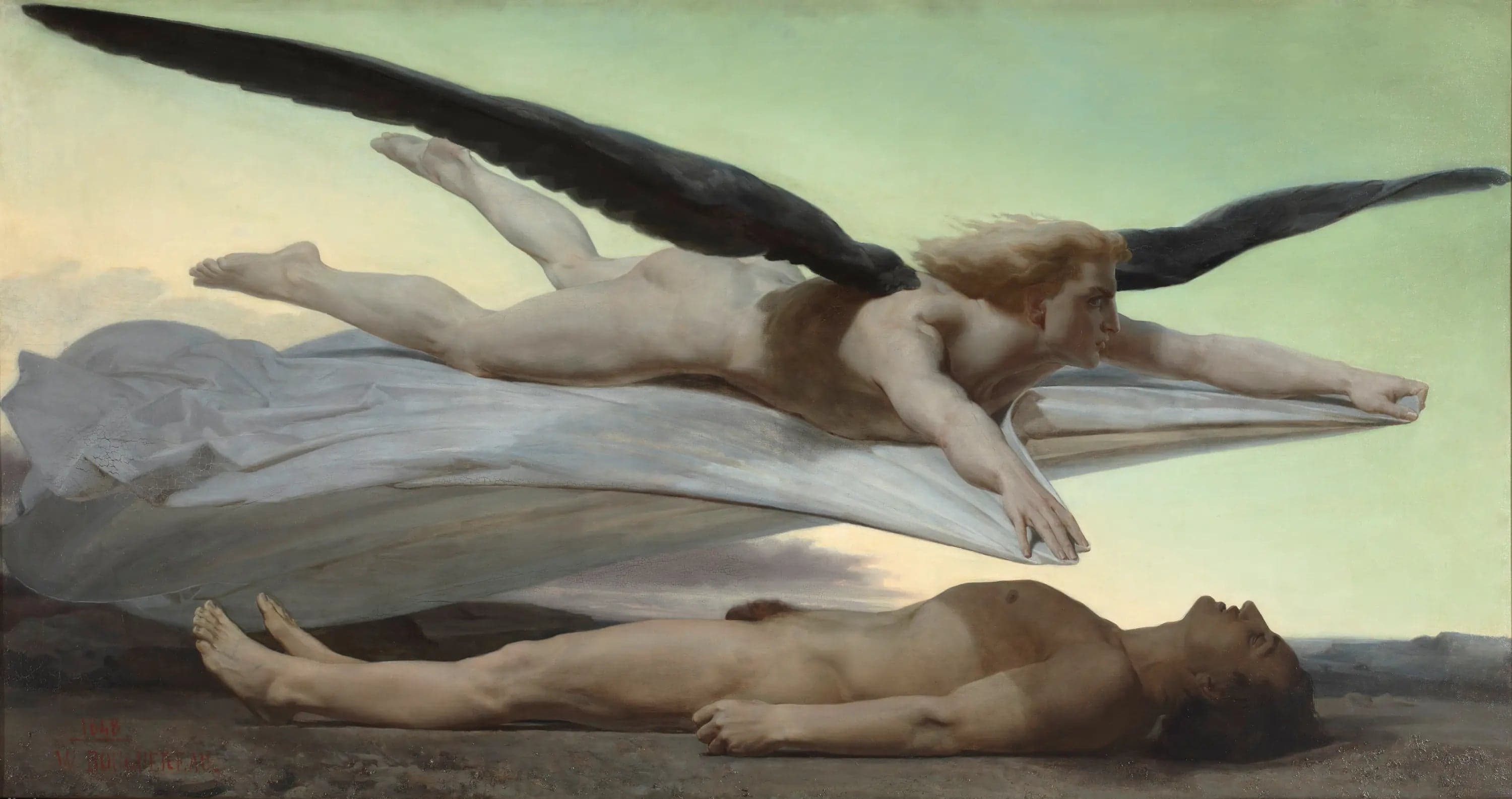
Equality Before Death
- Original dimensions
- 269 x 141 cm
- Movement
- Academicism
- Museum
- Orsay Museum
- Year
- 1848
Scene depicted
This masterpiece represents a poignant scene, where human figures confront death with dignity and serenity. By playing on the contrasts between the warmth of light and the shadow of the tragic, Bouguereau invites us to reflect on the human condition. Each character imbued with realism but also with a timeless grace evokes the fragility and beauty of life.
Historical context
Created in 1848, in Paris, this painting is part of the academic movement, an artistic current that values realism and harmony. In the heart of the 19th century, this painting, exhibited at the Salon of 1849, reflects the existential concerns of a troubled era. Today, the painting rests in the famous halls of the Orsay Museum , where its imposing dimensions of 269 by 141 centimeters attract the admiring gazes of visitors.
Place in the artist's career
Equality before Death is situated at a turning point in Bouguereau's career. This painting marks the affirmation of his mature style. It compares favorably to his previous works, Nymphs and Satyr (1873) and The Lovers (1875), thus demonstrating a technical and emotional evolution where the artist skillfully juggles between pain and harmony.
Anecdote
In a moment of introspection, Bouguereau reportedly confided: "Death is the great equalizer of humanity." Inspired by this thought, he captured a spring day, where the sweet song of birds and floral scents surrounded him. This vibrant emotion is palpably captured in the soul of the painting Equality before Death .
Major exhibitions
Salon of 1849