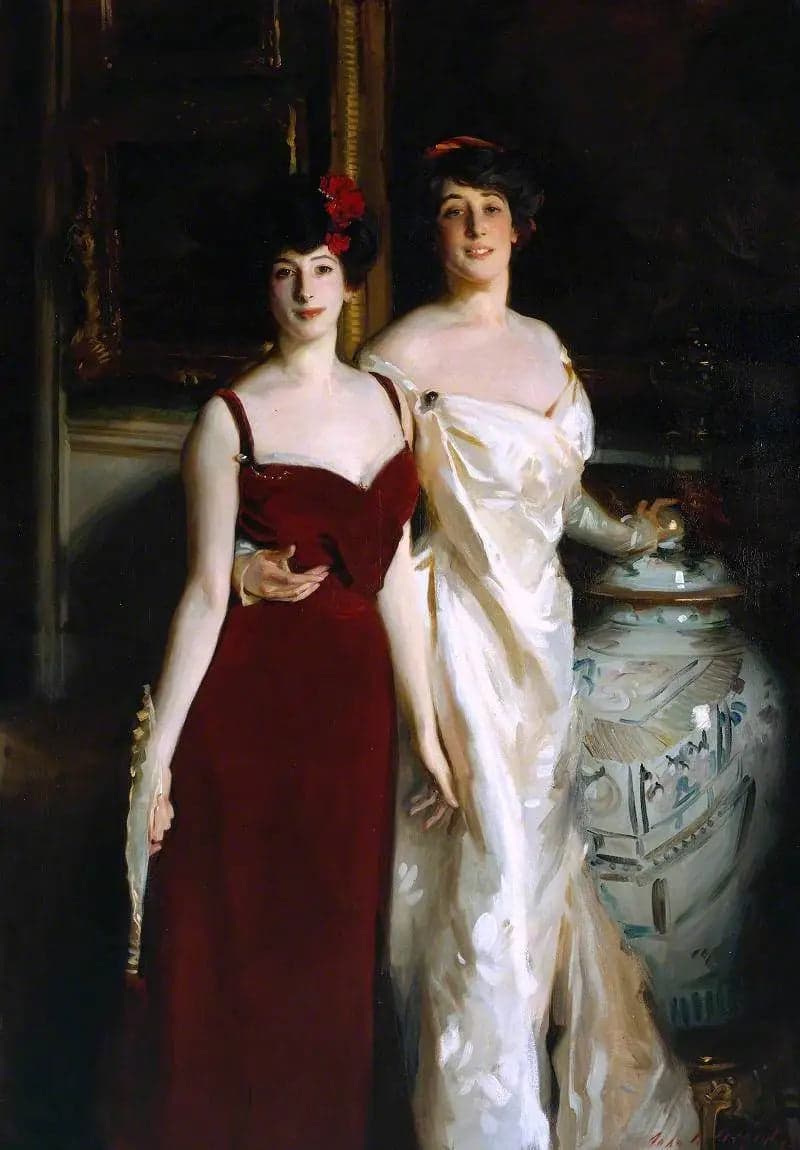
Ena and Betty, daughters of Asher and Mrs. Wertheimer
- Original dimensions
- 185.4 x 130.8 cm
- Museum
- Nationalmuseum
- Year
- 1901
Scene depicted
In this painting , two little girls, Ena and Betty, are depicted in a delicate pose, dressed in period clothing that accentuates their innocence and joy of living. The atmosphere described in the canvas evokes the sweet moments of childhood, an intergenerational harmony captured with tenderness and finesse by Sargent.
Historical context
This painting , created in Paris at the beginning of the 20th century, emerges from a time when pictorial art frees itself from traditional constraints. John Singer Sargent , an iconic figure of the Impressionist movement, captures the essence of childhood through the soft light of his portraits. The canvas is now located at the Nationalmuseum in Stockholm, representing the artistic peak of an artist who masters oil on canvas with rare virtuosity.
Place in the artist's career
The canvas “Ena et Betty” is part of Sargent's flourishing career, reflecting a period of maturity in his work. This masterpiece is often compared to other great portraits by the artist, such as “Madame X” and “Carnation, Lily, Lily, Rose,” illustrating the constant evolution of his technique and emotional approach.
Anecdote
“Light has its own language,” Sargent reportedly said, inspired one April morning as he immortalized the knowing smiles of his young models. It is in the bright garden of the Wertheimer villa that this pictorial work testifies to pure and childlike joy, evoking the beauty of a moment suspended in time.