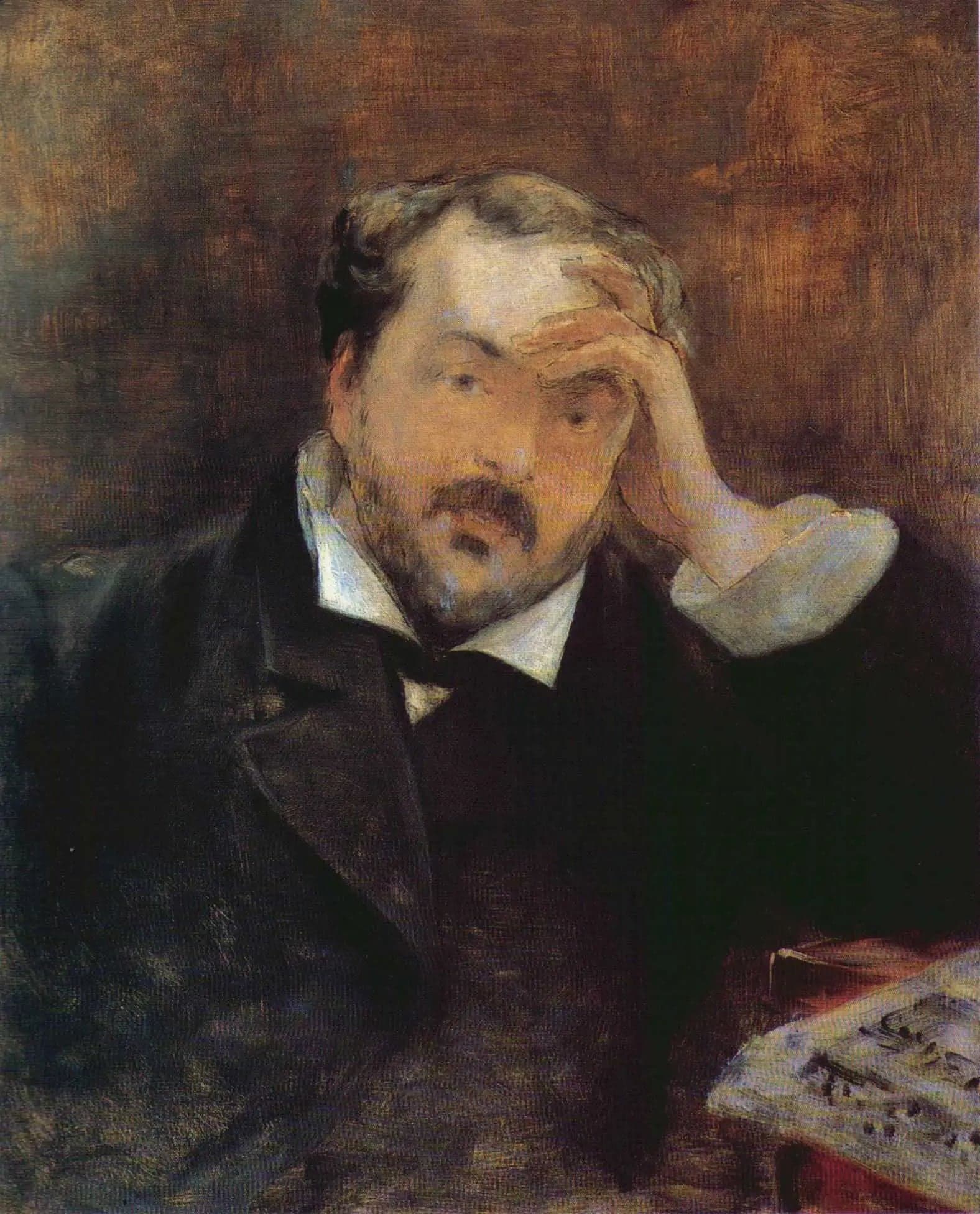
Emmanuel Chabrier
- Original dimensions
- 53 x 65 cm
- Museum
- Fogg Art Museum
- Year
- 1881
Scene depicted
In this painting, Manet offers us a striking view of the central character, Emmanuel Chabrier, whose exuberant demeanor and savoir-vivre intertwine with a vibrant atmosphere, ready to transport us. This painting stands as a tribute to friendship, conviviality, and art itself, revealing that each brushstroke tells a story.
Historical context
This iconic painting was born in the heart of France, in 1881, a time when the Impressionist movement had just shaken up artistic conventions. Emmanuel Chabrier fits into this movement while bringing his own touch of modernity. Today, this painting is carefully preserved within the Fogg Art Museum , testifying to the cultural and artistic heritage of this beautiful period.
Place in the artist's career
This painting , emblematic of artistic freedom, surpasses other works by Manet. It is situated after Déjeuner sur l’herbe and before Olympia , marking a turning point towards a bolder and more colorful representation of French society, paving the way for new perspectives.
Anecdote
Édouard Manet is said to have once said: "Painting is above all an emotion captured in light." The genesis of this masterpiece was inspired by a spring morning, where rays of sunlight filtered through the branches, illuminating a playful face. This scene immortalizes the joy of an effervescent moment, in sync with the evocative power of Emmanuel Chabrier .