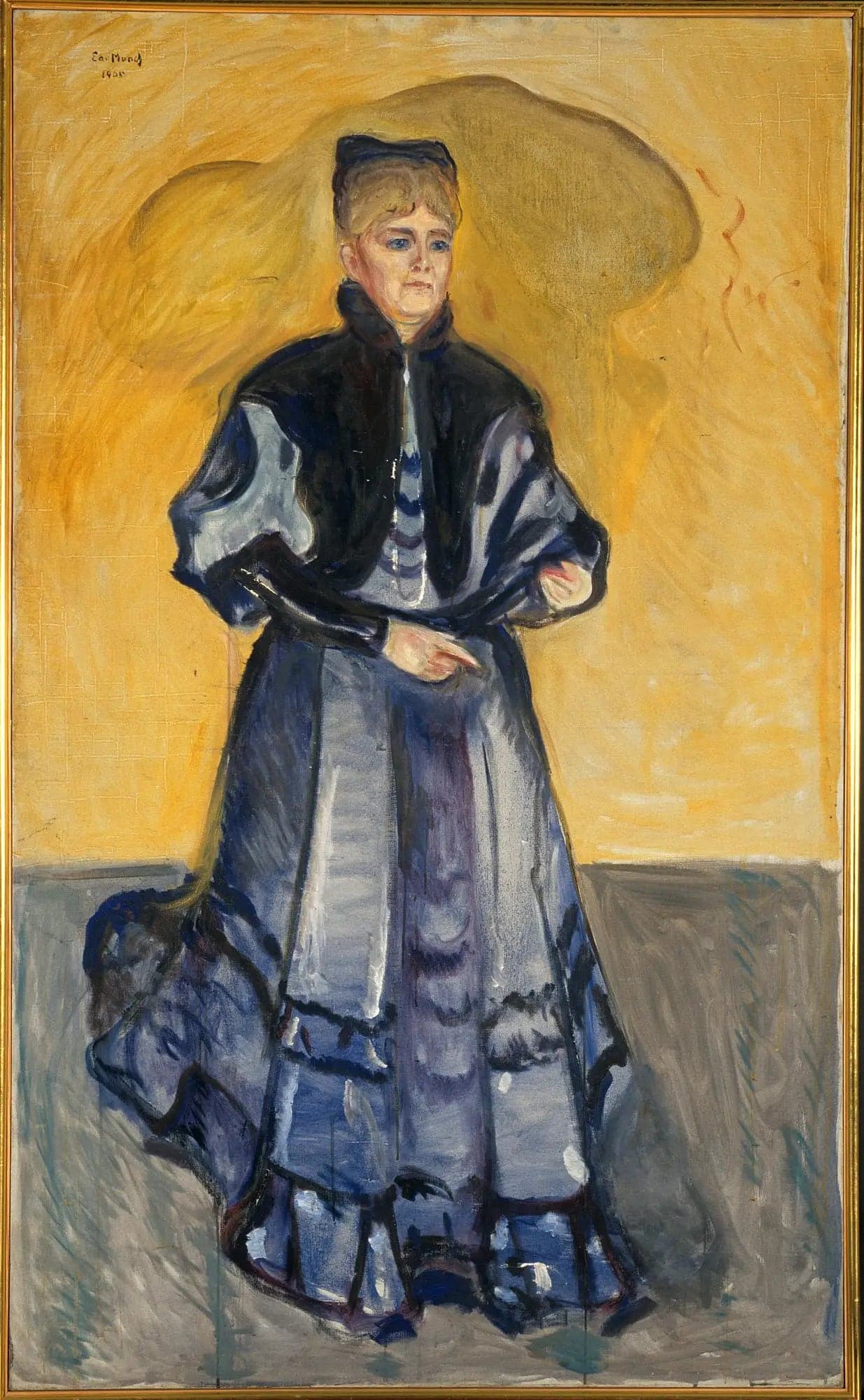
Elisabeth Förster-Nietzsche
- Original dimensions
- 101 x 164 cm
- Museum
- Munch Museum
- Year
- 1906
Scene depicted
The painting “Élisabeth Förster-Nietzsche” unfolds in a universe where emotions are palpable. Munch does not merely represent a portrait; he captures a state of being, a fleeting moment suspended in time. The posture, the expression, and even the choice of colors of this canvas evoke a deep connection, both personal and universal, between the subject and the viewer, making this painting a true testament to inner turmoil.
Historical context
Created in 1906 in Oslo, this painting reflects an artistic movement marked by Introspection. It is a time when Munch explores the depths of the human soul, seeking to capture complex emotions. Today, the canvas is located at the Munch Museum, where it continues to inspire visitors with its evocative power, revealing a dimension of human relationships imbued with tension and beauty.
Place in the artist's career
This painting marks an important milestone in Munch's career, reflecting his evolution towards a more intimate exploration of subjects. He positions himself between earlier works such as “The Scream” and “The Madonna,” where technique and emotion merge, revealing a growing mastery in the use of color and light. This canvas represents a turning point, the quest for fully self-expressive art.
Anecdote
“I paint dreams that I see,” Munch will say, evoking his inspirations. Imagine a spring morning, as the soft light of the day begins to filter through the windows of his studio. The motifs of this masterpiece then burst forth, like a spark, revealing the complexity of the human being in all its splendor and melancholy through the canvas .
Major exhibitions
Edvard Munch : portraits